

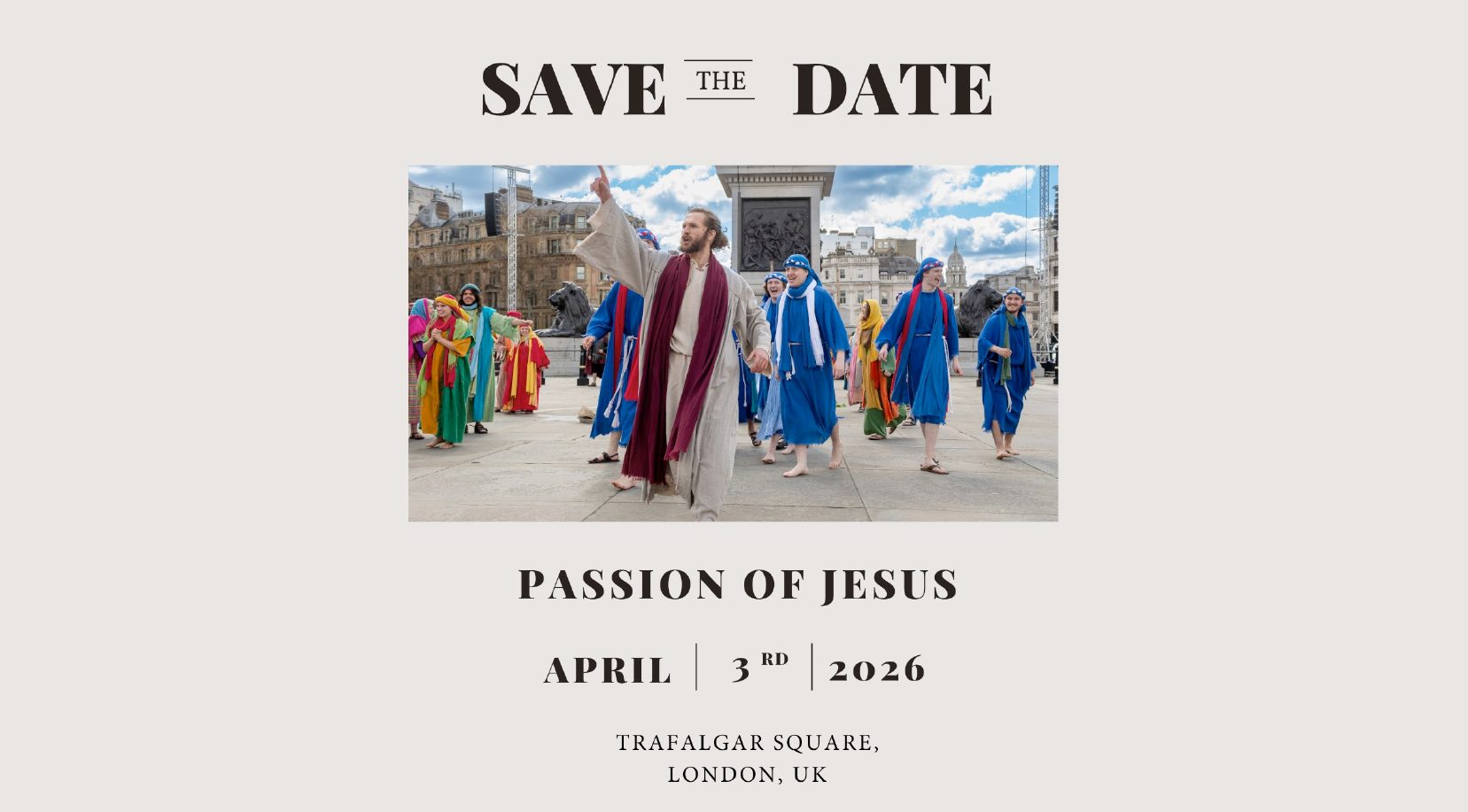
(ZENIT News / London, 03.15.2026).- One of London’s most distinctive Easter traditions will return to the heart of the British capital in 2026, as the Wintershall Theatre brings its acclaimed open-air dramatization of the Passion of Christ back to Trafalgar Square to mark fifteen years of performances in the historic public space.
On Good Friday, April 3, two free performances will transform the iconic square into a vast outdoor stage where thousands of spectators are expected to gather to witness the dramatic retelling of the final hours of Jesus’ life. The performances are scheduled for 12:00 p.m. and 3:15 p.m., continuing a tradition that has steadily grown into one of the most visible religious and cultural events in central London during Holy Week.
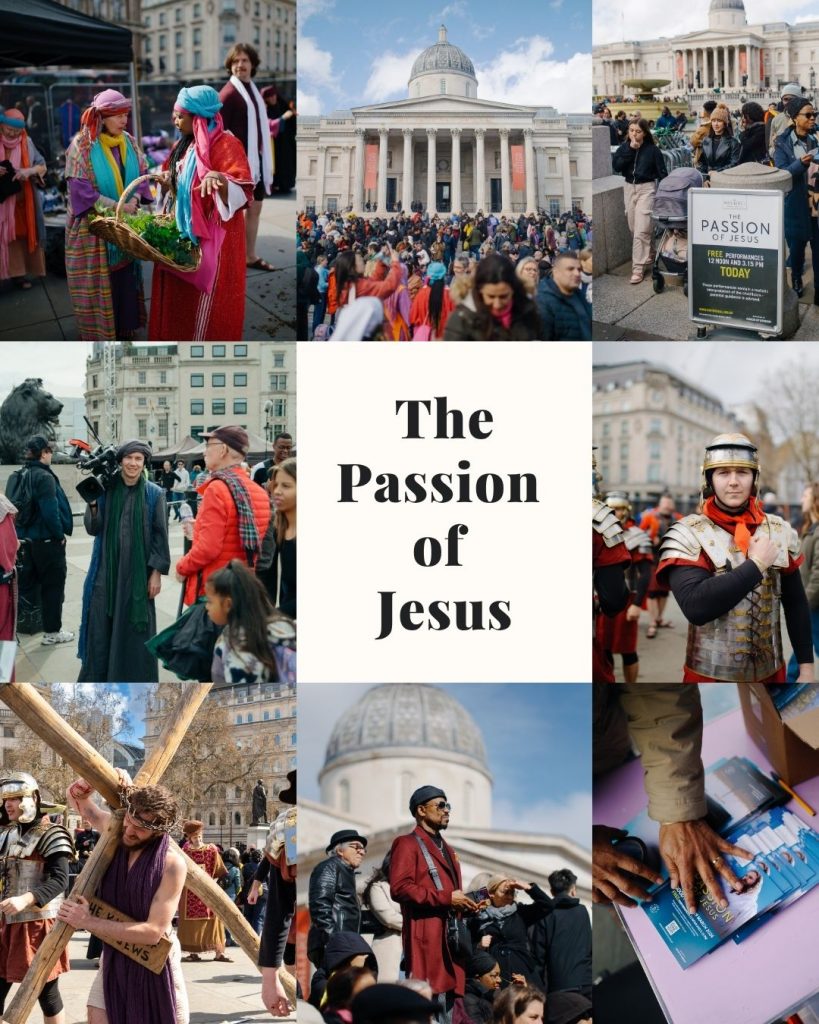
The production was first staged in Trafalgar Square in 2010 by the Wintershall Theatre, a company known for large-scale biblical dramas performed both indoors and in open landscapes. Over the past decade and a half, the Passion play has drawn hundreds of thousands of people, turning the square—normally dominated by tourists, commuters and political demonstrations—into an unexpected place of reflection on the central narrative of Christianity.
For the anniversary edition, organizers say the square will once again be transformed into a dramatic setting for the events that Christians commemorate on Good Friday: the arrest of Jesus, his trial, crucifixion and the proclamation of the resurrection. The production unfolds against one of the world’s most recognizable urban backdrops, framed by the monumental architecture of the square and the imposing column of Admiral Nelson.
The staging is known for its ambitious scale. The cast includes dozens of actors, accompanied by live animals, elaborate historical costumes and an original musical score designed to heighten the emotional intensity of the narrative. The result, according to organizers, is a performance that combines spectacle with a direct and personal portrayal of the Gospel story.
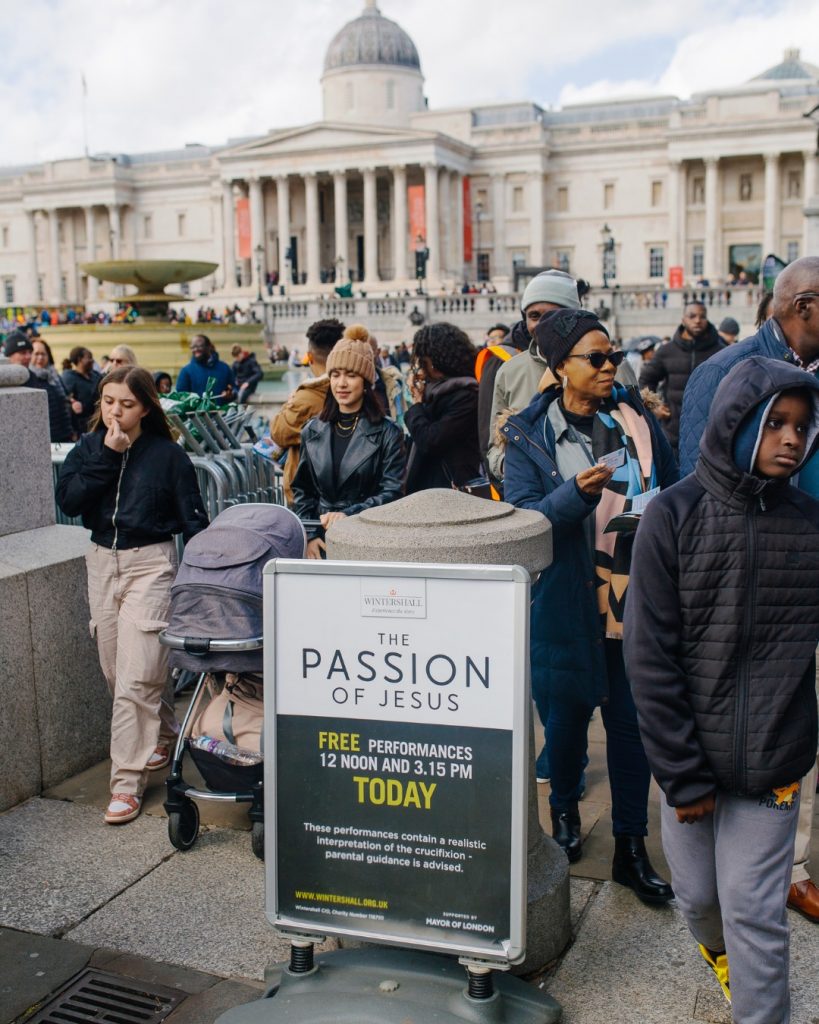
Yet the event’s organizers emphasize that the production is not intended solely for religious audiences. The performances are free and open to anyone who wishes to attend, regardless of religious background. Over the years, the crowd gathered in the square has included believers, tourists, passersby and people who might rarely encounter a religious story presented so publicly.
This openness has contributed to the event’s unusual place within London’s civic life. While the British capital is home to numerous churches and religious celebrations, few events place a biblical narrative so prominently in the middle of one of the city’s most famous public spaces.
London’s mayor, Sadiq Khan, welcomed the return of the production, describing it as a cherished part of the city’s Easter calendar. He noted that the performance transforms Trafalgar Square into a cultural stage where residents and visitors can come together to reflect on themes that remain relevant far beyond their religious origins.
According to Khan, the Passion play invites audiences to consider messages of compassion, love and hope—values that he said continue to resonate in a city as diverse and complex as London.
For the Wintershall Theatre team, the anniversary carries a particular significance. Producer Charlotte de Klee said the story of Jesus continues to speak powerfully in a world marked by uncertainty and conflict. In her view, the narrative of suffering, sacrifice and hope contained in the Passion resonates not only with Christians but with people of many faith traditions and even with those who do not identify with religion.
Ver esta publicación en Instagram
That universal dimension, she suggested, helps explain why such large and varied crowds continue to gather in Trafalgar Square each year. The square itself has become a symbol of the encounter between ancient faith and contemporary public life.
The performance also carries a note of realism that organizers caution may be intense for younger viewers. The depiction of the crucifixion is presented with dramatic authenticity, and families are advised to consider parental guidance when attending.
As with any outdoor event in London, the unpredictability of early spring weather remains a practical concern. Organizers are encouraging spectators to dress appropriately for the conditions, as the performances will take place regardless of temperature or light rain.
Even so, experience from previous years suggests that the weather rarely deters the crowds. When the actors portraying Roman soldiers, disciples and the figure of Christ step onto the temporary stage, Trafalgar Square often falls into an unusual silence—a pause in the rhythm of the busy metropolis as thousands of people watch the ancient story unfold.
Fifteen years after its debut in the square, the Wintershall Passion play has evolved into more than a theatrical production. For many Londoners, it has become a moment in which one of Christianity’s most enduring narratives reenters the public space of a modern city, reminding audiences that stories of suffering, redemption and hope continue to shape cultural memory even in a secular age.
Thank you for reading our content. If you would like to receive ZENIT’s daily e-mail news, you can subscribe for free through this link.

Publicaciones relacionadas:
 The Mexican Camino de Santiago or Camino de Guadalupe, Reaches Half the Goal in Record Time: 12 Squares and 50 Kilometers
 Germany: impressive health of altar server ministry in the country’s churches
 Paris’ Notre Dame Cathedral breaks visitation record and aims to become France’s most visited monument
 The bells of two beautiful churches destroyed (and now restored) after the passage of Islamism in Iraq ring once again
