

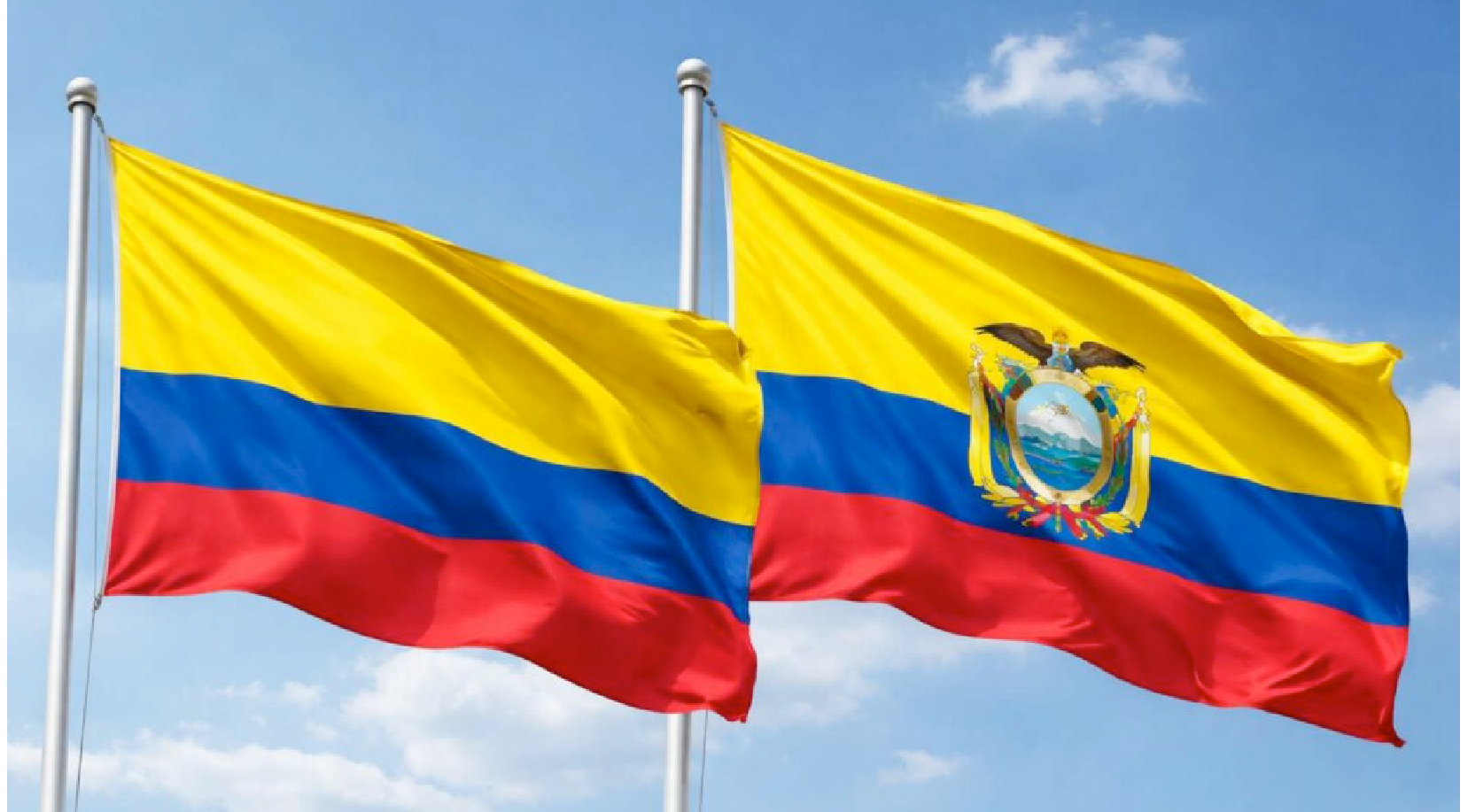
(ZENIT News / Bogotá-Quito, 03.26.2026).- The Catholic Church has moved decisively into the space of moral mediation, warning of a growing humanitarian toll and urging governments of Colombia and Ecuador to step back from confrontation.
In a joint message dated March 20, the episcopal conferences of both countries appealed directly to Gustavo Petro and Daniel Noboa, calling for “respectful, fraternal and urgent” action to defuse tensions that, they say, are already harming vulnerable populations along the shared border.
The bishops’ intervention reflects mounting concern that what began as a policy dispute over security cooperation has evolved into a multidimensional crisis—economic, diplomatic, and increasingly social.
From tariffs to territorial tension
The current standoff traces back to February, when Ecuador imposed a 30% tariff on Colombian goods, accusing Bogotá of insufficient efforts to control cross-border drug trafficking. Colombia responded in kind, and by March both countries had raised tariffs to 50%, signaling a rapid escalation.
The economic impact has been immediate. Colombia has also restricted the entry of key Ecuadorian exports, including rice and bananas—products central to Ecuador’s agricultural economy. The two nations, historically close trading partners with annual exchanges of approximately $2.8 billion, now face a breakdown in commercial flows that had long underpinned their bilateral relationship. Ecuador, which traditionally runs a trade deficit of around $900 million with Colombia, is particularly exposed.
Yet the dispute has not remained confined to trade. Diplomatic tensions intensified following the discovery of an unexploded bomb on Colombian territory, allegedly linked to an Ecuadorian military operation targeting narcotics networks. While Gustavo Petro initially accused Ecuador of a cross-border attack, a subsequent binational military investigation concluded that the device likely landed in Colombia after rebounding from its intended target zone in Ecuador, where it had failed to detonate.
The episode, though de-escalated at the technical level, contributed to a climate of mistrust that now extends beyond economic policy into questions of sovereignty and security coordination.
A humanitarian warning from the Church
Against this backdrop, the bishops’ message places the focus squarely on those most affected: border communities whose livelihoods depend on the free movement of goods and people.
“We live with pain and growing concern the humanitarian crisis affecting our sister populations on both sides of the border,” the prelates wrote, emphasizing that restrictions on trade and mobility are already undermining daily life. Their appeal avoids political alignment, instead framing the crisis in terms of human dignity, social cohesion, and the ethical imperative to protect life.
The language is characteristic of Latin American episcopal diplomacy, which often combines pastoral concern with calls for institutional responsibility. In this case, the bishops also invoked the shared history of cooperation between the two nations, recalling decades of cross-border exchange not only of goods but of “cultural values” and “fraternal ties.”
The appeal explicitly calls for dialogue rooted in patience and mutual respect, oriented toward forgiveness and reconciliation—terms that take on particular resonance as Christians approach the liturgical period commemorating the Passion and Resurrection.
A window for de-escalation
The timing of the bishops’ intervention coincides with a renewed diplomatic effort. Delegations from both governments are scheduled to meet in Lima under the auspices of the Andean Community, in what is expected to be a two-day attempt to reset negotiations.
The Church’s public stance adds a layer of moral pressure at a moment when political incentives alone may not suffice to reverse course.
The bishops’ call for a “very prompt reopening of borders” underscores the urgency they perceive. For communities along the frontier, the crisis is not abstract: it is measured in disrupted markets, restricted mobility, and growing insecurity.
Thank you for reading our content. If you would like to receive ZENIT’s daily e-mail news, you can subscribe for free through this link.

Publicaciones relacionadas:
 Sudan: Christians facing choice between fleeing and hardship
 Catholic Church in USA recognizes three women with highest pro-life distinction
 Study reveals that non-churchgoers would go to Mass at Christmas if invited by someone else
 Lefebvrians pave the way for schismatic ordinations with a book sent to every member of the Italian episcopate
