

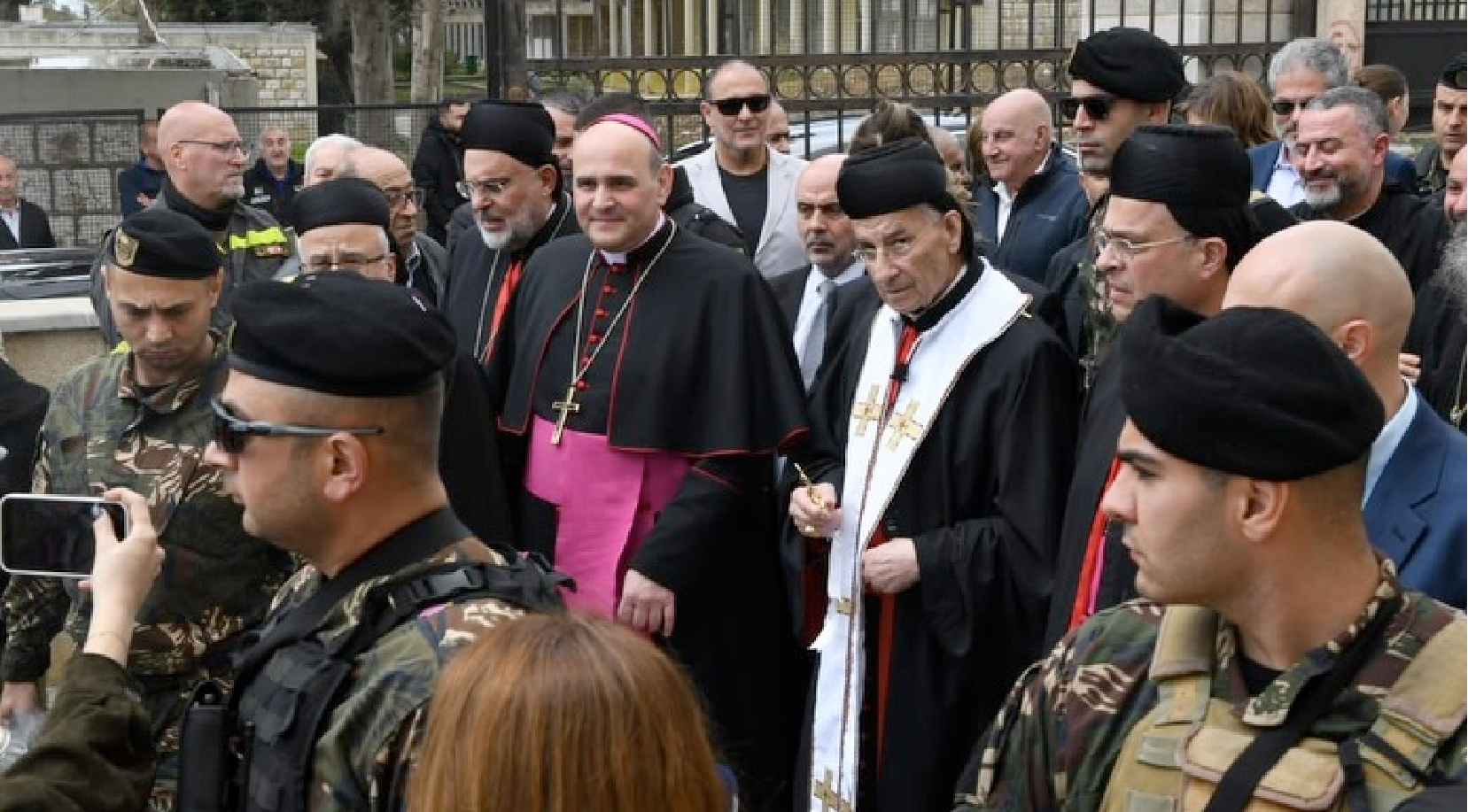
(ZENIT News / Beirut, 04.08.2026).- The Easter message sent by Pope Leo XIV to the village of Debel was never meant to travel through television screens. It was intended to arrive alongside three trucks carrying 40 tons of humanitarian aid, crossing a scarred landscape where frontlines shift faster than relief can reach the vulnerable. Instead, the convoy—halted by escalating violence—became another symbol of a conflict in which even gestures of compassion are obstructed.
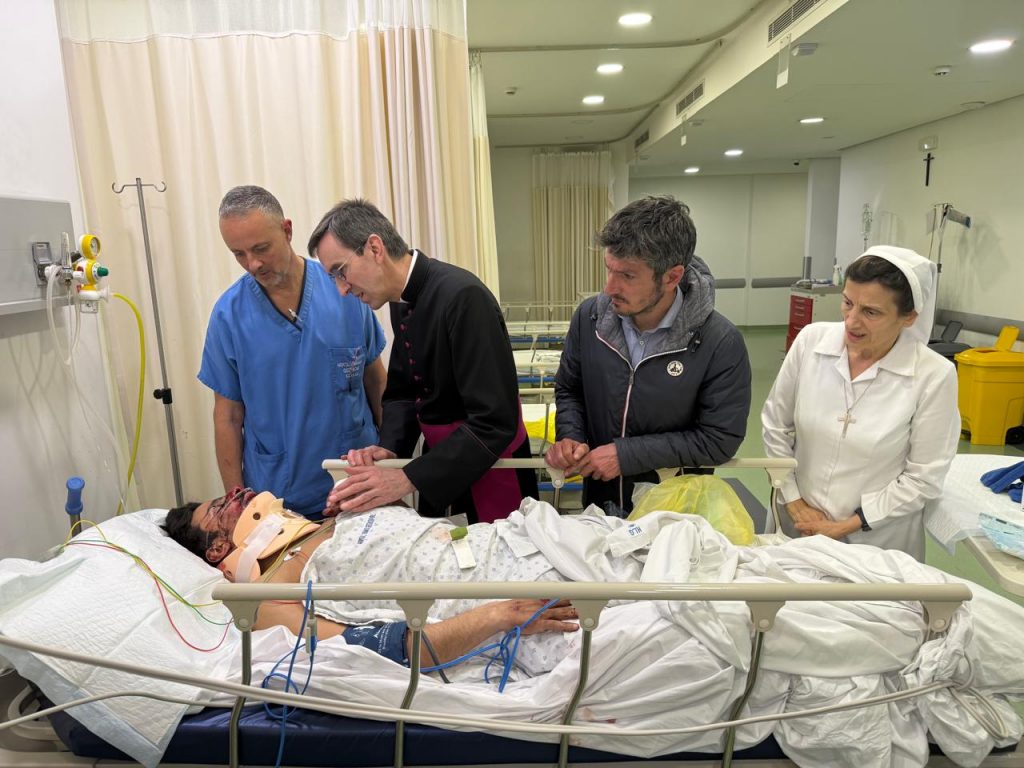
In southern Lebanon, where Christian communities have chosen to remain despite evacuation orders and intensifying clashes between Hezbollah and Israel Defense Forces, Easter unfolded under the echo of artillery. Villages like Debel, just a few kilometers from the Israeli border, are effectively cut off: movement is impossible, basic goods are scarce, and access to medicine is increasingly precarious. The apostolic nuncio, Paolo Borgia, attempting twice to deliver aid, was forced to turn back both times as crossfire intensified within kilometers of his destination.
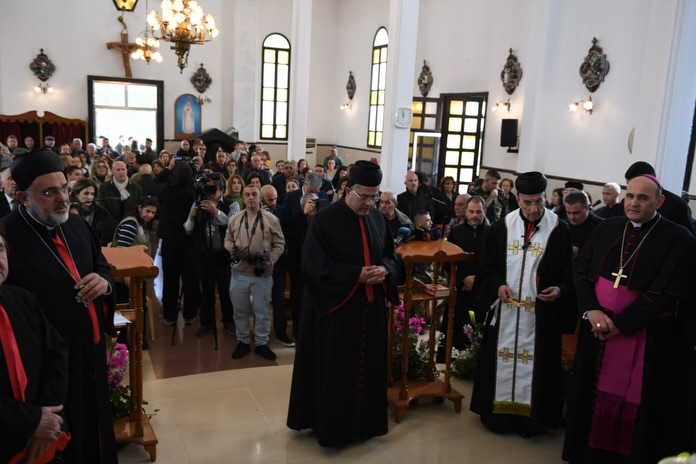
From a UNIFIL base in Deir Kifa, Borgia read aloud the Pope’s message—signed by Pietro Parolin—addressed not only to Debel but to all those trapped in the widening humanitarian crisis. It was a text marked by insistence as much as pastoral concern: a call not to surrender to despair, grounded in the paradox of Easter itself—joy emerging from devastation. For communities that marked Palm Sunday, the Via Crucis, and Easter liturgies amid bombardments, the message resonated less as abstraction than as lived experience.
The scale of that experience is staggering. Since the outbreak of hostilities tied to the broader regional confrontation involving Iran, Israel, and the United States, more than 1,400 people have been killed in Lebanon and over one million displaced. Some estimates place internal displacement at 1.2 million—roughly 20 percent of the population. Entire region south of the Litani River, representing about 15 percent of the national territory, are under severe strain, with Christian villages particularly exposed.
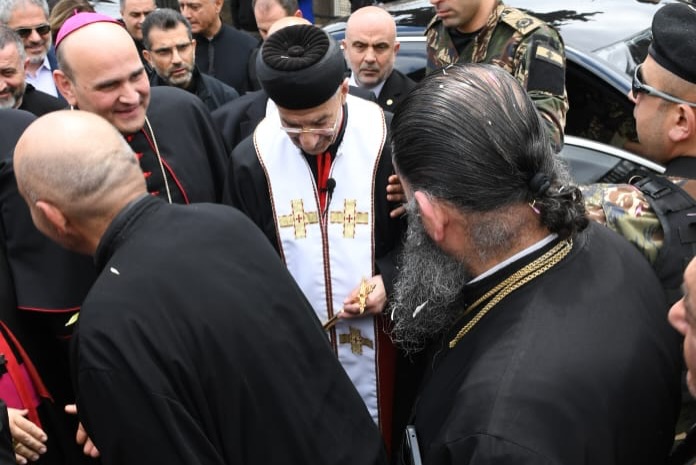
The humanitarian convoy blocked en route to Debel was not an isolated effort but part of a broader network involving Caritas Lebanon, the French organization L’Œuvre d’Orient, and UN peacekeepers. It was the seventh such mission in recent weeks. Its suspension prompted strong reactions from Church authorities, including Bechara Boutros Raï, who described the interruption as both a humanitarian failure and a moral affront to civilians trapped in war.
The violence has not been confined to the south. On April 8, Beirut itself was struck by one of the most intense waves of Israeli air raids in the current phase of the conflict. More than 100 targets were hit in roughly ten minutes across the capital, southern Lebanon, and the Bekaa Valley. Lebanese authorities reported at least 254 dead and 720 injured in the region alone, with emergency services overwhelmed and urgent calls for blood donations issued. Even a cemetery in Shmestar was struck during a funeral, underscoring the indiscriminate nature of the devastation as perceived by local population.
These strikes came just hours after the announcement of a two-week ceasefire brokered with the involvement of Pakistan and China, and publicly celebrated by Donald Trump as a strategic success. Yet the agreement explicitly excludes Lebanon, where Israeli officials maintain that operations against Hezbollah remain independent of the broader truce framework. The result is a fragmented geography of war: de-escalation in some theaters, intensification in others.
For Lebanon’s Christians—still the largest Christian population in the Arab world, representing roughly one-third of the country’s 5.5 million inhabitants—the conflict is not only geopolitical but existential. Clergy and laypeople alike frame their endurance in theological terms. A Maronite priest from the border village of Rmeish, Toni Elias, described a community that continues to celebrate its faith while demanding an end to violence. His appeal is both spiritual and civic: a Lebanon where coexistence is restored, where young people can remain, and where war no longer dictates daily life.
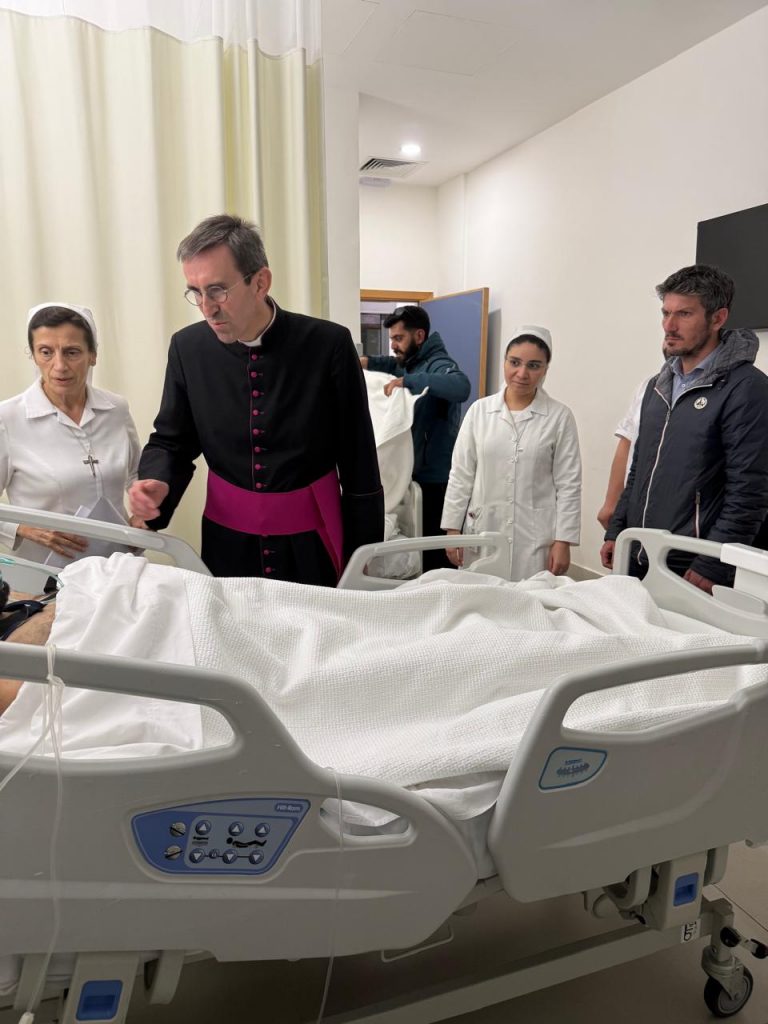
The cost of staying, however, is high. Clergy have been killed, including a Maronite priest struck by Israeli fire after refusing to abandon his village. Civilians continue to die in targeted strikes, such as the killing of local official Pierre Moawad and his wife in Beirut. Infrastructure is collapsing under repeated attacks, and humanitarian organizations warn that their capacity is nearing exhaustion.
Against this backdrop, the Pope’s Easter message acquires a dual function. It is, on one level, a traditional proclamation of hope rooted in the resurrection narrative. On another, it is a form of diplomatic and moral signaling: a reminder that even in a war defined by asymmetry and fragmentation, the plight of civilians—particularly minority communities—cannot be relegated to the margins.
What remains uncertain is whether such appeals can translate into tangible relief. For now, the trucks remain halted, the corridors closed, and entire communities suspended between resilience and attrition. In Debel and beyond, Easter has passed not as a moment of reprieve, but as a fragile affirmation that faith persists where structures fail—and where the promise of peace remains, at best, deferred.
Thank you for reading our content. If you would like to receive ZENIT’s daily e-mail news, you can subscribe for free through this link.

Publicaciones relacionadas:
 At Present, Mexico Is the Most Dangerous Country for Priests in Latin America. Here Are the Figures
 Nicaraguan Bishop Rolando Álvarez Nominated for the Sakharov Prize for Human Rights
 Archbishop demands government improve security after slaughter of Christians
 Pope Leo XIV comments on Trump’s peace plan for Gaza (and other current topics of general interest)
