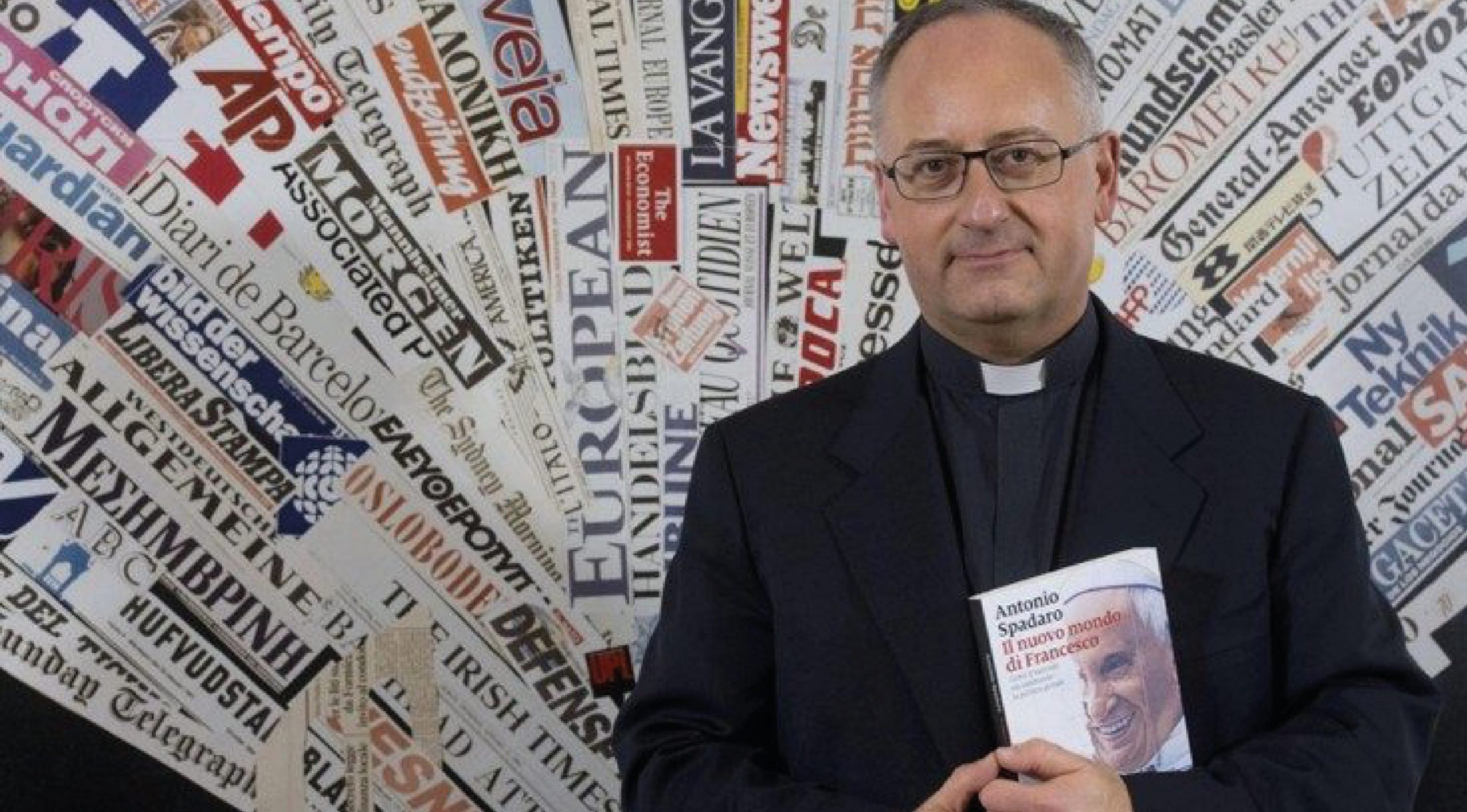
Antonio Spadaro, SJ
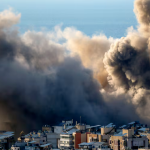
(ZENIT News / Rome, 03.08.2026).- The conflagration that has been consuming the Middle East since Feb. 28, may have irreversibly redrawn the political geography of the region. The joint American-Israeli strikes on Iran — which killed Ayatollah Ali Khamenei, the Supreme Leader of the Islamic Republic since 1989, along with Defense Minister Aziz Nasirzadeh and Revolutionary Guards commander Mohammed Pakpour — have opened a new chapter of bloodshed in a land already scarred by decades of conflict.
Iran’s retaliatory missile volleys, striking Israel, the Gulf states, and U.S. bases across the region, have ignited a regional conflagration of unprecedented scale. In Israel, at least 12 people are dead; in Iran, the Red Crescent reports 787 killed since operations began, including the 168 victims of the raids on the Shajareh Tayyebeh girls’ school in Minab. Lebanon is burning again: some 40 are reported dead and over 150 wounded from Israeli bombardment in the south of the country and in the Dahiyeh district. The numbers continue to climb.
Against this backdrop of devastation and fear, the voice of the Holy See has risen with a firmness and urgency commensurate with the gravity of the hour. But to grasp the weight of that voice and its reach, one must first retrace the long, patient path the popes have charted in their relations with Iran and the Shia world — a path woven from encounters, carefully measured words, and prophetic gestures that, amid the catastrophe, now acquire a still deeper significance.
The relationship between the Holy See and the Islamic Republic of Iran was marked by a complex period during the pontificate of Benedict XVI, as much by a genuine desire for dialogue as by unavoidable tensions. The Regensburg address of September 2006, which cited the Byzantine emperor Manuel II Palaiologos on the subject of holy war, provoked a harsh backlash across the Muslim world.
Ayatollah Khamenei himself described the pope’s remarks as «a link in the chain of the Israeli-American conspiracy to foment a clash between religions,» while reformist former president Mohammad Khatami called them «insolent.» Iranian Qur’anic universities suspended classes in protest, and relations between the Holy See and the Islamic world appeared to be hurtling toward a crisis from which there would be no return.
And yet, with the patience that is the hallmark of Vatican diplomacy, Benedict XVI managed to mend the torn threads. His address to the Ambassador of the Islamic Republic of Iran to the Holy See on Oct. 29, 2009, remains a document of rare clarity. In it, Ratzinger affirmed that «establishing cordial relations among believers of different religions is an urgent necessity of our time» and expressed his pleasure at «the existence, for several years now, of meetings organized regularly and jointly by the Pontifical Council for Interreligious Dialogue and the Organization for Islamic Culture and Relations, on topics of common interest.»
He did not neglect to acknowledge the Christian presence in Iran «since the earliest centuries of Christianity,» calling that community «truly Iranian» and its «centuries-old experience of harmonious coexistence with Muslim believers» a heritage to be defended. Benedict XVI also urged the Iranian authorities to «strengthen and guarantee Christians the freedom to profess their faith.»
Benedict XVI’s approach took concrete institutional form through interreligious dialogue coordinated by the Pontifical Council for Interreligious Dialogue. A significant moment in this process came in November 2010, when Cardinal Jean-Louis Tauran, then president of the dicastery, traveled to Tehran for the seventh round of the Holy See–Iran dialogue. On that occasion, Tauran delivered a personal message from Benedict XVI to President Mahmoud Ahmadinejad.
The papal letter, dated Nov. 3, 2010, conveyed the pope’s high regard for the Iranian authorities and expressed his hope for collaboration on universal ethical questions and world peace. The Iranian response was one of openness: Ambassador Ali Akbar Naseri reported that Ahmadinejad had formally invited the pope to visit Iran, emphasizing that relations were «very sincere and cordial.» The invitation was reiterated in February 2012, following Cardinal Tauran’s visit to Tehran, confirming the regime’s willingness at the time to use the Vatican channel as a means to mitigate its international isolation.
With the election of Pope Francis in March 2013, the Holy See’s approach to the Middle East and to Iran took on a new dimension, shaped by the «culture of encounter» that the Argentine pontiff placed at the heart of his teaching. As I have written in my book The Diplomacy of Pope Francis (forthcoming from Georgetown University Press), the Holy See’s engagement with the world during the Francis pontificate was defined by a three-hundred-and-sixty-degree dialogue with the protagonists on the international stage: from Trump to Putin, from Maduro to Rouhani, from Castro to the Colombian peace negotiators.
It is within this framework that the Holy See’s commitment to treating Iran as a global interlocutor must be understood. Faced with the intra-Islamic conflict between Sunnis and Shias — which found one of its bloody theaters in Syria — the Holy See had to guard against the risk of playing into the hands of those who sought to pit Riyadh against Tehran by aligning with one side or the other. The picture was, and remains, extraordinarily complex, but eliminating the scourge of the so-called Islamic State required Sunnis, Shias, Russia, and the West to make common cause.
The high-water mark of this strategy came with Iranian President Hassan Rouhani’s visit to the Vatican on Jan. 26, 2016. That day, the president wrote on his Twitter account: «Islam and Christianity need dialogue more than ever today, because at the root of conflicts between religions lies above all ignorance and a lack of mutual understanding.»
The Vatican press office reported that “during the cordial discussions, common spiritual values emerged and reference was made to the good state of relations between the Holy See and the Islamic Republic of Iran, the life of the Church in the country and the action of the Holy See to favor the promotion of the dignity of the human person and religious freedom. Attention then turned to the conclusion and application of the Nuclear Accord and the important role that Iran is called upon to fulfil, along with other countries in the region, to promote suitable political solutions to the problems afflicting the Middle East, to counter the spread of terrorism and arms trafficking. In this respect, the parties highlighted the importance of interreligious dialogue and the responsibility of religious communities in promoting reconciliation, tolerance and peace.»
With Iran, this was a reciprocal diplomatic recognition that went well beyond the courtesies of protocol: the Holy See had established regular diplomatic relations with Tehran — relations that, for instance, do not exist with the Kingdom of Saudi Arabia. The bond with Tehran continued with the visit of Foreign Minister Mohammad Javad Zarif on May 17, 2021.
But the Holy See’s relationship with Iran has never been free of shadows or denunciations. Beginning in September 2022, Iran was shaken by the «Woman, Life, Freedom» protests, which erupted after the death of Mahsa Amini. The repression was violent.
Pope Francis chose his New Year’s address to the ambassadors accredited to the Holy See as the occasion to voice both his concern over the stalemate in nuclear negotiations and his condemnation of a country where «the right to life is threatened by the death penalty, used for a supposed state justice.»
He also acknowledged that the protests «demand greater respect for the dignity of women.» This was the Francis who never relinquished the duty of speaking the truth, yet who never closed the door to dialogue.
It was during the apostolic journey to Iraq in March 2021 that the relationship between the pontificate and the Shia world reached its prophetic zenith. On the morning of March 6, an Iraqi Airways flight carried the pope from Baghdad to Najaf, the principal Shia religious center in Iraq, a pilgrimage destination for Shias the world over because it houses the tomb of Imam Ali, cousin and son-in-law of the Prophet Muhammad and the first imam of the Shia tradition.
Francis made his way to the residence of Grand Ayatollah Sayyid Ali al-Husayni al-Sistani, within the mosque of Imam Ali, threading through the narrow lanes of the holy city. Al-Sistani’s interpretation of Islamic sources calls for religious authorities to refrain from direct political activity, standing in opposition to Ayatollah Khomeini’s theocratic interpretation that had prevailed in Iran. The meeting lasted approximately 45 minutes: never before had the Ayatollah received a head of state, and never before had he risen to greet a guest — yet on this occasion he did so more than once.
During the visit, posters appeared in the surrounding streets bearing images of Francis and al-Sistani alongside a celebrated saying of Imam Ali: «People are of two kinds: they are either your brothers in faith or your equals in humanity.» The two leaders emphasized the importance of collaboration among religious communities and of strengthening the values of harmony, peaceful coexistence, and human solidarity. Francis called the encounter «unforgettable.» Mohammad Ali Abtahi, vice president during the Khatami presidency, called it «one of the historic turning points of the divine religions.»
The significance of that meeting must be understood in its geopolitical context. Francis’s journey cast a spotlight on Najaf, the Shia «holy city,» and opened an important new prospect for intra-Islamic dialogue. The pope had inserted himself into — and, in doing so, dismantled — entrenched narratives that portrayed all the world’s major powers operating on that ground.
The first narrative to be upended cast Christians as the West’s fifth column, just as it cast Shias as proxies of Iran and Sunnis as proxies of Saudi Arabia. The second was the religious narrative of a permanent conflict between Sunnis and Shias: many people discovered, at that moment, that Shia Islam is plural and that a traditional strain of it exists — precisely the strain embodied by al-Sistani.
The third was the geopolitical vision nourished by apocalyptic ideology, in which the interests of political Islam — both Sunni and Shia — become entangled at the expense of religion, instrumentalizing it. The message of the visit to al-Sistani was the peaceful recognition of a «plural» Islam, the prerequisite for guaranteeing full citizenship to all.
Today, five years after that prophetic encounter, fire has returned to devastate the Middle East. And the voice of Francis’s successor, Pope Leo XIV, has risen with the urgency that the hour demands. At the Angelus on March 1, the second Sunday of Lent, the pope declared: «I follow with deep concern what is unfolding in the Middle East and in Iran during these dramatic hours. Stability and peace are not built through mutual threats, nor through weapons, which sow destruction, suffering, and death, but only through reasonable, authentic, and responsible dialogue. In the face of the possibility of a tragedy of enormous proportions, I make a heartfelt appeal to the parties involved to take on the moral responsibility of halting the spiral of violence before it becomes an irreparable abyss! May diplomacy rediscover its role and may the good of peoples be promoted — peoples who long for peaceful coexistence founded on justice. And let us continue to pray for peace.»
The language is revealing: this is not an appeal that confines itself to moral platitudes but rather one that identifies a specific responsibility — to stop the spiral of violence before it becomes an irreparable abyss.
A few hours later, while visiting the parish community of the Ascension in the Quarticciolo neighborhood of Rome, Leo XIV returned to the unfolding tragedy: «I am very worried about what is happening in the world, especially in the Middle East, yesterday, today, and we don’t know for how many more days. War, once again!»
And to the children gathered there, he recalled the tragedy of Gaza, «where so many children have died, where so many children have been left without parents, without school, without a place to live.» These words grow out of the tradition of denunciation that, from Francis onward, has characterized the papal magisterium on the Middle East — and which today assume a still more dramatic urgency.
Any serious reflection on the present cannot evade the most radical questions this conflict poses. The issue is not the defense of the Iranian regime and its indisputable brutality — from the repression of the 2009 Green Movement to the savage crackdown on «Woman, Life, Freedom,» from summary executions to the systematic persecution of dissent. The issue is that this war is not a war between the forces of justice and the forces of oppression: it is driven by political calculus and the interests of power, and it leaves on the ground, above all, innocent civilians — children, women, the elderly.
What ends with Khamenei, and what risks returning in other forms? We must seriously reckon with the apocalyptic strain within the Khomeinist leadership — a vision of time shaped not by linearity but by collisions between good and evil, which must grow ever more violent to hasten the day of the final battle. The death of the supreme leader does not automatically herald the dawn of a new era: the specter of chaos, fragmentation, and a possible internecine war among rival factions of the regime looms over a country that may not possess the internal resources for a peaceful transition.
Bishop Paolo Martinelli, Apostolic Vicar of Southern Arabia, interviewed as Iranian missiles struck Abu Dhabi and Dubai, offered the ecclesial perspective with the clarity the situation demands: «I don’t believe this can be called a war on Islam. There is always the great risk of instrumentalizing religion for partisan interests. We must continue to promote dialogue among people of different faiths.» He added a warning that serves as a compass: «We must go back to looking at the good of peoples. Looking at the good of people immediately reveals the hollowness of ideological confrontations and threats.»
President Trump has declared that the war on Iran could last «four to five weeks» and that he has «three excellent choices» of candidates to install at the helm of the country following the killing of Khamenei — words that summon the ghosts of previous wars, from Iraq to Lebanon, where promises of swift resolution and regime change invariably metastasized into decades of chaos and suffering.
Have we learned anything from the Iraq war, which occurred barely two decades ago? As Francis wrote in the encyclical Fratelli tutti, «every war leaves the world worse than it found it.» War is the failure of politics and humanity, a shameful capitulation before the forces of evil. Choosing peace is not naïve sentimentality: it is far-sighted wisdom.
What the Holy See has built over these years — the encounter with Rouhani, the journey to Najaf, the Document on Human Fraternity signed in Abu Dhabi, the tireless dialogue with all parties — has not been lost. It is the spiritual and diplomatic patrimony upon which reconstruction will be possible when the guns fall silent.
As Leo XIV stated with force, the only viable path remains «reasonable, authentic, and responsible dialogue.» The only durable solution is diplomatic. But for diplomacy to reclaim its role, the world’s powerful must renounce what Francis once called the temptation of «playing with fire, with missiles and bombs, with weapons that sow weeping and death, covering our common home with ash and hatred.»
The fate of the Middle East, and with it the fate of world peace, will be decided in the coming hours and days. The prayer that Leo XIV raised from the window of the Apostolic Palace is also a political program, in the highest sense of the term: stop the violence, restore the primacy of diplomacy, and look to the good of peoples. It is the least that history asks of us. But in a world that seems to have forgotten the language of reason, it is also the most we can aspire to.
Thank you for reading our content. If you would like to receive ZENIT’s daily e-mail news, you can subscribe for free through this link.