

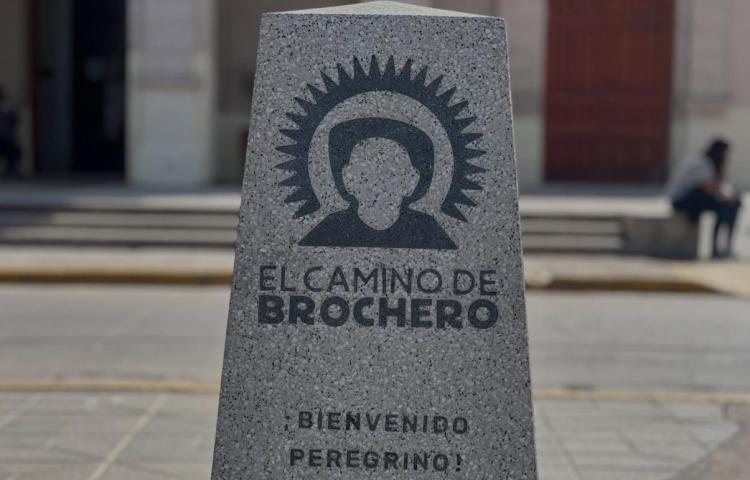
(ZENIT News / Buenos Aires, 09.12.2026).- Argentina is giving formal recognition to two very different expressions of Catholic heritage: a 240-kilometer pilgrimage route associated with a 19th-century priest and a small Marian sanctuary in Misiones whose very walls were built by the local community.
The two measures, were approved at different levels of government.
The national Chamber of Deputies approved with 207 votes the law declaring the Camino de Brochero an Intangible Cultural Heritage of Argentina. The Senate had already given the initiative preliminary approval in September 2025, and the latest vote completes the legislative process.
The approximately 240-kilometer route links places associated with the life and pastoral mission of St. José Gabriel del Rosario Brochero, the Argentine priest popularly remembered as the “Gaucho Priest.” Much of his ministry unfolded in the Traslasierra region of Córdoba, where he travelled difficult terrain, often by mule, to bring the sacraments to isolated communities, encourage people to make spiritual retreats and accompany families.
Today, Villa Cura Brochero, where his remains are buried, has become a permanent pilgrimage destination. Thousands of people continue to follow routes connected with the saint, whose reputation rests not on distance from ordinary life but on his closeness to people, particularly the poor, and his determination to bring the Gospel to communities scattered across the countryside.
The new national designation goes beyond protecting a road or collection of sites. It covers the celebrations, traditions, knowledge, communal practices and expressions of popular devotion transmitted through generations around Brochero’s memory. In that sense, the Camino is being recognized as living heritage: something sustained by people who continue to walk it rather than simply an historical itinerary preserved on a map.
That distinction becomes particularly relevant when considered alongside a second decision, this time in Misiones.
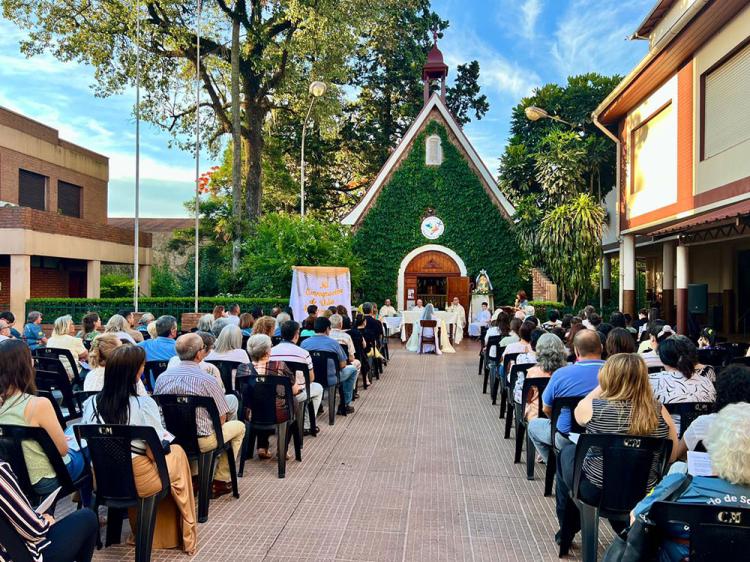
On August 26, the provincial Chamber of Representatives declared the Schoenstatt Shrine of Oberá Historical, Cultural and Spiritual Heritage of Misiones. The decision came as the sanctuary marked 70 years since its blessing.
Located at 714 Sarmiento Avenue, on the grounds of Mariano School, the shrine is an important center of Catholic spirituality in Oberá, a city of around 80,000 inhabitants and the second-largest in the province. It is also the second Schoenstatt shrine established in Argentina and forms part of the city’s religious tourism circuit.
But its strongest claim to historical significance may lie not in its architectural design but in how it was built.
During the legislative debate, provincial lawmaker Aryhatne Bahr emphasized that the sanctuary was a collective undertaking. Students, their families and local residents personally helped lay the bricks that eventually formed its walls. Antonio Schmitz was the builder, but the principal workforce and support came from the surrounding community. According to the account presented to legislators, the project received neither state nor corporate financing.
The speed of construction adds another remarkable detail. After the cornerstone was laid on September 24, 1956, the sanctuary was completed in roughly two months and blessed on November 21. Bahr said that such a rapid construction process has no precedent among other shrines of the movement worldwide.
Its origins go back further. The Sisters of Mary arrived in Misiones in 1949, and Schoenstatt’s founder, Father Joseph Kentenich, visited Oberá that same year, helping establish the foundations for a spiritual center in the region. Seven years later, the local community built the sanctuary as a replica of the original Schoenstatt shrine in Germany.
The provincial declaration has a practical consequence as well. It opens the way for works needed to guarantee safe and hygienic facilities and for improvements designed to integrate the sanctuary more effectively into its urban and landscape surroundings.
Taken together, the two Argentine initiatives reveal two complementary forms of Catholic heritage. Both cases also illustrate why religious heritage cannot always be reduced to monuments. A pilgrimage route can preserve a spiritual tradition even when the original landscape changes, while a modest church can become historically important because generations of people invested their work, faith and memories in it.
The new designations therefore recognize the human communities that have made these places meaningful—and, in doing so, acknowledge that Catholic heritage remains a living part of the country’s cultural memory.
Thank you for reading our content. If you would like to receive ZENIT’s daily e-mail news, you can subscribe for free through this link.

Publicaciones relacionadas:
 Shrine to Mary Undoer of Knots Is Erected Officially in Cancún, Mexico: It Welcomes on Average 15,000 People Weekly
 This is the largest statue of the Virgin Mary in the world, which is in Argentina
 Zaragoza’s Basilica of the Pillar Marks Record-Breaking Global Pilgrimage Surge: Americans are the largest group
 The Tallest Image of Our Lady of Fatima Was Inaugurated in Brazil’s Most Catholic City.
