

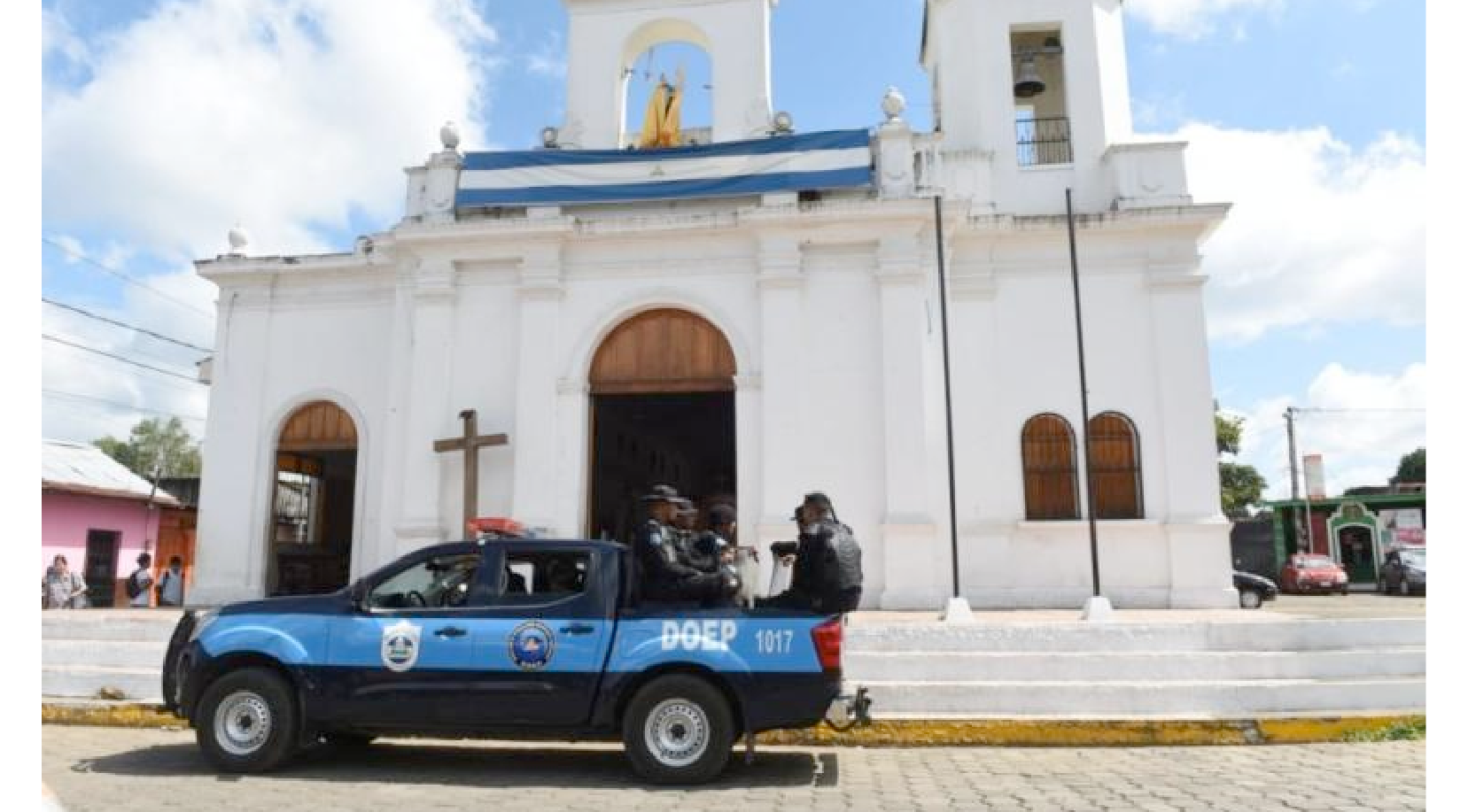
(ZENIT News / León, Nicaragua, 01.23.2026).- A new episode of pressure on the Catholic Church has unfolded in Nicaragua, where the regime has ordered clergy in the Diocese of León to remain inside their parishes and refrain from preaching outside church buildings. The directive, delivered days before a planned wave of pastoral missions, underscores how sharply religious life in the country continues to be curtailed under the Sandinista government led by Daniel Ortega and Rosario Murillo.
The ban affected pastoral outreach scheduled for January 24 as part of the so-called Ecclesiological Year proclaimed by Bishop Sócrates René Sándigo, who governs both the dioceses of León and neighboring Chinandega. The initiative was meant to renew the Church’s missionary presence, including traditional door-to-door visits and public proclamation of the Gospel. Instead, priests reportedly received a blunt instruction from authorities: “Do your work inside.”
The order was first denounced by Nicaraguan lawyer and researcher Martha Patricia Molina, whose documentation of religious persecution in the country has become a key reference for international observers. According to Molina, and as reported by the independent outlet Despacho 505, the message was conveyed directly by police agents acting on behalf of the regime. Clergy were told explicitly not to leave their parishes to carry out pastoral activities, effectively neutralizing the missionary dimension of the diocesan program.
Sources close to the Church confirmed that the prohibition was enforced through police presence and intimidation, a familiar tactic in a country where law enforcement has increasingly assumed the role of ideological gatekeeper. While no formal decree was published, the verbal order carried enough weight to ensure compliance, reflecting the climate of fear that has taken hold among religious communities.
The case of León is particularly revealing. Bishop Sándigo has often been perceived as one of the less confrontational prelates toward the government, and in the past his dioceses enjoyed limited concessions not granted elsewhere. On some occasions, processions were even allowed in university areas—an exception in a country where public religious expressions have been systematically banned or dismantled. The latest intervention suggests that even perceived moderation offers no lasting protection.
For readers unfamiliar with Nicaragua’s recent history, such restrictions mark a dramatic departure from longstanding Catholic practice. In Latin America, parish missions and house-to-house visits are not marginal activities but a central expression of pastoral care, especially in poorer and rural communities. Preventing priests from leaving church premises amounts to redefining religion as a purely private act, stripped of its social and communal dimension.
The prohibition in León fits into a broader pattern. Over the past several years, the Ortega-Murillo regime has expelled religious orders, confiscated Church property, jailed or exiled clergy, and banned public processions nationwide. What distinguishes this episode is its precision: rather than closing churches outright, the state is now dictating how ministry may be exercised, down to the parish boundary.
For the faithful of León and Chinandega, the message is unmistakable. The Church may exist, but only within limits imposed by the state. The command to “stay inside” is not merely logistical; it is symbolic of a regime determined to confine religious life to silence and walls, even when bishops once considered relatively acceptable are involved.
Thank you for reading our content. If you would like to receive ZENIT’s daily e-mail news, you can subscribe for free through this link.

