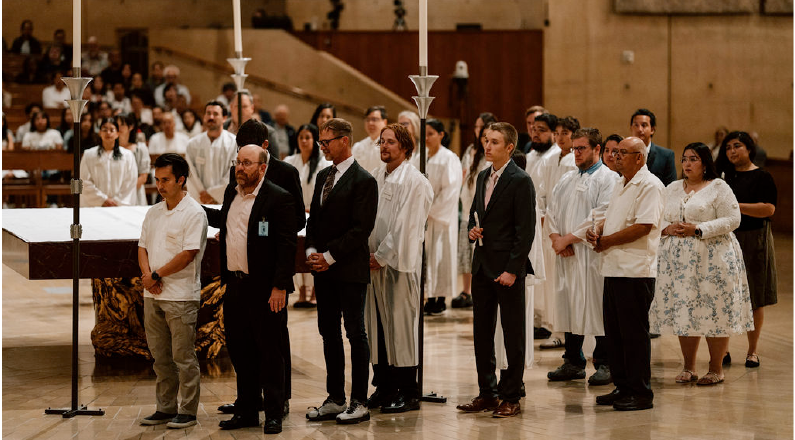
(ZENIT News / Rome, 04.14.2026).- In a religious landscape long marked by decline in the West, the Easter Vigil of 2026 has offered an unexpected counterpoint. Across the United States and far beyond, Catholic dioceses reported a notable increase in the number of adults entering the Church, suggesting not a sudden revival but a complex and uneven reawakening whose causes—and durability—remain open to interpretation.
The scale of the phenomenon in the United States is striking. Data gathered from dozens of dioceses indicate that, on average, the number of people received into the Church this year rose by 38 percent compared to 2025. A separate survey found a 57 percent increase specifically among unbaptized individuals seeking full initiation. Out of 71 dioceses that provided projections ahead of Easter, only five anticipated a decline.
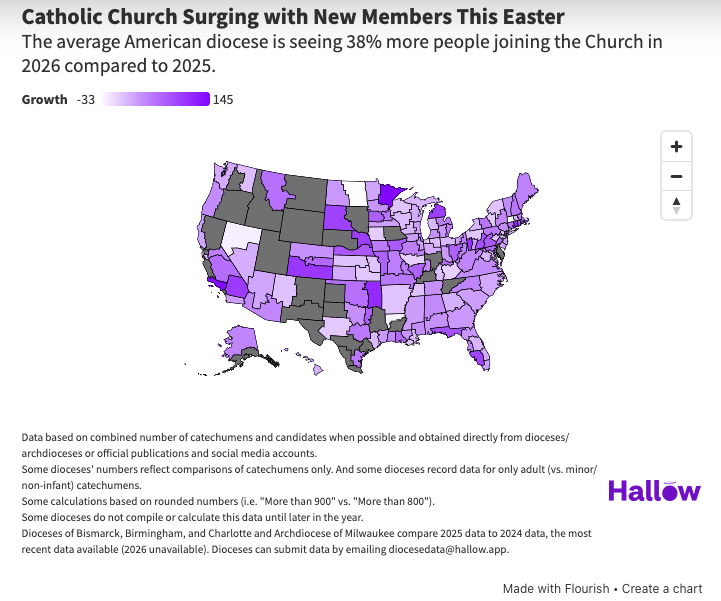
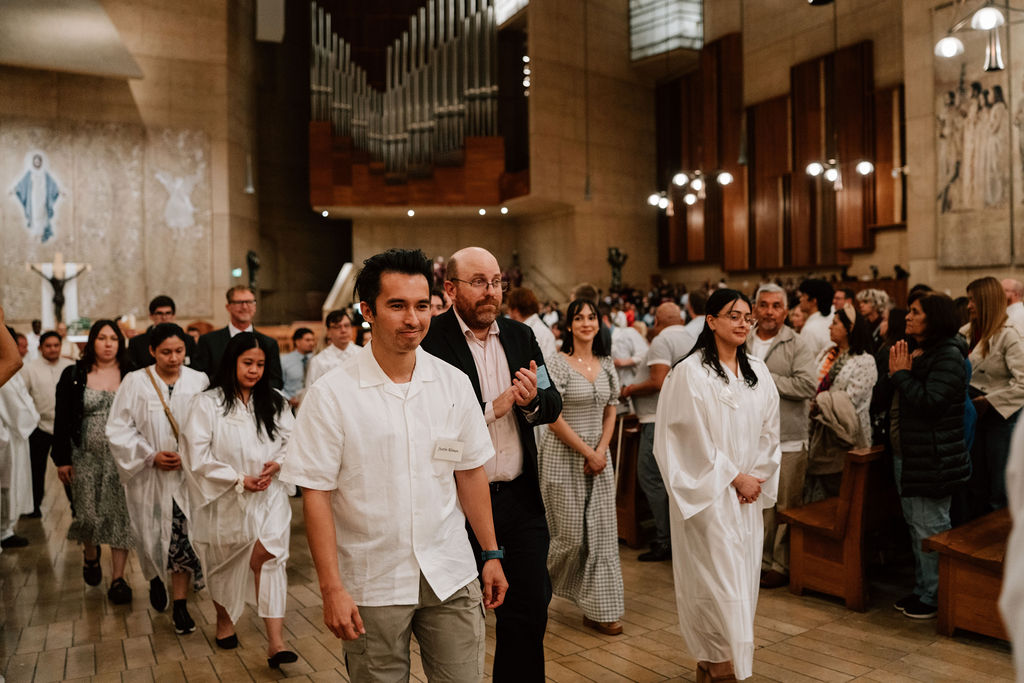
Some of the largest dioceses posted dramatic gains. Los Angeles welcomed more than 8,500 new Catholics during Holy Week, a 139 percent increase over the previous year. Chicago reported a 52 percent rise, New York 36 percent, and Phoenix 23 percent. In Detroit, 1,428 people were received into the Church, including 583 catechumens and 845 candidates—the largest group in two decades.
The trend is not confined to major urban centers. Smaller dioceses have recorded equally significant, and in some cases more dramatic, growth. Duluth in Minnesota expanded by 145 percent, Rapid City by 96 percent, and Pensacola-Tallahassee by 85 percent. Even in regions often described as highly secularized, such as New England, increases have been substantial: Boston saw a 55 percent rise in catechumens, while Norwich, Connecticut, more than doubled its numbers.
Yet the current surge must be read against a longer historical arc that tells a more sobering story. At the turn of the millennium, more than 173,000 adults entered the Catholic Church annually in the United States. By 2020, amid the disruptions of the pandemic, that number had fallen to just over 70,000. Although recent years have brought a steady recovery—reaching more than 90,000 in 2024—the figures remain significantly below those of previous decades.
Moreover, the broader indicators of Catholic life continue to point downward. Since 2000, child baptisms have declined by more than 50 percent, marriages by 59 percent, and even funerals by 26 percent. The current increase in adult conversions, while encouraging, does not yet offset these structural declines.
What appears to be emerging is not a simple return to past levels of religious practice, but a shift in the profile of those entering the Church. In many dioceses, younger adults are prominently represented among new converts. Priest and bishops point to a combination of factors: a search for meaning in an uncertain cultural climate, the appeal of doctrinal clarity, and the attraction of a tradition perceived as both ancient and coherent.
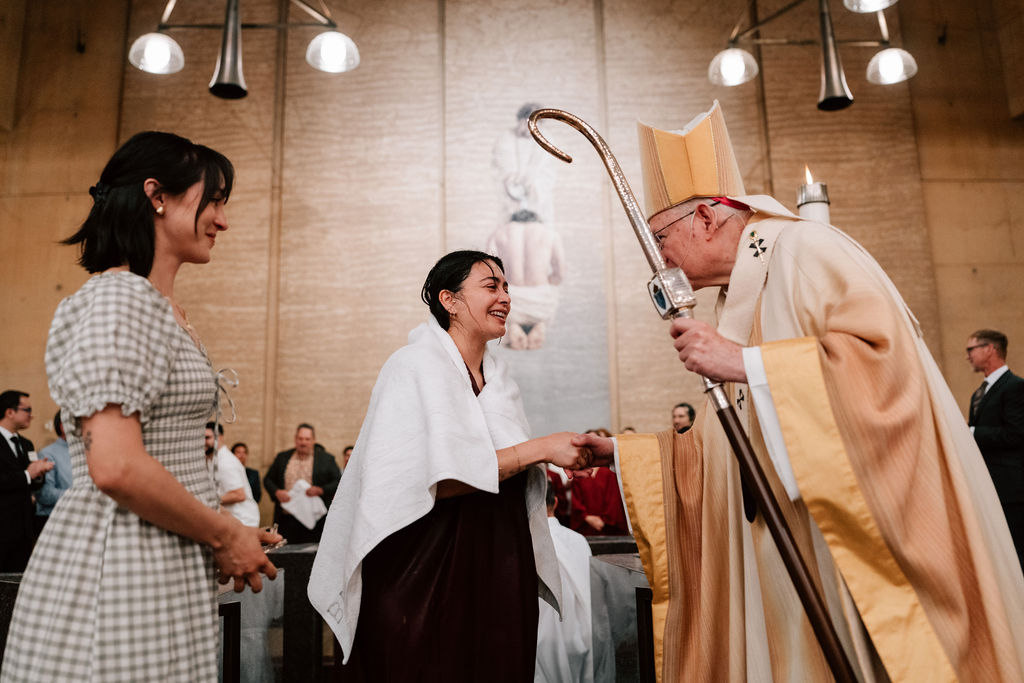
Some bishops and pastors also note a more intangible dynamic. In places like Boise, local officials have described a renewed “spiritual vitality,” attributing the increase less to specific programs than to a broader openness among individuals seeking deeper commitments. Others highlight the role of visible Catholic witness in schools and parishes, particularly among young people.
This pattern is not limited to North America. In Asia, the growth has been equally remarkable. Singapore recorded more than 1,250 adult baptisms at the Easter Vigil, while Hong Kong reported over 2,500 baptisms, including 1,600 adults. In both cases, Church leaders have pointed to active evangelization efforts and the influence of personal testimony within Catholic communities.
In Europe, France continues to experience what observers have described as a “baptism boom,” even as infant baptisms decline. The coexistence of falling cultural Catholicism and rising adult conversion suggests a reconfiguration rather than a simple contraction of religious life: fewer inherited believers, but potentially more intentional ones.
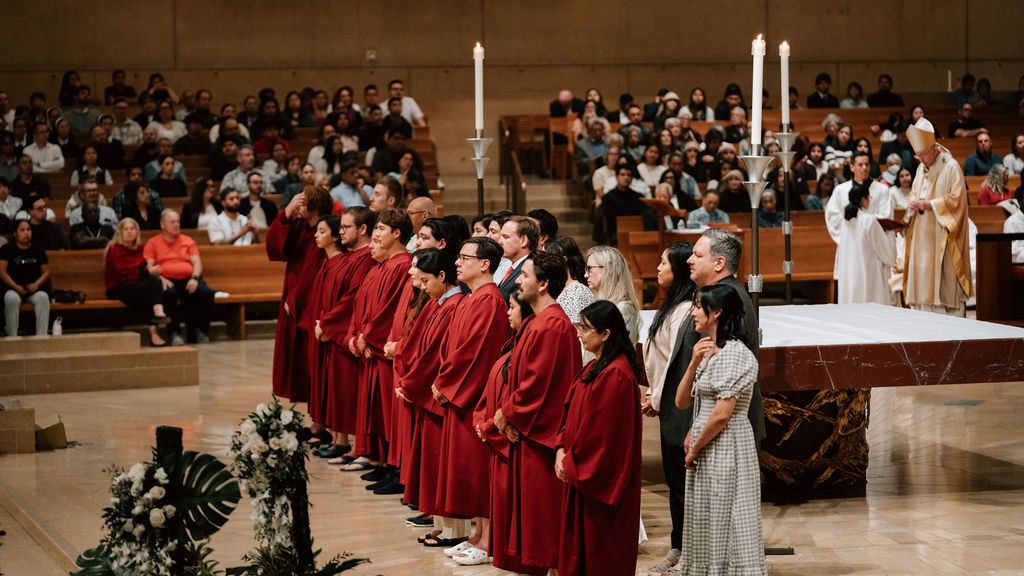
Still, the data resist easy conclusions. Among a sample of 16 U.S. dioceses with detailed records, all reported more new Catholics in 2026 than in 2024, with an average increase of 83 percent. Yet only two of those dioceses surpassed their figures from the year 2000. In other words, the current growth represents a recovery from recent lows rather than a return to historical highs.
There are also internal contrasts. While many dioceses are expanding, others have seen slight declines. Shreveport, for example, reported 257 new entrants this year, down from 329 in 2025—though still far above the 89 recorded in 2021. Such variations suggest that local conditions, leadership, and demographic factors continue to play a decisive role.
Globally, the picture is similarly mixed. Countries undergoing rapid secularization do not always experience a parallel rise in conversions. Germany, for instance, has not seen a comparable increase in adult entrants, underscoring that the current trend is not universal.
What emerges from the data is a Church in transition. The decline of inherited religious identity, especially in the West, has not eliminated the possibility of growth; rather, it has altered its mechanisms. Where once Catholic affiliation was often transmitted culturally, it is now more frequently the result of personal decision.
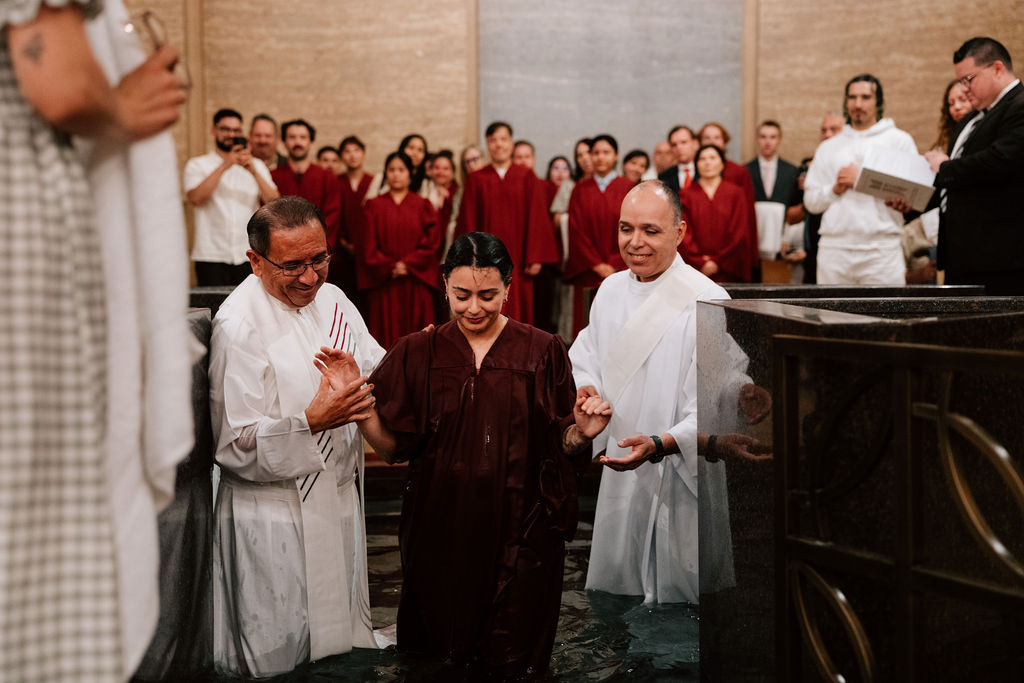
Whether this shift will lead to sustained growth remains uncertain. Much will depend on whether the current influx of converts can be integrated into stable communities and whether the broader decline in sacramental life can be addressed.
For now, the Easter Vigil of 2026 stands as a moment of contrast: in a period often defined by narratives of decline, thousands of individuals, across continents and cultures, have chosen to enter the Catholic Church. Whether this signals the beginning of a deeper transformation or a temporary surge will only become clear in the years ahead.
Thank you for reading our content. If you would like to receive ZENIT’s daily e-mail news, you can subscribe for free through this link.