

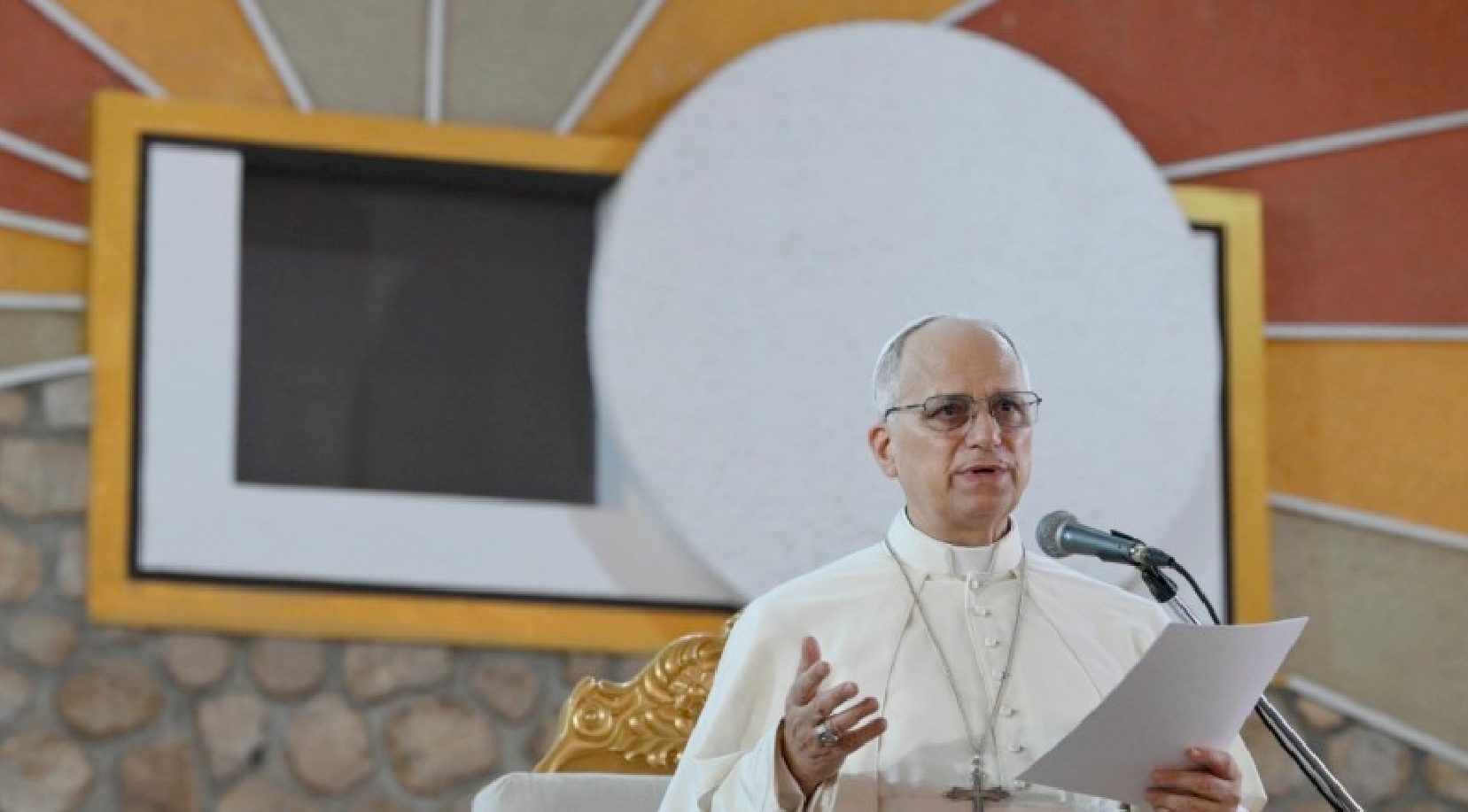
(ZENIT News / Rome, 04.19. 2026).- While Pope Leo XIV continues his Apostolic Journey through Africa, the tension with the US Administration has taken on a dimension that transcends rhetoric and is beginning to have concrete consequences. What began as a series of statements regarding the war in Iran has evolved into a broader episode, where diplomacy, moral doctrine, and political decisions with social impact are intertwined.
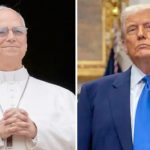
On April 16, in Cameroon, the Pope delivered one of the most significant speeches of his Apostolic Journey. Without mentioning names, he denounced the world as being «ravaged by a handful of tyrants» who spend billions on war, while also warning against the instrumental use of religion to justify violence between nations. His words, prepared weeks in advance, as he later clarified, were interpreted as a direct confrontation with Washington, in a context marked by the recent verbal attacks of President Donald Trump.
The Pope himself has tried to downplay that interpretation. During the flight from Cameroon to Angola, the third leg of a journey that would finally take him to Equatorial Guinea, he explained to the approximately 70 journalists accompanying him that many media interpretations responded to a dynamic of «comments on comments,» rather than his actual intention: «A certain narrative, not entirely accurate, has been circulated due to the political situation created when, on the first day of the trip, the President of the United States made some statements about me […] Much of what has been written since then is nothing more than a comment on another comment, in an attempt to interpret what was said.» He insisted that his speech on peace was not a situational response, but part of a consistent teaching, predating any political controversy: «[The speeches] had been prepared two weeks earlier, long before the President commented on me and the message of peace I am promoting. However, it was interpreted as if I were trying to debate the President again, which doesn’t concern me at all.»
Ver esta publicación en Instagram
That nuance has not prevented the conflict from having tangible effects. In the United States, the Federal Government has cancelled an $11 million contract with Catholic Charities of Miami, an organization that for years managed programs to house unaccompanied migrant children. The funding, channelled through the Office of Refugee Resettlement, part of the Department of Health and Human Services, supported a family-based foster care system for children arriving in the country alone. The decision, announced at the end of March 2026, ends a long-standing collaboration between the U.S. Government and Catholic organizations, which dated back to the care of Cuban exiles in Florida.
Although not formally presented as retaliation, the measure comes amid growing friction between the White House and sectors of the American Catholic Church, which in recent days have closed ranks in support of the Pope. The controversy, therefore, is no longer limited to rhetoric, but affects public policies and concrete social programs.
Meanwhile, the Pope’s African trip has continued with an agenda marked by meetings and initiatives that reflect another dimension of his pontificate.
Cameroon, described by the Pope himself as a country that embodies the diversity of the Continent — with some 250 local languages and a complex cultural and social reality — has been the setting for meetings with Muslim religious leaders, in line with the tradition of interreligious dialogue promoted in recent years by the Holy See. His visit to the Catholic University of Central Africa was also noteworthy, where he blessed a monument symbolizing the unity of the Continent around the figure of Saint Augustine.
In his speeches, Leo XIV addressed structural issues such as inequality in the distribution of wealth, noting that Africa is both a land of opportunity and of profound difficulties. But he insisted that his presence on the Continent is primarily a pastoral mission: to accompany Catholic communities, strengthen faith, and promote peace in contexts marked by internal tensions and global challenges.
From Washington, the tone has softened somewhat in recent hours. Vice President J.D. Vance, after suggesting days earlier that the Vatican
should limit its intervention to religious matters, publicly acknowledged the complexity of the moment and praised the Pope for «preaching the Gospel as he should,» admitting that disagreements between the Church’s moral authority and political action are, in a way, inevitable. Vance wrote:
«I am grateful to Pope Leo for saying this. Although the media narrative constantly stokes the conflict — and yes, real disagreements have occurred and will continue to occur — the reality is often much more complicated. Pope Leo preaches the Gospel as he should,» and that inevitably means he offers his opinions on the moral issues of the day. The President — and the entire Administration — work to apply those moral principles in a chaotic world. He will be in our prayers, and I hope we will be in his.
I am grateful to Pope Leo for saying this. While the media narrative constantly gins up conflict–and yes, real disagreements have happened and will happen–the reality is often much more complicated.
Pope Leo preaches the gospel, as he should, and that will inevitably mean he… https://t.co/SxWCKyhDSj
— JD Vance (@JDVance) April 18, 2026
The sequence of events paints an unusual picture in the relationship between the Holy See and the United States. The figure of a Pope born in that country adds a unique element to a crisis in which differing visions of the role of religion in the public sphere and of the response to international conflicts intersect. From Africa, the Pontiff has not only drawn attention to the fuelling of polarizations, but also reminded everyone why he is there: to encourage Catholics, not to debate with Trump. In this way, he not only lowers the tension, but also positions himself on a different plane: that of a constant appeal for peace, in a world that, in his own words, remains trapped in the logic of confrontation.

Publicaciones relacionadas:
 Trump and Vance prolong the conflict with Leon XIV as Russia and Brazil join the controversy
 Pope Leo XIV Receives Nobel Prize Laureate Maria Corina Machado: This Is What the Venezuelan Leader Asked Him
 A diplomatic storm denied: Vatican and Washington push back against claims of Pentagon pressure on the Holy See
 Trump Attacks the Pope for the Second Day, and Meloni Defends Him. The World Reacts While the Catholic Vice-President of the USA Supports Him
