

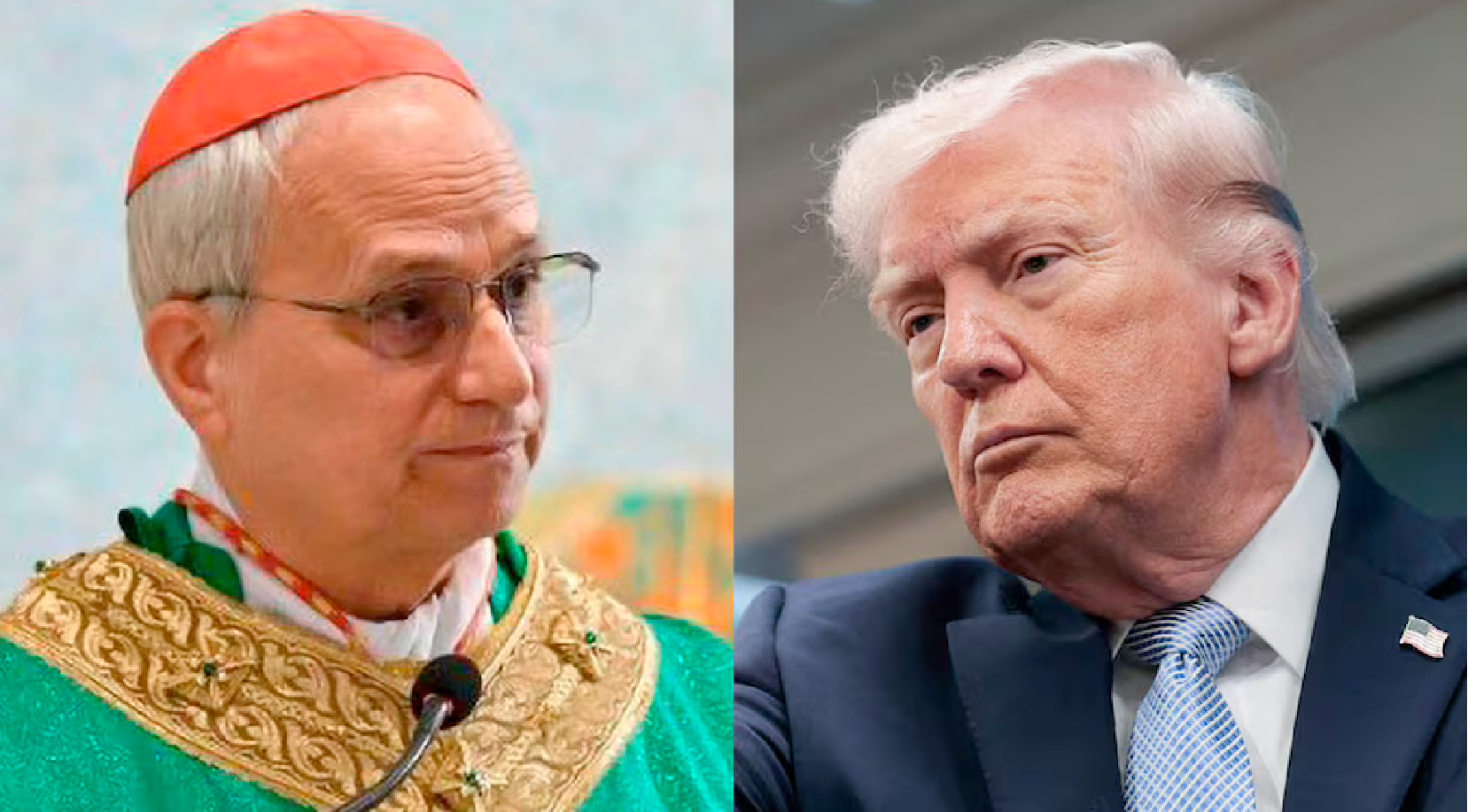
(ZENIT News / Rome, 04.16.2026).- A confrontation that began with a papal appeal for peace has rapidly evolved into a multilayered geopolitical and ecclesial crisis, exposing deep fractures not only between the Vatican and Washington, but also within the broader moral architecture that has long underpinned Western leadership.
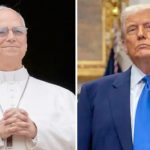
At the center stands Pope Leo XIV, whose insistence on condemning war in unequivocal moral terms has triggered an unusually direct and sustained backlash from the administration of President Donald Trump. What might once have remained a diplomatic disagreement has instead escalated into a public contest over authority, theology, and the limits of religious speech in political affairs.
The immediate spark was the Pope’s repeated denunciation of military action against Iran, framed not as a geopolitical miscalculation but as a moral failure. In response, Trump intensified his rhetoric, accusing the pontiff of ignorance regarding Iran’s internal repression and claiming that at least 42,000 unarmed protesters had been killed in recent months. He further argued that preventing Iran from acquiring nuclear weapons justified a more forceful posture, dismissing Vatican criticism as naïve and ill-informed.
In a third statement to the press, Trump falsely accused the Pope of agreeing that Iran should have nuclear weapons. The Pope has never said such a thing.
Ver esta publicación en Instagram
In a post on Truth Social on Wednesday, April 15, Trump once again criticized the Pope.
The tone of the exchange quickly deteriorated. Trump described the Pope as weak on crime and incompetent in foreign policy, while also circulating — and later attempting to reinterpret — a controversial image of himself depicted with Christ-like attributes. The episode signaled not merely a political disagreement, but a breakdown in the customary deference that has historically characterized relations between the Holy See and the White House.
Leo XIV, for his part, has refused to personalize the conflict. His responses have remained anchored in a consistent theological framework: war, he has argued, cannot be reconciled with the Gospel when it perpetuates cycles of violence and injustice. Speaking to journalists, he made clear that fear of political power would not temper his message, emphasizing instead the Church’s duty to promote peace, dialogue, and multilateral solutions.
Yet the dispute has not remained confined to two figures. It has drawn in a wide constellation of political, religious, and diplomatic actors, each reframing the conflict according to their own priorities.
Vice President JD Vance, himself a Catholic convert, has emerged as one of the administration’s most articulate critics of the Pope’s position. His intervention has been notable not only for its political content but for its theological ambition. Invoking the legacy of the Second World War, Vance challenged the Pope’s assertion that God does not stand with those who wage war, asking whether divine justice was absent when Allied forces liberated Europe from Nazism.
Ver esta publicación en Instagram
Behind this argument lies a deeper dispute over the interpretation of the just war tradition, a doctrine rooted in the thought of Saint Augustine and later systematized by Thomas Aquinas. This tradition does not celebrate war but seeks to delimit its moral legitimacy under strict conditions: just cause, right intention, proportionality, and the exhaustion of peaceful alternatives. By questioning the Pope’s formulation, Vance effectively accused him of oversimplifying a complex moral theology that has guided Catholic reflection on conflict for over a millennium.
The Vatican, however, has not abandoned that tradition. Leo XIV himself, deeply formed within the Augustinian intellectual heritage, has repeatedly emphasized that the ultimate aim of any legitimate use of force must be the restoration of peace, and that the criteria for such legitimacy are exceedingly difficult to meet in modern warfare. His recent pilgrimage to Algeria, where he honored Saint Augustine in the ancient city of Hippo, underscored this continuity even as the public debate suggested rupture.
Within the United States, the controversy has exposed political vulnerabilities. Attempts by the administration to rally support for military action have met with uneven reception, even among conservative audiences. A university event in Georgia featuring Vance revealed subdued enthusiasm and pointed questioning, particularly from younger attendees wary of renewed conflict in the Middle East. The sparse turnout and critical interventions suggested that the fusion of religious rhetoric and military policy may not resonate as strongly as in previous eras.
The internal Catholic response has been notably unified in defense of the Pope. Several American bishops have rebuked the tone of the administration’s attacks, reaffirming the legitimacy of Leo XIV’s peace-centered teaching. Their statements have framed the issue not as a partisan dispute but as a matter of fidelity to the Gospel, emphasizing the dignity of human life and the moral imperative to seek nonviolent solutions.
At the same time, some political figures have attempted to redraw the boundaries of ecclesial engagement, such as Tom Homan, the drug czar and a Catholic. Calls for the Church to “stay out of politics” have resurfaced, often coupled with arguments that religious leaders should confine themselves to strictly spiritual concerns. Such claims, however, overlook the longstanding Catholic understanding that moral teaching necessarily intersects with public life, particularly in matters of war and peace.
Internationally, the episode has taken on additional dimensions. Russian diplomatic voices have expressed respect for the Pope’s pacifist stance while criticizing the emotional tenor of the American response, framing the Vatican as a rare moral constant in a volatile geopolitical landscape. In a more overtly strategic move, Moscow has sought to position itself as a defender of religious diplomacy, contrasting its posture with what it portrays as Western aggression.
Other global leaders have also entered the debate from different angles. Brazil’s president has publicly defended the Pope against attacks by powerful figures, portraying him as part of a historical lineage of voices marginalized for advocating peace. Meanwhile, the leadership of the Anglican Communion has aligned itself with the Vatican’s call for an immediate de-escalation, emphasizing the human cost of war and the shared responsibility of political authorities to pursue just and peaceful resolutions.
What emerges from this complex tableau is not merely a dispute over a specific conflict, but a broader reconfiguration of moral authority in international affairs. The figure of the Pope — traditionally seen as a transnational voice capable of speaking above political divisions — is now being drawn more directly into the arena of ideological contestation.
The paradox is striking. Leo XIV, the first American-born pontiff, appears increasingly willing to distance himself from the strategic assumptions of his country of origin, asserting instead a vision of the Church as an independent moral actor. In doing so, he challenges not only specific policies but the underlying logic that often governs them.
Whether this moment marks a temporary escalation or a lasting shift remains uncertain. What is clear is that the language of peace, when articulated with theological clarity and institutional authority, retains the capacity to unsettle political power — and to provoke reactions that reveal just how contested that authority has become.
Thank you for reading our content. If you would like to receive ZENIT’s daily e-mail news, you can subscribe for free through this link.

Publicaciones relacionadas:
 The Middle East, the spread of war, and the position of the Pope and the Catholic Church
 A Church Against the Logic of War: Vatican Voices, Middle East Realities, and the Risk of a Vanishing Christianity
 Trump Opens Another War Front: The Pope and the Vatican, Leo XIV Responds: «I Am Not Afraid of the Trump Administration»
 Trump Attacks the Pope for the Second Day, and Meloni Defends Him. The World Reacts While the Catholic Vice-President of the USA Supports Him
