

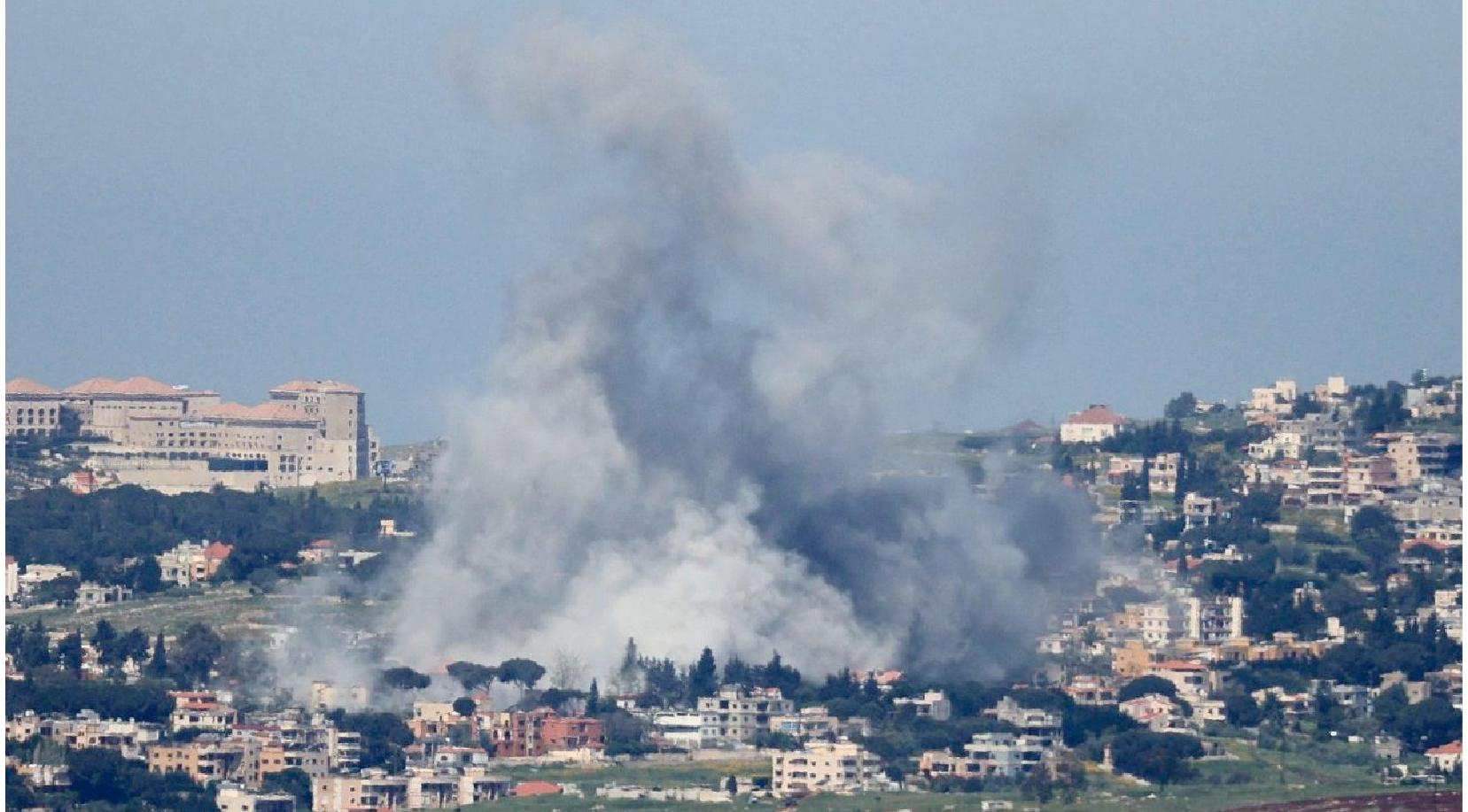
(ZENIT News / Beirut, 05.04.2026).- The uneasy calm that followed the mid-April ceasefire in southern Lebanon is rapidly eroding, exposing once again the vulnerability of civilian populations and the precarious status of religious sites caught in the crossfire. Despite diplomatic efforts and a formally declared truce, violence has persisted across the region, with mounting casualties, widespread destruction, and growing humanitarian concern—particularly for isolated Christian communities.
On May 2, renewed Israeli airstrikes struck multiple regions in southern Lebanon, leaving at least seven people dead in a single day, according to local reports. These attacks form part of a broader escalation that has, since March 2, resulted in more than 2,650 deaths and over 8,100 injuries, as confirmed by Lebanese health authorities. Other estimates place the toll slightly lower—2,387 killed and 7,602 wounded—but all figures point to a sustained and devastating conflict.
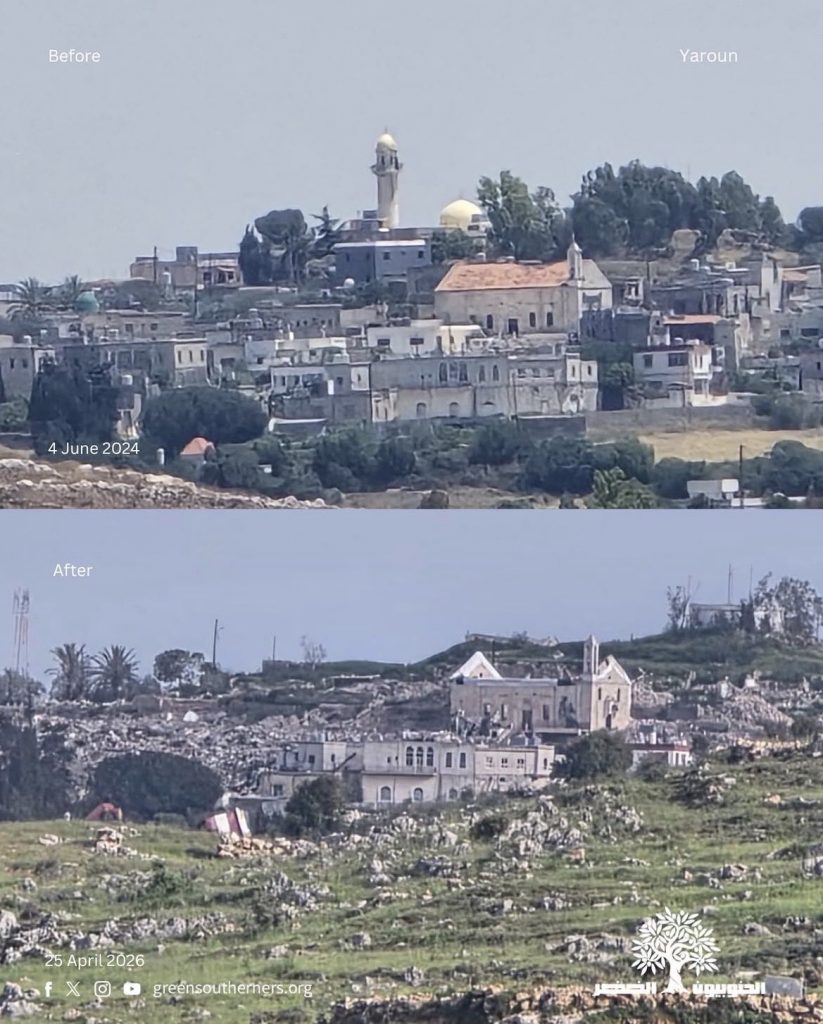
Amid this violence, a particularly sensitive episode has drawn international attention: the damage inflicted on a Catholic convent complex in the border village of Yaroun. The site, previously home to a small religious community and a school, had already been abandoned due to ongoing hostilities. According to Church representatives, Israeli forces used bulldozers to demolish parts of the compound. The Israeli military, however, disputes this characterization, stating that the structure was unintentionally damaged during operations targeting Hezbollah infrastructure and lacked visible religious markings. It further claimed that the site had allegedly been used in the past to launch rockets—an assertion firmly rejected by Catholic authorities in Lebanon.
🇱🇧⛪️ Nouveau tollé après la démolition par Israël d’un couvent à Yaroun, au Liban-Sud
Lire : https://t.co/TGEzOV74Ve pic.twitter.com/z4Ny7vjGJb
— L’Orient-Le Jour (@LOrientLeJour) May 2, 2026
Father Abdo Abou Kassm, head of the Catholic Media Center, responded unequivocally: places of worship, he said, are dedicated to peace, education, and spiritual life—not military activity. His remarks echo a broader concern within the Church about the erosion of respect for religious spaces in modern conflict zones, where distinctions between civilian and military targets are increasingly blurred.
The incident in Yaroun follows another troubling image that circulated widely: an Israeli soldier striking a fallen crucifix in the village of Debel. The footage provoked condemnation across religious and diplomatic circles, reinforcing perceptions that Christian symbols and communities are not being adequately safeguarded.
Beyond isolated events, the strategic landscape has shifted significantly. Israel has established what it describes as an “advanced defense zone” extending up to 10 kilometers into Lebanese territory, delineated by a so-called “yellow line.” This buffer area encompasses approximately 55 towns and villages, many of which have been systematically evacuated, bombed, and in some cases leveled. Residents are prohibited from returning, and entire areas have been transformed into what observers describe as “ghost villages.”
Among the most affected are historically Christian regions such as Rmeish, Debel, and Ain Ebel—three of the few villages still partially inhabited. There, thousands of families remain effectively trapped. Roads are blocked, supply lines disrupted, and access to essential goods severely restricted. Local clergy report acute shortages of medicine, infant formula, and fuel. One Maronite priest, Father Tony Elias, described the situation starkly: “We are surrounded. There is no way out. We rely on rain water and dwindling food supplies. The question is how long we can endure.”
The humanitarian dimension is compounded by the scale of displacement. More than one million people have been forced from their homes since the conflict reignited, with only about 120,000 accommodated in official shelters. Many who attempted to return south after the ceasefire found their villages either destroyed or inaccessible, prompting a second wave of internal displacement.
The ceasefire itself, initially brokered with international involvement and announced in Washington, has proven fragile. Violations have been reported on both sides. Israeli officials maintain that operations target Hezbollah fighters and infrastructure, citing drone strikes and air raids against alleged militants. Hezbollah, for its part, continues to launch attacks, including drone strikes against Israeli positions. The a result is a war environment that persists despite formal agreements.
International concern is growing. The United Nations Security Council has condemned attacks affecting peacekeeping forces, while countries such as Russia have begun delivering humanitarian aid. Meanwhile, geopolitical tensions involving the United States, Iran, and regional actors continue to influence the conflict’s trajectory, raising fears of a broader escalation.
In this context, the response of the Holy See has taken on renewed significance. Under the direction of Pope Leo XIV, the Vatican has intensified its humanitarian outreach. The Apostolic Almoner, Luis Marín de San Martín, confirmed that 15,000 essential medicines have been dispatched to Lebanon. These include antibiotics, anti-inflammatory drugs, and treatments for chronic illnesses such as diabetes and hypertension—precisely the סוג of supplies now critically lacking in besieged regions.
The Vatican’s aid is being distributed through ecclesial networks on the ground. As Marín de San Martín put it, “charity is the Gospel lived.” His appeal for peace was equally direct, urging a moral conversion that places human dignity above strategic calculations.
This dual reality—escalating violence and persistent charity—captures the paradox of Lebanon today. While military objectives continue to dominate the logic of the conflict, the human cost is borne disproportionately by civilians, including vulnerable Christian minorities whose presence in the region dates back centuries.
The destruction of infrastructure, the restriction of movement, and the precarious status of religious sites raise pressing questions about the future of these communities. For many observers, the crisis is not only geopolitical but also civilizational: a test of whether pluralism and religious coexistence can survive in a area increasingly shaped by armed force.
For now, the population of southern Lebanon endure in uncertainty, sustained by limited aid and a fragile hope that diplomacy might yet prevail over destruction.
Thank you for reading our content. If you would like to receive ZENIT’s daily e-mail news, you can subscribe for free through this link.

Publicaciones relacionadas:
 Israeli government of Jerusalem municipality freezes bank accounts of Greek Orthodox Church
 Lebanon requests diplomatic mediation from the Vatican to prevent Israel from attacking or displacing Catholic communities in the south of the country
 The last historic Christian village in the Holy Land, threatened with annexation by the Jewish state of Israel
 Holy Land: Catholic Church denounces Jewish settlers’ encroachment on church-owned properties. Israeli government seeks to mend relations
