

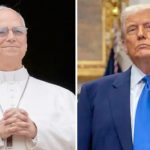
(ZENIT News / Rome, 05.05.2026).- The fragile equilibrium between Washington and the Vatican has been shaken once again, as U.S. President Donald Trump renewed his public attacks against Pope Leo XIV, advancing claims that the Pontiff has now firmly and explicitly denied. At the center of the dispute lies a serious accusation: that the Pope would be open to Iran acquiring nuclear weapons—an assertion contradicted not only by Leo XIV’s own words, but by the consistent teaching of the Catholic Church over decades.
The controversy erupted anew during a televised phone interview in which Trump, speaking to conservative host Hugh Hewitt, suggested that the Pope’s priorities were misplaced and even dangerous. When questioned about the case of imprisoned Hong Kong Catholic activist Jimmy Lai, the president pivoted sharply, alleging that the Pope preferred to focus on whether Iran should possess nuclear arms. He went further, claiming that such a position would endanger Catholics worldwide.
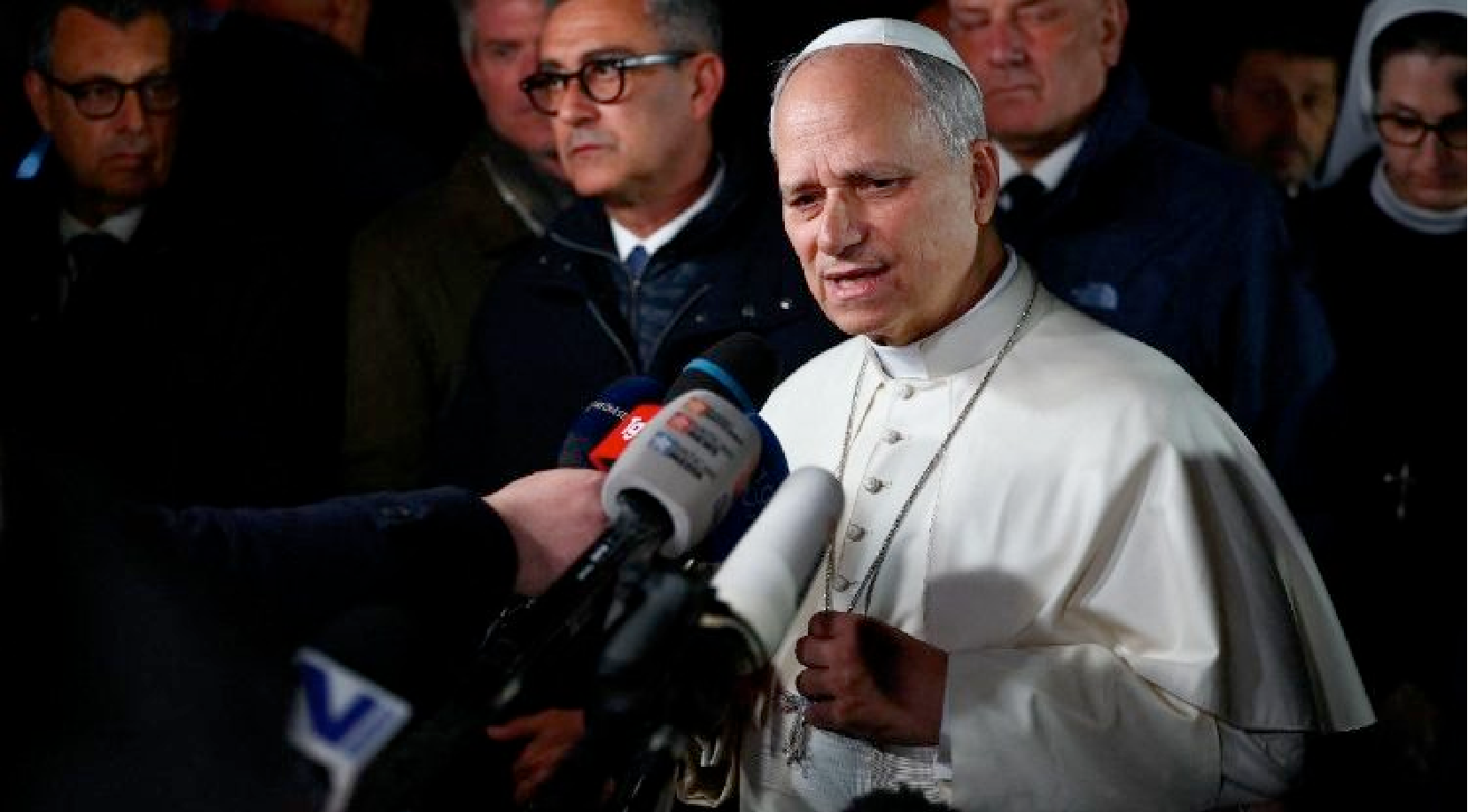
No evidence has been presented to support this claim. On the contrary, the Holy See’s stance on nuclear weapons has been clear and consistent: categorical opposition, grounded in both moral theology and international advocacy for disarmament. This position was reiterated directly by Pope Leo XIV himself on May 5, when he addressed journalists outside his residence in Castel Gandolfo.
“The Church has spoken for years against all nuclear weapons. There is no doubt about that,” the Pope said, dismissing the accusation without escalating the tone. His response was measured but unambiguous, reflecting a broader pattern in his approach to criticism: to correct what he sees as falsehood while avoiding personal confrontation. “If someone wishes to criticize me for proclaiming the Gospel, they should do so with the truth,” he added.
The exchange comes at a delicate diplomatic moment. U.S. Secretary of State Marco Rubio is scheduled to meet the Pope at the Vatican on May 7, in what is widely understood as an effort to stabilize relations that have deteriorated steadily since the beginning of the year. Rubio, a practicing Catholic, has been tasked with reopening channels of dialogue not only with the Holy See but also with European partners unsettled by recent U.S. positions.
The Vatican’s chief diplomat, Cardinal Pietro Parolin, responded to Trump’s remarks, the morning of Tuesday, May 5, by reaffirming the continuity of the Pope’s mission rather than engaging in direct rebuttal. Speaking at a public event, he emphasized that the Pope’s role is to preach the Gospel and promote peace in all circumstances, regardless of whether that message is welcomed. The implication was clear: the Church’s position is not shaped by political convenience, but by a moral framework that transcends shifting alliances.
This latest episode is part of a broader and increasingly personal clash between Trump and the first American-born Pope. Since January, tensions have intensified over several issues, including migration policy, military interventions abroad, and the use of religious language in political discourse. The relationship deteriorated sharply on April 12, when Trump launched an unprecedented public attack on the Pontiff.
The confrontation did not end there. Trump also circulated controversial imagery portraying himself in religious roles, almost messianic, blurring the line between political messaging and symbolic appropriation. Although such content was later removed, it contributed to a climate of escalation that has made diplomatic engagement more complex.
Pope Leo XIV responded at the time during a press conference while traveling, stating that he did not fear the U.S. administration and would continue to speak openly against war. While he declined to engage in a direct personal dispute, he made clear that the Church has a moral obligation to oppose armed conflict and to advocate for peace, even when doing so places it at odds with powerful governments.
The current dispute also intersects with wider geopolitical tensions. Trump has recently criticized key allies, including Italy’s leadership, over their reluctance to support military action against Iran. Such positions have introduced additional strain into transatlantic relations, complicating the environment in which Rubio’s upcoming visit will take place.
Vice President J.D. Vance has added another dimension to the debate, suggesting that religious leaders should exercise caution when addressing political matters. His comments, perceived in some circles as a critique of the Pope’s public interventions, highlight an underlying disagreement about the role of moral authority in global affairs.
For the Catholic Church, the stakes are not merely diplomatic. They touch on the integrity of its witness in a world where the language of power often overshadows the language of conscience.
Thank you for reading our content. If you would like to receive ZENIT’s daily e-mail news, you can subscribe for free through this link.

Publicaciones relacionadas:
 Pope Leo XIV removes controversial Italian bishop as head of John Paul II Institute for the family
 Pope Leo’s visit to Argentina unofficially confirmed after audience with President Milei
 After call from Israeli prime minister, Pope speaks by phone with Palestinian president
 Trump Attacks the Pope for the Second Day, and Meloni Defends Him. The World Reacts While the Catholic Vice-President of the USA Supports Him
