

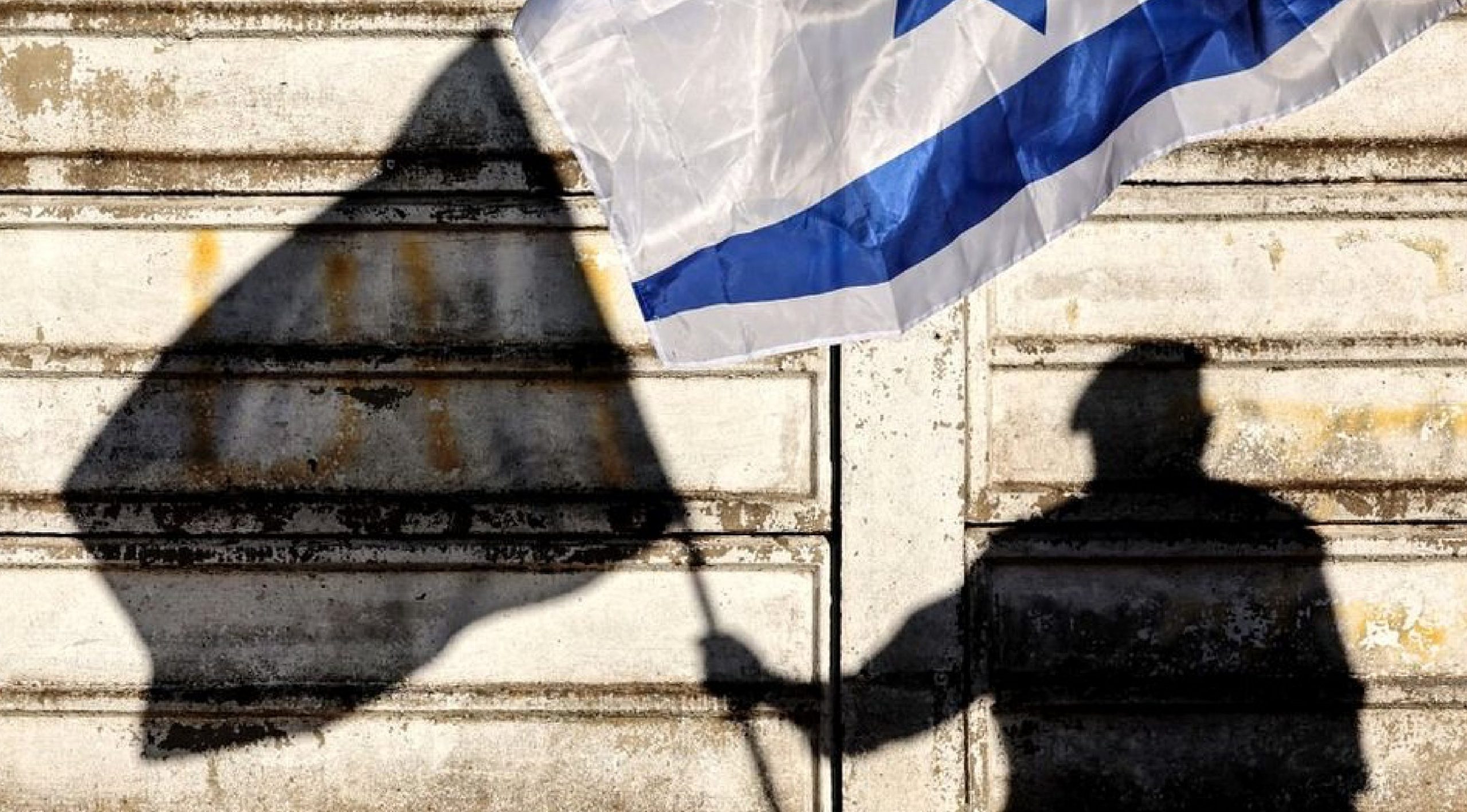
(ZENIT News / Jerusalén, 06.29.2026).- For centuries, the Holy Land has been home to the faith traditions that emerged from Jerusalem. Today, however, many Christian leaders fear that the region’s ancient Christian presence is being squeezed by a combination of rising extremism, political conflict, demographic pressures and an increasingly polarized atmosphere.
A growing number of incidents targeting Christians in Israel has become one of the most visible signs of that concern. According to Israel’s Religious Freedom Data Center, 88 cases of anti-Christian harassment had already been documented during the first half of 2026, including 63 recorded between April and June alone. The organization registered 180 incidents throughout 2025, compared with 107 the previous year, suggesting that the trend continues to worsen.
Most reported episodes involve vandalism of cemeteries, crosses and statues, as well as verbal abuse, intimidation and spitting directed at priests, nuns and other Christians, particularly in Jerusalem’s Old City. The issue drew international attention earlier this year after a Jewish man assaulted a Catholic nun in Jerusalem.
Father Firas Abedrabbo of the Latin Patriarchate described a similar experience after three young religious Jews allegedly spat at him, insulted him and mocked him as he left the Old City. According to the priest, filing a police complaint proved almost as frustrating as the incident itself, with repeated attempts to discourage the complaint before it was eventually accepted.
Several religious communities have consequently adopted new precautions. Some female religious orders no longer allow sisters to walk alone in certain parts of Jerusalem while wearing their habits.
Abbot Nikodemus Schnabel of the Dormition Abbey observes that the character of these incidents has also changed. Acts that once occurred discreetly at night are now taking place openly in broad daylight. At the same time, he cautions against ignoring the historical context, acknowledging Christianity’s long record of antisemitism while insisting that past injustices cannot justify hostility toward Christians today.
Israeli researcher Yisca Harani, founder of the Religious Freedom Data Center, attributes the increase to several overlapping factors, including the social trauma following the October 2023 Hamas attacks, widespread ignorance about contemporary Christianity, and the influence of extremist nationalist groups. Nevertheless, she stresses that those responsible represent only a small minority and notes that many Israeli Jews—including Orthodox rabbis—actively support and defend Christian communities.
Other Church leaders urge balance in assessing the situation. Father Piotr Zelazko, who heads the Vicariate of Saint James for Hebrew-speaking Catholics, emphasizes that approximately 185,000 Christians live openly in Israel and enjoy legal protections and religious freedom unavailable in many neighboring countries where Christians face severe persecution. While every act of anti-Christian hatred deserves condemnation, he argues that such incidents should be understood within the broader challenge of combating all forms of religious and ethnic hatred.
Beyond Israel itself, concern is mounting across the occupied Palestinian territories, where churches and international Christian organizations warn that ongoing settlement expansion threatens both Palestinian communities and Christianity’s historic roots.
Peace Now, an Israeli organization opposing settlement expansion, recently criticized government approval for new construction connected to the Shavei Hevron Yeshiva in Hebron’s historic center. The group argues that the project reflects a broader process that increasingly separates planning authority for Israeli settlers from that governing Palestinian residents.
The World Council of Churches has also expressed alarm over plans for another settlement near Beit Sahour, close to Bethlehem. General Secretary Rev. Prof. Jerry Pillay warned that the project could further isolate one of the Holy Land’s oldest Christian communities while accelerating land confiscation and undermining the long-term survival of indigenous Palestinian Christians.
Pillay also condemned the seizure of land belonging to the Greek Orthodox Patriarchate near the historic Monastery of Saint Onuphrius in East Jerusalem. The Patriarchate maintains that the confiscation concerns property legally registered in its name and possessing significant historical, archaeological and religious importance.
Violence has affected other religious communities as well. Recent attacks by Israeli settlers against two mosques in the West Bank prompted strong condemnation from several Muslim-majority nations, including Saudi Arabia, the United Arab Emirates, Qatar, Jordan, Egypt, Türkiye, Indonesia and Pakistan. Reports of forced displacement among Palestinian Bedouin and shepherd communities have likewise continued to emerge, with Palestinian human rights organizations documenting dozens of communities uprooted since late 2023.
These developments unfold against a backdrop of shifting international opinion. A new Pew Research Center survey conducted across 36 countries between February and May 2026 found that unfavorable views of Israel have increased in most nations compared with 2025. Positive opinions now outnumber negative ones in only four countries—India, Kenya, Nigeria and Ghana—while negative perceptions dominate much of Europe, Asia and Latin America.
The survey also found widespread skepticism toward Israeli Prime Minister Benjamin Netanyahu’s international leadership, although public opinion remains deeply divided along ideological lines in several countries, particularly the United States.
Interestingly, Pew also explored how religious leaders address current conflicts from the pulpit. Among American Catholics who had recently heard sermons addressing the Middle East, criticism of the U.S. war against Iran was considerably more common than support for it, while discussion of Israel itself tended to be more supportive or neutral than condemnatory. Evangelical Protestant pastors, by contrast, overwhelmingly expressed support for Israel.
Meanwhile, the humanitarian dimension of the conflict continues to draw intense international scrutiny. A recent report issued by the United Nations Independent International Commission of Inquiry alleges that Israeli military operations have caused unprecedented levels of death, injury and trauma among Palestinian children in Gaza since October 2023. The Commission cites more than 20,179 child deaths and 44,143 injuries during the first two years of the conflict and concludes that there are reasonable grounds to believe serious violations of international law have occurred.
Israel has firmly rejected the report, describing it as defamatory and accusing the Commission of ignoring Hamas’ deliberate attacks on Israeli civilians and its use of Palestinian civilians, including children, as human shields.
For the Christian Churches of the Holy Land, however, the immediate concern extends beyond politics. Their appeal is that the birthplace of Christianity should not become merely a destination for pilgrims but remain a living homeland where Christian communities continue to worship, educate their children and contribute to the rich religious diversity that has characterized Jerusalem and the surrounding region for centuries.
Whether that ancient presence can be preserved may depend not only on military or diplomatic developments, but also on the willingness of political leaders and ordinary citizens alike to reject religious hatred, defend places of worship, and protect the dignity and rights of every community that calls the Holy Land home.
Thank you for reading our content. If you would like to receive ZENIT’s daily e-mail news, you can subscribe for free through this link.

Publicaciones relacionadas:
 Maronite Cardinal of Lebanon speaks out on Israeli aggression against Lebanese civilians
 Israel to Draft 7,000 Ultra-Orthodox Men Amid Ongoing Military Pressure in Gaza
 Israel’s Ban on UNRWA Sparks International Outcry, Raises Alarm for Gaza’s Humanitarian Crisis
 A besieged Easter: Lebanon’s Christians between bombardment, blocked aid, and a fragile hope
