(ZENIT News – Tierra Santa Net / Jerusalem, 07.06.2026).- On Sunday, June 28, the Israeli government officially recognized the Armenian Genocide committed by the Ottoman Empire during World War I: approximately 1.5 million people (estimates range from 600,000 to 1.5 million) were killed between 1915 and 1923, primarily between 1915 and 1916, though massacres continued into the 1920s. The decision, approved unanimously at the proposal of Foreign Minister Gideon Sa’ar, must now be ratified by the Knesset, the Parliament. This marks a significant and historic turning point: previous Israeli governments had always avoided formal recognition to preserve relations with Turkey, the successor to the Ottoman Empire and a former close strategic partner in the region.
Sa’ar described the decision as a «historic moral» duty and denounced the «institutionalized campaign of denial and minimization» led primarily by the Turkish government. He went on to clarify that this is not an act of retaliation for Ankara’s hostility, adding that «the spreading of lies about Israel by Turkey does not grant it immunity from historical truth.» In addition to Israel, the Armenian Genocide is recognized by approximately 35 countries, including Italy (officially since 2019), France, Germany, and the United States. Turkey continues to firmly reject the term, arguing that the victims, both Armenian and Turkish, died as a consequence of the War.
This move comes at a time of marked deterioration in relations between the two countries, a decline that worsened following the October 7, 2023, Hamas attack and the subsequent Israeli war in Gaza, which claimed the lives of more than 73,000 Palestinians. Ankara reacted harshly to the recognition, labeling it a «political decision» intended to cover up crimes committed in Gaza, where Israel is facing genocide charges before the International Court of Justice, an accusation the Israeli government categorically denies. The Turkish Foreign Ministry vowed to continue countering Israel’s «expansionist and destabilizing policies» in the region.
Turkish President Recep Tayyip Erdoğan has become one of Israel’s fiercest critics, comparing its leaders to Nazi officials. Netanyahu responded by calling him an «antisemitic dictator committing genocide against the Kurds.» Turkey has suspended a large part of its trade with Israel and has become a major diplomatic ally of Hamas.
The Armenian Reaction
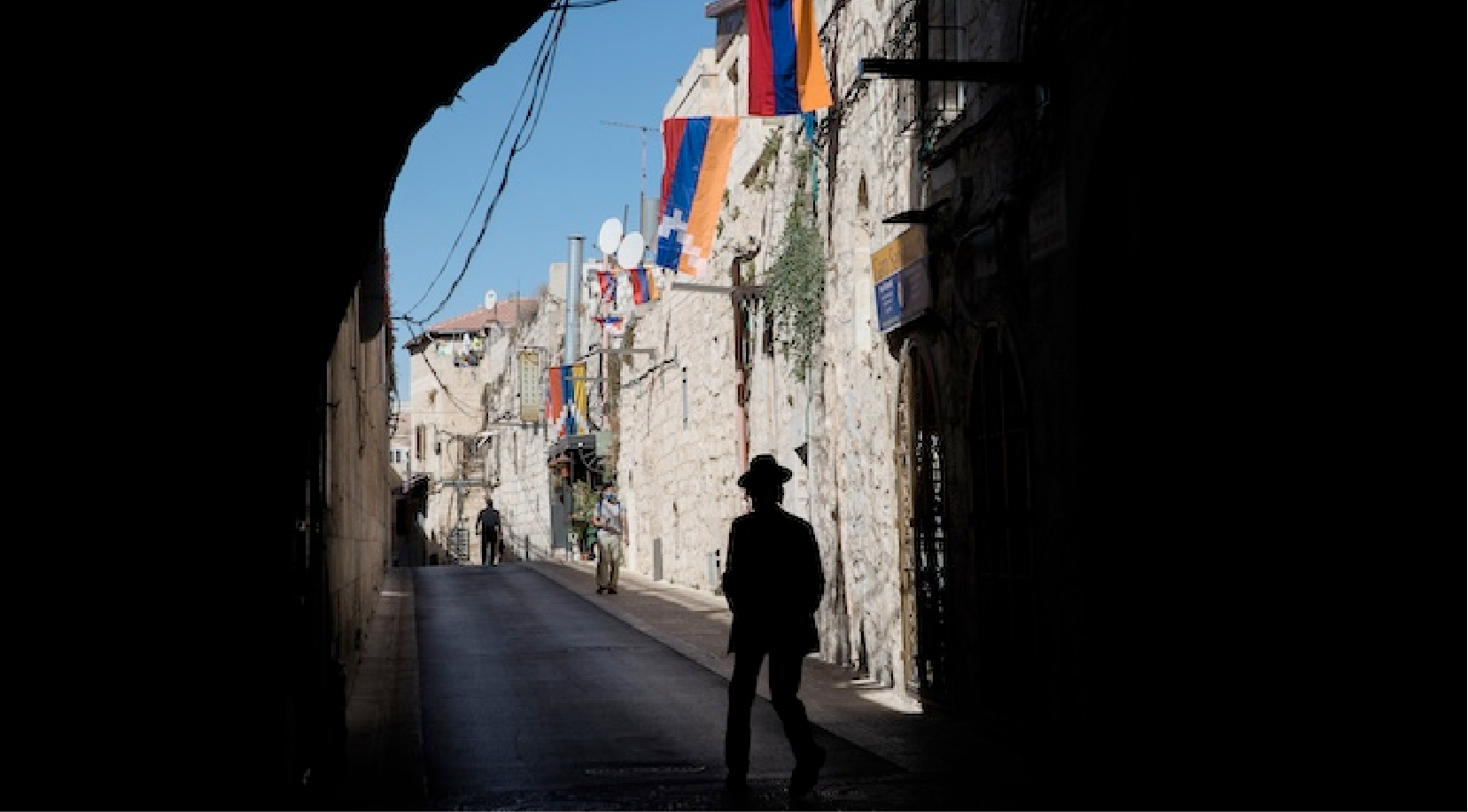
The matter is also linked to regional balances of power: Azerbaijan, an ally of Ankara that has twice clashed with Armenia over Nagorno-Karabakh (territory it reclaimed between 2020 and 2023), described the Israeli decision as a «distortion of historical facts» that undermines peace efforts. Armenia, for its part, finds itself in a delicate position: its Prime Minister, Nikol Pashinyan, is attempting a difficult reconciliation with Turkey and therefore cannot openly express gratitude toward Israel, while also seeking to avoid jeopardizing relations with Iran, its primary link to the outside world.
Relations between Israel and Armenia had already cooled following Yerevan’s recognition of the State of Palestine in June 2024. Pashinyan reacted coolly; according to the Israeli newspaper The Times of Israel, he implied that Israel’s decision was politically motivated, given that Jerusalem had for decades refrained from recognizing the Armenian Genocide to avoid antagonizing Turkey, once an ally and now an adversary.
According to the Armenian Patriarchate of Jerusalem, represented by Bishop Koryun Baghdasaryan, the Israeli government has fulfilled its moral duty by recognizing the Armenian Genocide. The high-ranking prelate emphasized that this recognition represents Israel’s fulfillment of an ethical obligation, given the history of the Jewish people as victims of genocide at the hands of Nazi Germany.
However, the Knesset maintains a firm stance regarding the Holodomor of 1932–1933, never recognizing it as a genocide of Ukrainians committed by the Soviet Union under Stalin’s regime. According to some analysts, this position reflects, on the one hand, a defense of the uniqueness of the Holocaust and, on the other, a pragmatic relationship with Moscow, signaling that Israel does not approach the historical tragedies of others from a universal perspective, but rather based on its own geopolitical interests at the time.
Translation of the Italian original into Spanish by ZENIT’s Editorial Director and, into English, by Virginia M. Forrester