

Rebecca Oas
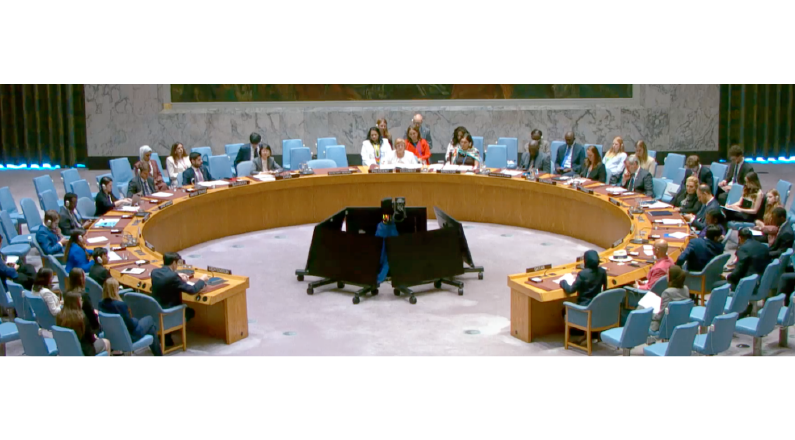
(ZENIT News – Center for Family and Human Rights / Ny, 07.12.2026).- The debate over gender issues that has snarled consensus in other parts of the UN system showed up recently at the Security Council when the body debated Women, Peace, and Security (WPS).
The Colombian minister for foreign affairs complained that governments are restricting sexual and reproductive rights, “excluding women from decision-making spaces, and legitimizing hate speech. In multilateral forums, they do not want to speak about gender, nor do they want to speak about our diversity.”
Delegations agreed that women play an essential role in creating and maintaining peace and face unique threats and harms in conflict situations. However, feminist groups have actively seized on humanitarian law to push for abortion and have used the Women, Peace, and Security platform, launched in 2020 by Security Council Resolution 1325, to infiltrate the Security Council with their feminist agenda.
This effort has been aided by several reports from the UN Secretary-General promoting abortion as a humanitarian right.
However, as Kaavya Asoka, director of the NGO Working Group on Women, Peace and Security, warned the council, there is “an intensifying, organized, and well-funded global backlash against gender justice and women’s rights.”
“Well-established international norms on gender equality, preventing gender-based violence, women’s participation, and sexual and reproductive health and rights [SRHR], among other issues, were repeatedly contested, rolled back, and actively removed from Council decisions,” said Asoka, accusing “several members of this Council” of keeping it from doing its job.
While Asoka did not name names, she was likely referring primarily to the United States and Russia for pushing back on “sexual and reproductive health and rights” because the phrase is used to push for abortion and gender ideology.
The United States’ statement reminded the council that “under President Trump, the United States was the first country with a comprehensive law on women, peace, and security,” signed in 2017. The delegate pointed out that the U.S. remains “the largest single donor to the humanitarian system” and assured the council that the U.S. understands “the imperative of protection assistance for women and girls in conflict and disaster settings, particularly those who are victims of sexual violence.”
Several delegations referred to their own feminist approaches to foreign policy, including Luxembourg, which spoke on behalf of the “19 members of the Feminist Foreign Policy Plus group.” This group has issued statements expressing its support for “universal access to sexual and reproductive health and rights [SRHR],” despite having countries with pro-life laws, including Rwanda, Morocco, and Liberia, among its members.
Despite the fact that only a fraction of women identify themselves as feminists, it has become a common progressive tactic at the UN to equate women’s groups with feminist groups.
Asoka’s statement called for the inclusion of “feminist movements at all levels of decision-making” and insisted that “quotas for women’s participation must be established and enforced.”
The NGO working group represented by Asoka includes members that are outspoken in favor of abortion, such as the Global Justice Center, Amnesty International, and the Women’s Refugee Commission. It also includes Outright International, which exists to promote LGBTQ+ issues. All of its members operate on the basis of consensus, meaning that they support the group’s stance on these controversial issues regardless of their own areas of expertise.
Thank you for reading our content. If you would like to receive ZENIT’s daily e-mail news, you can subscribe for free through this link.

Publicaciones relacionadas:
 Vatican announces publication of documents on Artificial Intelligence, role of women in the Church and monogamy
 World’s oldest human being dies: nun who lived from Pius X to Pope Francis
 Sr. Oonah O’Shea Elected President of UISG, Brings Rural Wisdom and Bold Vision to Global Role
 International Olympic Committee bans transgender men from competing against women in sports
