

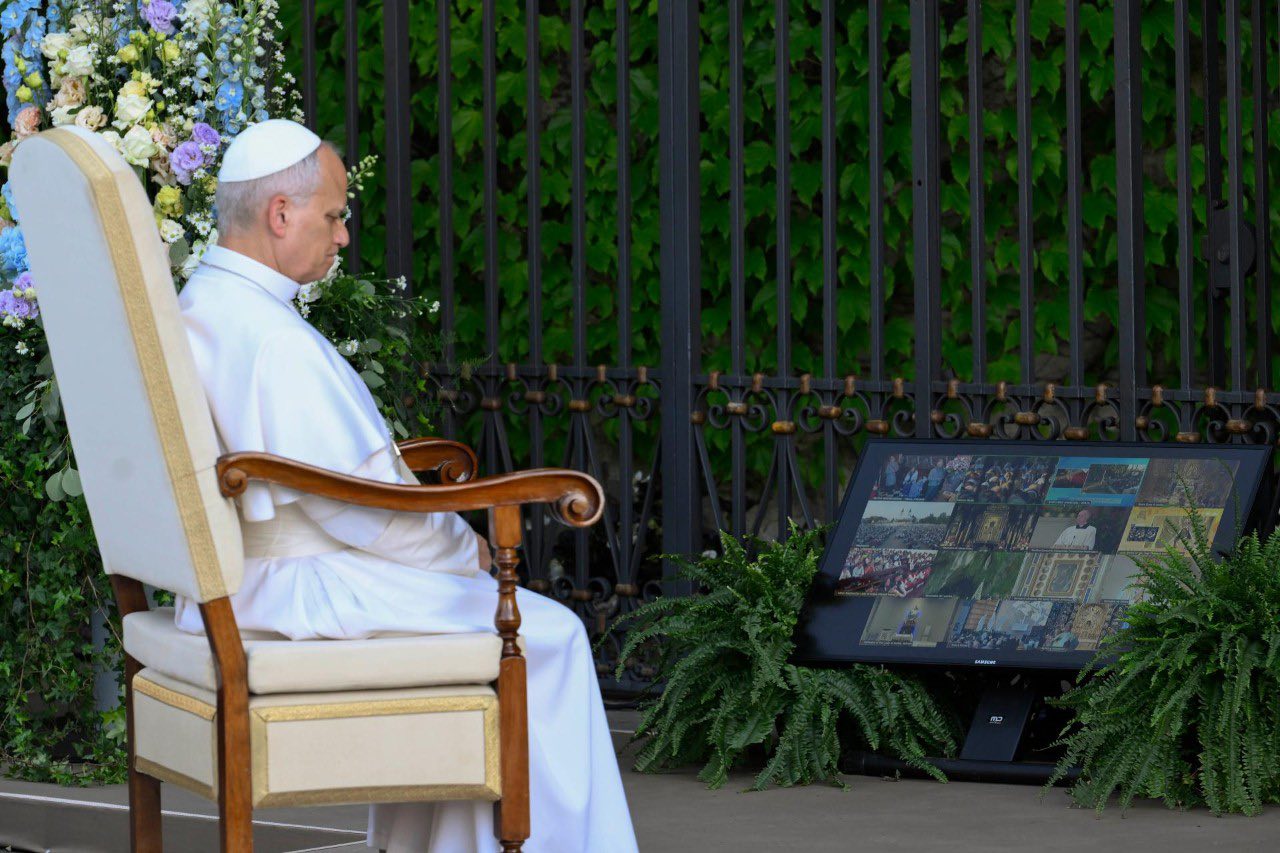
(ZENIT News / Montevideo, 07.16.2026).- Uruguay is preparing for a papal visit that could carry a significance far beyond the country’s relatively small Catholic population. Although the Vatican has not yet formally announced the itinerary, Cardinal Daniel Sturla, Archbishop of Montevideo, says Pope Leo XIV is expected to visit Uruguay in November as part of his first journey to Latin America.
The tentative trip would also include Argentina and Peru and could take place between November 5 and 15, with the official schedule expected to be confirmed by the Holy See toward the end of July.
For Uruguay’s Church, the prospect is already being treated as a historic moment. Sturla said he personally urged Leo XIV to visit the country shortly after the Pope’s election in May 2025, reminding him that Pope Francis had never travelled to either Uruguay or Argentina.
The appeal appears to have found a receptive audience. According to the cardinal, the possibility of visiting both countries was also discussed directly with Leo XIV in the period immediately following his election. The Pope himself had expressed a desire to travel to Latin America, particularly Argentina and Uruguay, during a press conference after his first international journey, although no plans had yet been decided at that time.
Now, the long-standing possibility is beginning to look like a concrete journey.
The proposed itinerary would place Uruguay at the centre of the Pope’s first encounter with Latin America. Montevideo is expected to be one of the principal stops, while the city of Florida could host a major religious celebration at the National Shrine of the Virgin of the Thirty-Three, the patroness of Uruguay.
Sturla has expressed the hope that Leo XIV will celebrate Mass there on Sunday, November 8, coinciding with the feast associated with the country’s patroness. The visit would also carry particular historical resonance for Uruguay, where devotion to the Virgin of the Thirty-Three is closely linked to the nation’s religious and national history.
A third stop may be added in northern Uruguay, with Paysandú among the possibilities. A Vatican advance delegation has already visited Montevideo, Florida and Paysandú as preparations for the possible journey take shape.
The Pope’s schedule is also expected to include a meeting with President Yamandú Orsi, who personally extended an invitation to Leo XIV during his visit to the Vatican.
One proposed destination, however, remains uncertain: Uruguay’s Parliament.
The issue has acquired an unusual political sensitivity in a country known for its strong tradition of institutional secularism. Some legislators from different political forces have invited the Pope to visit the Legislative Palace, but the proposal has generated debate over the meaning of religious neutrality in public life.
Sturla indicated that such a visit is far from certain. The cardinal said that the Holy See had made clear that papal visits to national parliaments are not normally part of the standard itinerary. More importantly, he argued that the Pope should not become a participant in domestic political disputes.
The principle is significant. In a secular democracy, religious freedom does not require the exclusion of religious voices from public life. Nor does a papal visit automatically amount to the endorsement of a political programme. But the Vatican traditionally seeks to ensure that the Pope’s presence can serve as a point of encounter rather than become a symbol claimed by one political camp against another.
For that reason, the most revealing moments of the visit may take place far from Uruguay’s political institutions.
The Church wants Leo XIV to visit the Casavalle area of Montevideo, including the Barrio Borro, one of the city’s most vulnerable areas. Within a relatively small radius, numerous Catholic social initiatives provide assistance to local residents. Sturla hopes the Pope can meet the people served by these projects and see directly how the Church works among those facing poverty and social exclusion.
That choice would give the journey a distinctly pastoral character. Rather than presenting the Church primarily through its institutions, the visit would place the Pope among the people who depend on its charitable and social work.
The expectation surrounding the journey is already intense. Yago de la Cierva, a communications consultant who coordinated Leo XIV’s recent visit to Spain, warned Uruguayan organizers that they should begin preparing well in advance, describing the Pope as exceptionally popular.
That popularity could make the visit a national event even in a country where many citizens do not regularly participate in religious life. Sturla himself acknowledged Uruguay’s secular character while insisting that the Pope’s arrival would matter beyond the Catholic community.
The last papal visits to Uruguay, by John Paul II in 1987 and 1988, remain deeply embedded in the country’s collective memory. Nearly four decades later, Leo XIV’s arrival would mark a new chapter, not simply because of the passage of time, but because it would be his first visit to Latin America as Pope.
The final programme remains in the hands of the Holy See. Dates, cities and individual events could still change before the official announcement.
Thank you for reading our content. If you would like to receive ZENIT’s daily e-mail news, you can subscribe for free through this link.

Publicaciones relacionadas:
 “Pope Leo XIV’s Paths”: New Tourist Route Is Presented in Peru
 US Congress: bill introduced to prevent revocation of Pope Leo XIV’s citizenship and tax issues
 Pope Leo XIV’s Beautiful Letter To Priests of Madrid (That Every Priest or Future Priest Should Read)
 8 out of 10 Americans approve of Pope Leo XIV. They also disapprove of Trump’s attacks on the Pope
