

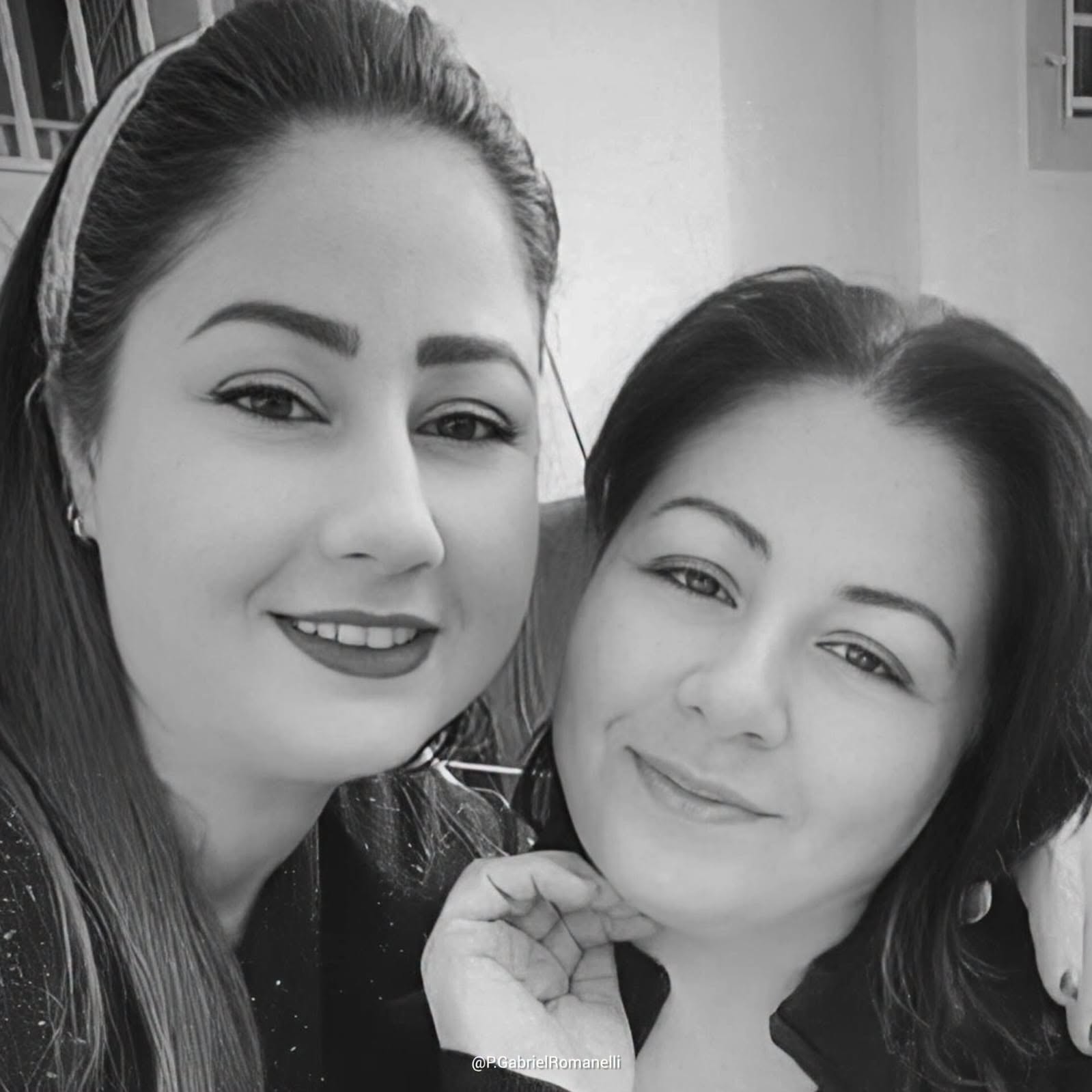
(ZENIT News / Gaza City, 10.05.2026).- For Gaza’s tiny Christian community, the deaths of two women in an Israeli airstrike have once again turned an ordinary attempt to rebuild a life into a funeral. At the same time, hundreds of miles away, another Palestinian Christian community is confronting a potentially enduring threat: being unable to reach the land on which its families have depended for generations.
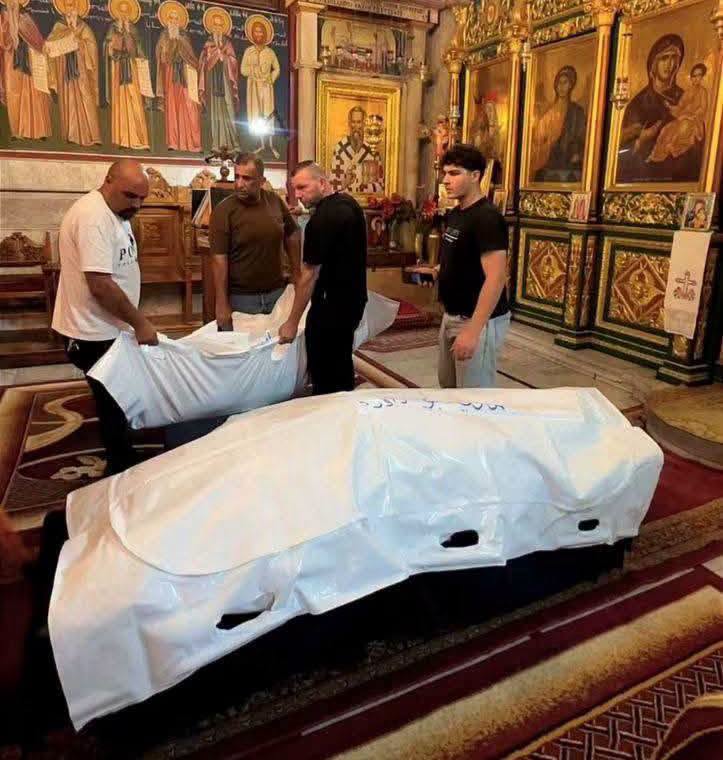
Maysaa Khader Ibrahim Abu Dawoud and Mary Hafez Michel al-Najjar were killed in the early hours of October 3 when a residential building in western Gaza City was struck. Palestinian medical and civil-defense sources said five people died in the attack and several others were wounded. The Israeli military had not issued an immediate public comment on the strike.
The two women were members of Gaza’s small Greek Orthodox Christian community and, according to the reports, had spent much of the war sheltering at the Catholic Church of the Holy Family. They had only recently moved into rented accommodation, hoping to regain something resembling a stable family life after months of displacement.
Instead, they were killed together.
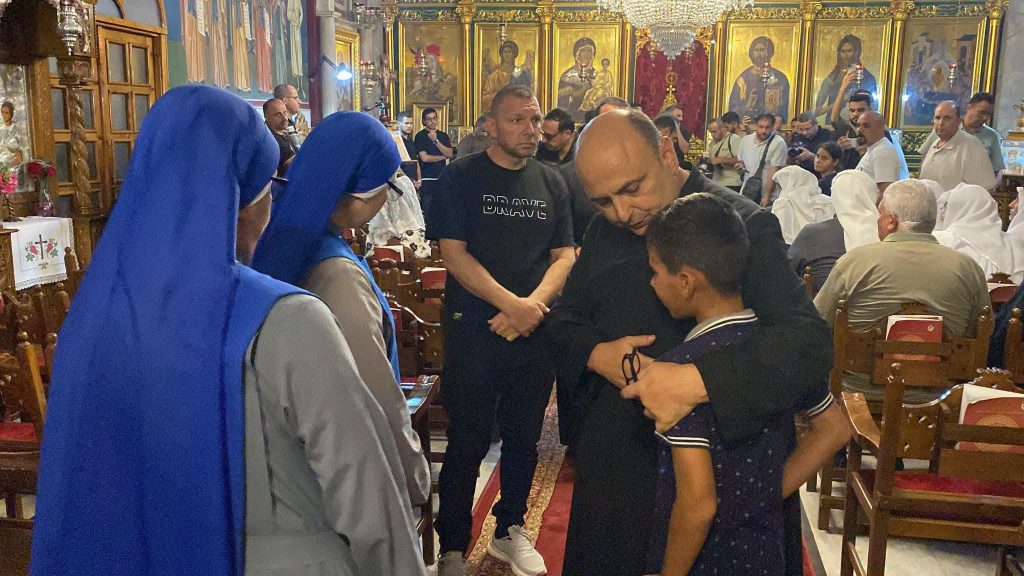
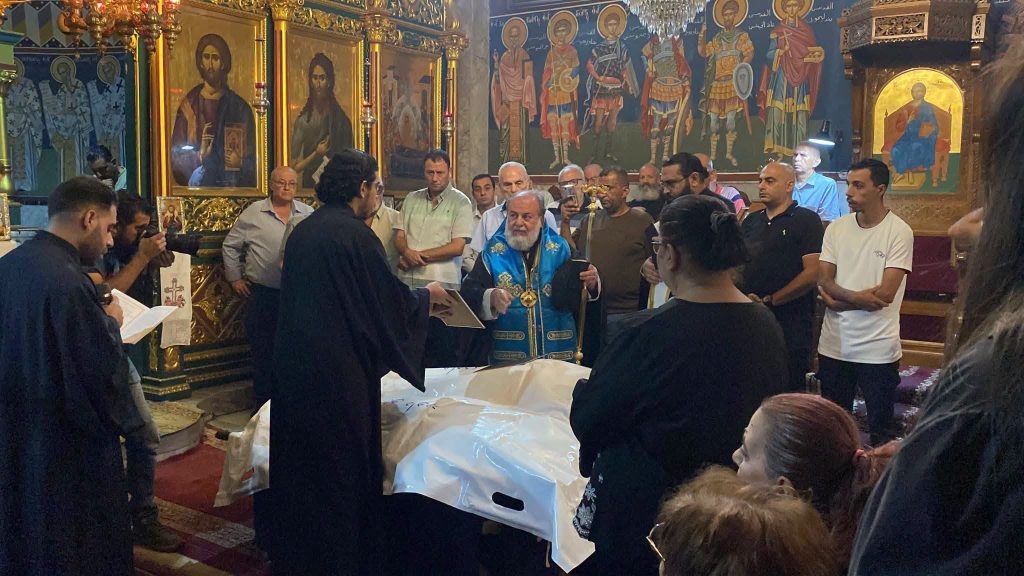
Their funeral was held at the Greek Orthodox Church of Saint Porphyrius, another Christian sanctuary that has itself become a symbol of Gaza’s ordeal. About 200 people, Christians and Muslims, gathered for the ceremony, with religious sisters, Catholic priest Gabriel Romanelli and Muslim community leaders among those present.
Cardinal Pierbattista Pizzaballa, Latin Patriarch of Jerusalem, expressed his “deep sorrow and grief” and offered condolences to the families and to Gaza’s Christian community. His words carry particular weight because the community he addressed has been shrinking dramatically throughout the war. In September, Pizzaballa said that only 541 Christians, Catholics and Orthodox together, remained in Gaza, compared with 1,017 before the war.
That decline is more than a demographic statistic. Gaza’s Christians are not a recently arrived minority whose presence can simply be measured by the number of people who remain. Their communities, churches, schools and charitable institutions form part of a Christian presence in the Holy Land that reaches back centuries. The war is therefore destroying not only homes and livelihoods but also the physical and social conditions necessary for a community to continue existing.
The Holy Family parish illustrates that role. During the conflict it has sheltered displaced Christian and Muslim families, while its wider pastoral and educational mission has continued under extraordinary circumstances. In September, the Latin Patriarchate announced the reopening of its school for the 2026–27 academic year, with 1,005 pupils, after almost three years in which the war had interrupted normal educational activity.
The circumstances surrounding the October 3 strike remain contested and incomplete. Reports in the material indicate that the intended target may have been Hamas official Ali al-Amoudi, a senior figure whom Israeli sources reportedly sought to eliminate. His name was not among the confirmed dead. The Israeli military had not publicly explained the operation at the time of the reports.
That distinction matters. A military operation directed against an armed-group leader is not the same thing as an attack deliberately aimed at Christians. But the distinction does not erase the consequence: civilians died, including members of one of the smallest and most vulnerable religious communities in the territory. For Christians who have already spent months moving between homes, shelters and churches, the possibility that even a newly rented apartment may become a place of death reinforces a devastating sense of insecurity.
The same question of whether Christians can remain on their ancestral land appears in a different form in Taybeh, the predominantly Christian town in the West Bank.
There, the immediate issue is not an airstrike but the olive harvest. As the 2026 harvest began, reports said Jewish settlers were entering agricultural land east of the town and picking olives from privately owned groves while the area remained under military closure. Residents, meanwhile, faced difficulties or danger in reaching their own fields.
For Taybeh, this is not a marginal agricultural dispute. The town’s olive groves cover more than 16,000 dunums, according to local agricultural, community and church representatives. The harvest supplies families with food and income and traditionally produces olive oil for sale beyond Palestine.
An olive tree also operates on a different timescale from a military operation. A destroyed building can sometimes be reconstructed; a harvest lost today means the loss of a year’s income. Repeatedly preventing families from reaching their land, however, carries a deeper consequence: over time, ownership may remain on paper while the practical ability to live from and care for that land disappears.
That is why the Taybeh appeal is ultimately about more than olives. Residents are asking to reach their own fields, harvest trees planted by their parents and grandparents, and return home with the fruit of their own land.
In Gaza, Christian families are struggling simply to survive amid bombardment, displacement and the destruction of homes. In Taybeh, the concern is whether families can continue to live securely from land inherited across generations. One community is being reduced by death and displacement; another fears that restrictions, violence and the loss of access to farmland could progressively undermine the conditions that allow it to remain.
For the Catholic Church and other Christian communities in the Holy Land, protecting these people cannot mean treating them merely as symbols of a religious heritage. It means defending the ordinary foundations of communal life: safety, worship, education, family homes, livelihoods and access to property.
The danger is that the disappearance of a Christian community rarely occurs in a single dramatic moment. It can happen through accumulated losses — one family leaving, one house destroyed, one school closed, one harvest abandoned, one generation growing up without the possibility of returning to its ancestral land.
Thank you for reading our content. If you would like to receive ZENIT’s daily e-mail news, you can subscribe for free through this link.

Publicaciones relacionadas:
 Franciscans Ask Marco Rubio for Help in the Face of Persecution by Jewish Settlers Affecting Christians (and Others) in the Holy Land
 Pope Francis Breaks His Silence on Nicaragua and Speaks Out Clearly from Saint Peter’s Square in the Vatican
 Vatican questions “preventive” war in Iran as Leo XIV intensifies diplomatic calls for peace
 Leo XIV Speaks Out in Support of Palestinians Attacked by Jewish Settlers in Tierra Sana: Here’s What’s Happening
