

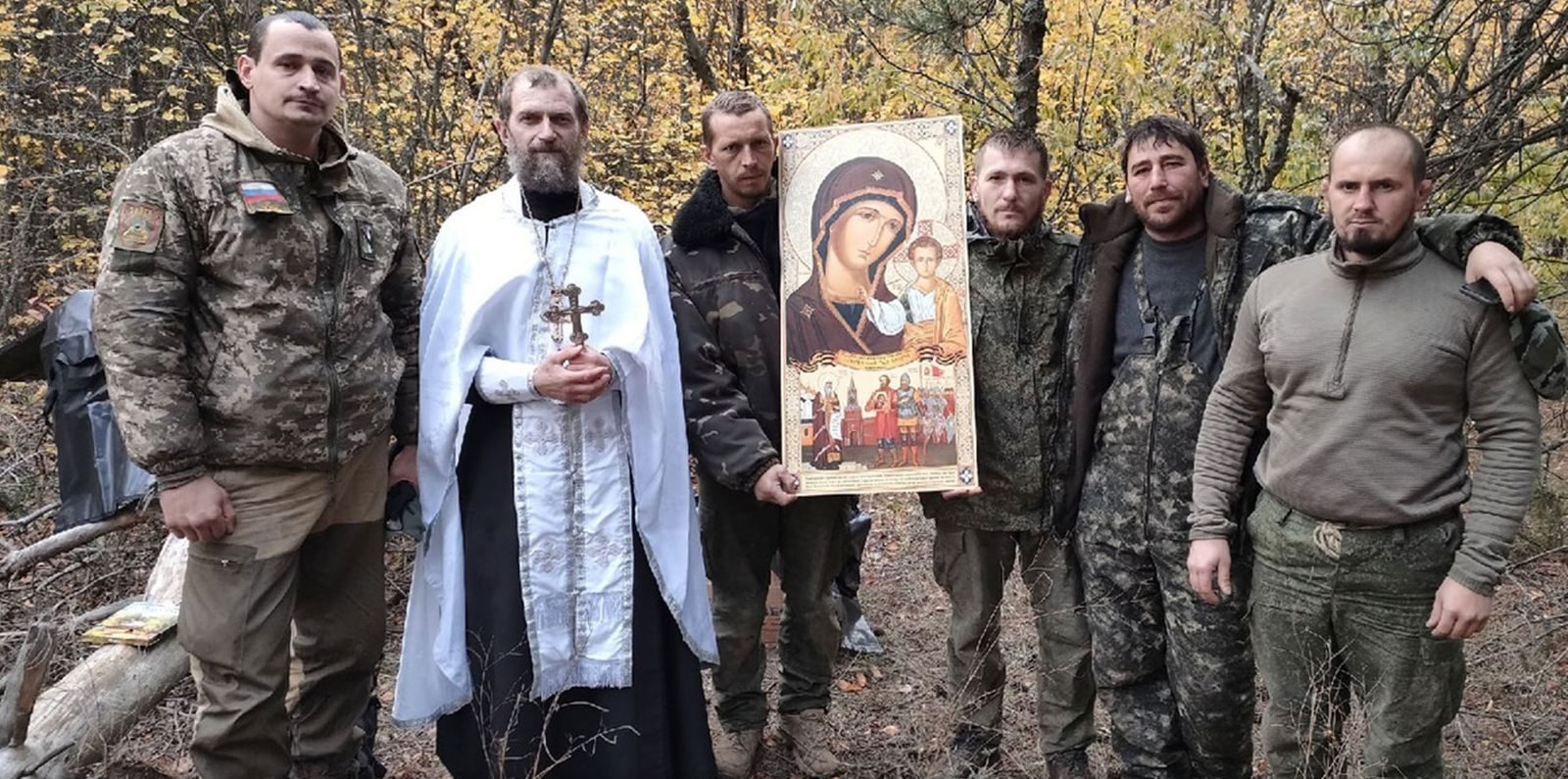
(ZENIT News / Rome, 10.25.2026).- At least 17 Christian clergy and religious workers have died in the war in Ukraine during 2026, according to the ecumenical organization Christians Against the War, exceeding the 14 clerical deaths it documented for the whole of 2025. The growing toll underscores the cost of Russia’s invasion not only for Ukraine’s civilian population but also for religious communities whose priests and ministers have continued serving amid bombardment, military deployment and humanitarian collapse.
The organization’s latest figures record 13 Ukrainian priests and one altar server killed in Russian attacks this year, alongside four monks and priests of the Russian Orthodox Church reported killed in separate 2026 statistics. Most of the victims on both sides were Orthodox Christians. Some had served as military chaplains or soldiers; others died in their home communities. Since 2014, the group estimates that at least 99 priests, nuns, altar servers and other church workers have been killed in Ukraine as a result of Russian aggression. It has also recorded 29 deaths on the Russian side.
The figures are compiled by Christians Against the War, an international initiative led by Orthodox theologian Natallia Vasilevich from Germany. The group publishes victims’ names, photographs and biographical details, seeking to ensure that those killed are remembered as individuals rather than absorbed into the vast statistics of war. Vasilevich cautions that the available counts may not include clergy who died in combat, meaning the actual toll could be higher.
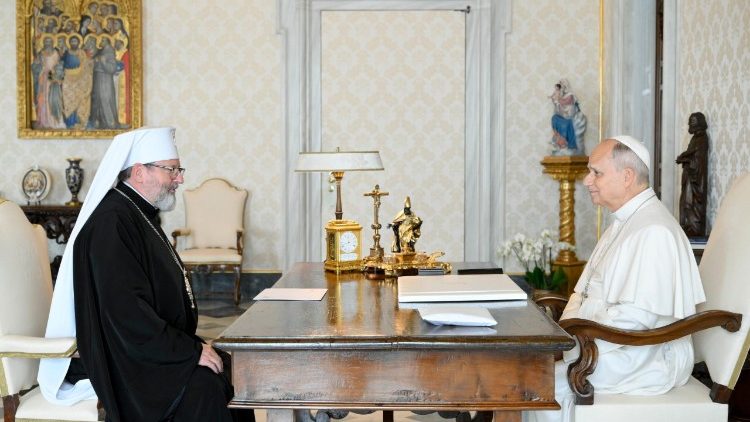
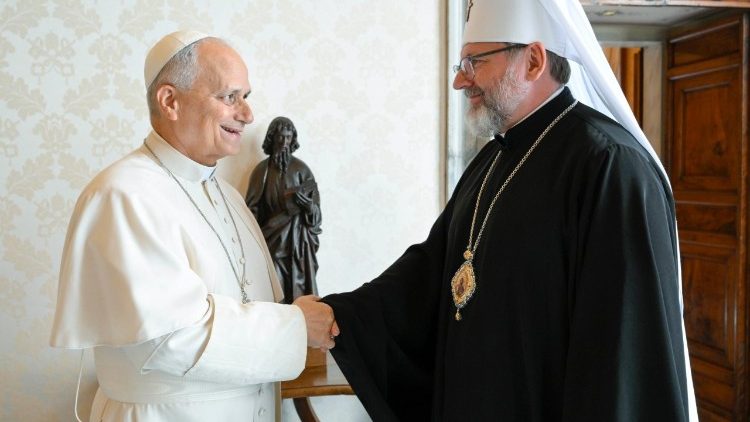
The human cost of the conflict was also at the center of a meeting at the Vatican on October 23, when Pope Leo XIV received Major Archbishop Sviatoslav Shevchuk, head of the Ukrainian Greek Catholic Church. The encounter brought together two urgent concerns: the fate of Ukrainians held captive by Russia and the worsening humanitarian pressures facing a country preparing for another harsh winter.
Shevchuk thanked the Pope for his appeals to end the war and, in particular, for his telephone conversations with Russian President Vladimir Putin and Ukrainian President Volodymyr Zelensky. He also expressed gratitude for Leo’s attention to the crisis in Oleshky, a Russian-occupied town where residents have reportedly been left without adequate food, water and medicine. The Pope’s intervention reflects the Holy See’s continuing attempt to use diplomatic channels to secure humanitarian relief, even as the prospects for a negotiated settlement remain uncertain.
A central part of that effort has been the Vatican’s work on behalf of prisoners of war, detained civilians and Ukrainian children transferred away from their places of origin. Shevchuk handed Leo a list of hundreds of prisoners held in Russia, continuing a practice from previous meetings. During an audience in February 2026, he had delivered a list containing 400 names.
The Ukrainian Greek Catholic leader also highlighted the recent missions to Kyiv and Moscow by Cardinal Matteo Maria Zuppi, president of the Italian Bishops’ Conference, and Archbishop Paul Richard Gallagher, the Vatican’s secretary for relations with states and international organizations. Their visits involved institutional and pastoral contacts aimed at advancing humanitarian initiatives. According to Shevchuk, Zuppi’s visit to a Russian detention facility holding Ukrainian prisoners was particularly significant: he described it as the first time a representative of an international institution had been able to visit Ukrainian prisoners of war in Russia. For families awaiting news of detained relatives, such access offers a rare sign that their loved ones have not been forgotten.
The Vatican’s diplomatic position remains that the war cannot be resolved by military means alone and that conditions must be created for a political and diplomatic process. Yet humanitarian diplomacy cannot by itself end the suffering, particularly as Russian attacks on infrastructure raise fears about electricity, heating, food and medical supplies during the approaching winter.
A further response is planned for October 27–30, when Archbishop Luis Marín de San Martín, prefect of the Dicastery for the Service of Charity, is due to travel to Ukraine carrying food, medicines and other essential supplies, as well as a message of closeness from Leo XIV. The Ukrainian Greek Catholic Church will be involved in the mission.
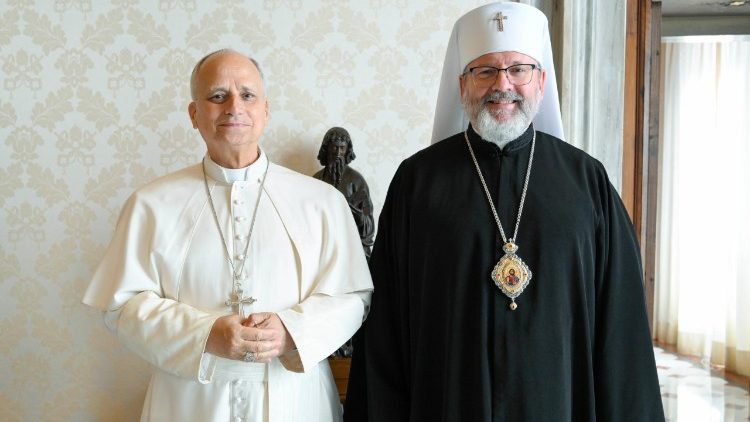
Shevchuk also briefed the Pope on his Church’s recent synod, which addressed vocations to the priesthood and consecrated life. The discussion took place against the backdrop of demographic decline and humanitarian disruption caused by the war, pressures that threaten the future of communities already struggling to survive. Leo, according to Shevchuk, thanked Ukrainian bishops, priests, monks and faithful for their witness of faith under extraordinary conditions.
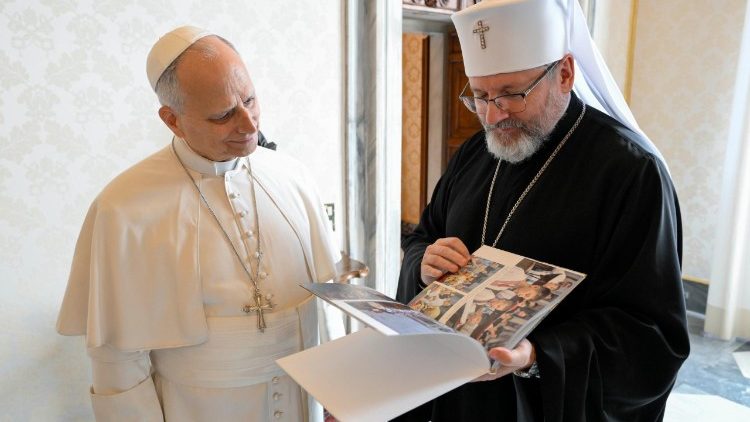
The meeting was also marked by gifts reflecting the bonds between Ukraine and the Holy See, including Vatican-related postage stamps, a special Ukrainian stamp depicting Leo XIV, a photographic album and a book by war veteran Arthur Dron. These gestures offered a personal counterpoint to the lists of prisoners and the grim casualty figures.
Thank you for reading our content. If you would like to receive ZENIT’s daily e-mail news, you can subscribe for free through this link.

Publicaciones relacionadas:
 Decline, Resurgence, and Breaking Stereotypes: The State of Vocations and Priestly Ordinations in France, Germany, and Italy
 A young Kenyan diocese faces a test of authority as its bishop suspends nearly one in six priests
 German priests loyal to the Pope respond to their own bishop (and cardinal), who is pressuring them to bless same-sex couples in a major diocese
 Vatican official stresses the importance of rest as part of mental health in the life of a priest
