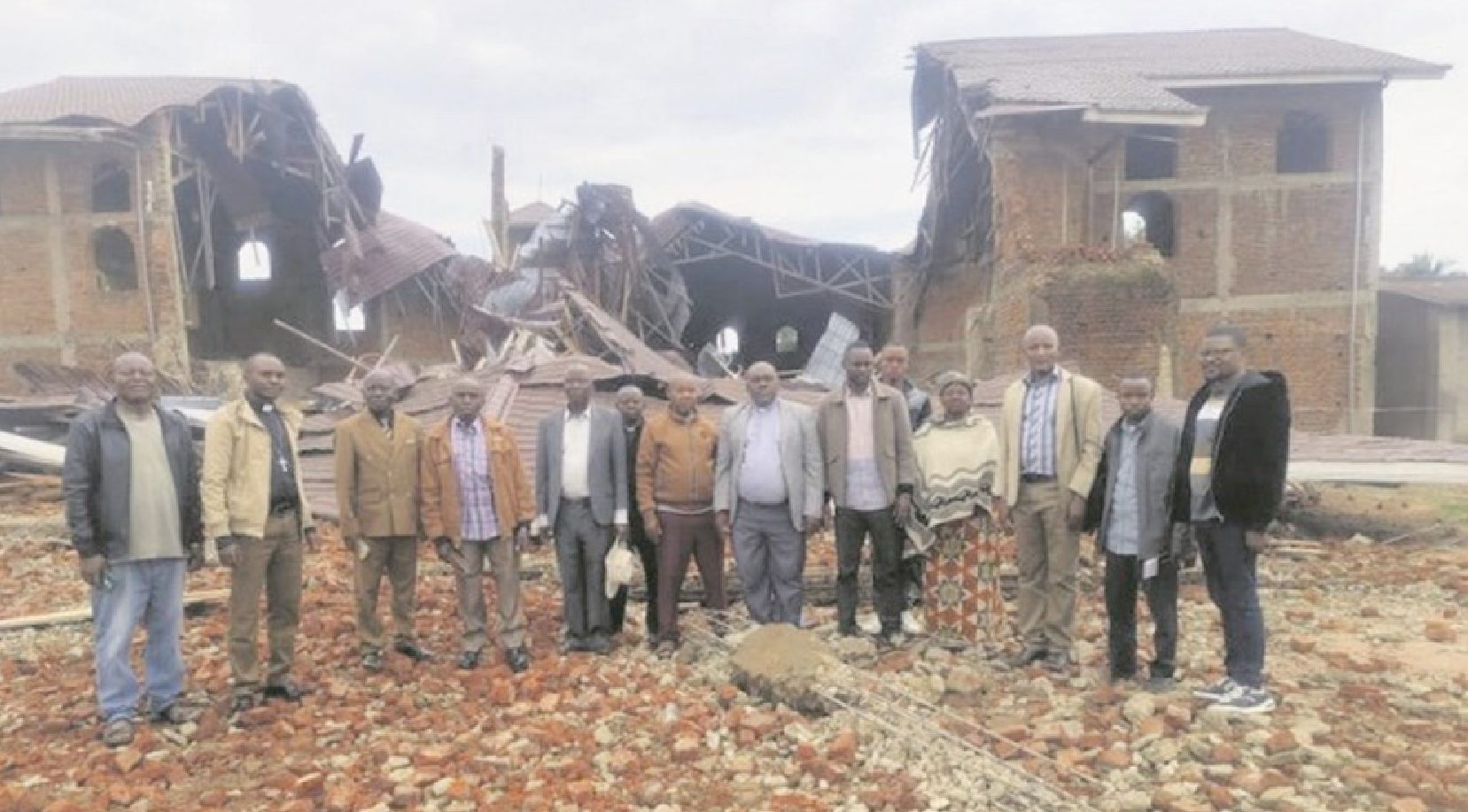
(ZENIT News / Beni, 09.09.2025).- For nearly two decades, the Anglican faithful of Beni in eastern Democratic Republic of Congo held onto a dream: a cathedral that would embody their perseverance amid conflict, disease, and poverty. That dream collapsed—literally—on August 14, when the newly completed structure, the Cathedral of St. John, gave way under the weight of torrential rains.
The building, still awaiting its consecration, crumbled just months after workers had completed its roof in February. Local worshippers, who had gathered for morning prayer, fled the sanctuary as the walls shook and fell. Miraculously, no lives were lost.
“It took us twenty years of sweat, sacrifice, and hope to raise this temple,” Bishop Cyrille Kambala Tavuirima of Beni said in a trembling voice to the Anglican Communion News Service. “To see it reduced to rubble in an instant—imagine what that does to the heart of a community.”
The story of the fallen cathedral is also the story of the region itself. First envisioned in 2006, the project languished for more than a decade as the people of Beni endured militia violence, displacement, and deepening poverty. The Ebola outbreak of 2019 and the global paralysis of the COVID-19 pandemic added further delays. Only in 2017 were its walls finally raised, and only this year was the roof completed.
Then came the rains
For the Christians of Beni, the sight of their unfinished cathedral in ruins has become a new symbol of fragility. Survivors of war, disease, and economic hardship now carry the trauma of seeing their spiritual home vanish just as it was about to open.
Yet Bishop Kambala has chosen not despair but appeal. He has called on Anglicans worldwide, and on “all people of goodwill,” to stand with the diocese in prayer and material support. “We ask for solidarity not only to rebuild this house of God,” he said, “but to help us endure the difficult times our nation is passing through. Pray for peace in Congo, and especially in Beni.”
The wider backdrop is as grim as it is familiar. Since the Rwandan genocide in 1994, eastern Congo has been plagued by conflict involving more than 120 armed groups vying for control of its mineral-rich territories. Communities like Beni find themselves caught between warlords and epidemics, between hope and despair.
The cathedral’s fall, in this sense, is more than an architectural failure. It is a parable of persistence in a land where nearly every act of building—whether of homes, schools, or churches—requires defying the odds.
For now, the Anglicans of Beni gather once again in makeshift spaces to pray. Their cathedral has become rubble, but their faith, their bishop insists, remains unshaken.
Thank you for reading our content. If you would like to receive ZENIT’s daily e-mail news, you can subscribe for free through this link.