

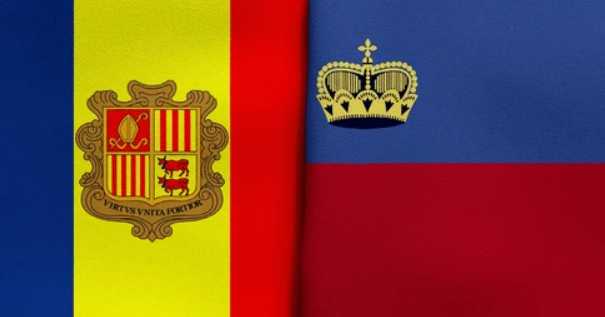
(ZENIT News / Vaduz, 09.15.2026).- Two of Europe’s smallest states are confronting one of the continent’s most consequential moral debates, but the political choices emerging in Andorra and Liechtenstein could hardly be more different.
In Andorra, the government says it intends to decriminalize abortion before parliamentary elections in April 2027, even if an agreement with the Holy See cannot be reached. In neighboring Liechtenstein, meanwhile, parliament has narrowly approved a proposal to legalize abortion during the first 12 weeks of pregnancy, but the country’s hereditary prince has indicated that he intends to block it.
The two cases share an unusual feature: both countries have Catholic majorities and constitutional arrangements in which the Church or a Catholic head of state retains an institutional role. Yet they illustrate two very different ways in which questions of abortion, political authority and conscience can collide.
Andorra’s constitutional structure makes its debate particularly distinctive. The tiny Pyrenean principality has two heads of state, the president of France and the Catholic bishop of Urgell. The current bishop, Josep Lluís Serrano Pentinat, therefore serves as co-prince alongside the French president, Emmanuel Macron.
That arrangement has made abortion far more than an ordinary legislative question.
Prime Minister Xavier Espot said on September 8 that his government is aiming to approve a law decriminalizing abortion by April 2027. He also acknowledged that discussions with the Holy See would continue, but made clear that the government expects parliament eventually to act.
The precise content of the proposal remains unpublished. Reports in Andorra suggest that it may take a narrower approach than full legalization: criminal penalties could be removed for women who undergo abortions in the country while abortion itself would remain formally illegal and medical professionals could potentially continue to face criminal liability.
The uncertainty surrounding the legislation is matched by the sensitivity of the institutional question. Under Andorran law, legislation requires the signature of only one of the two co-princes to enter into force, a responsibility that generally falls to the French co-prince in politically contentious matters. Espot has said the government wants its negotiations with the Holy See to ensure that whatever parliament decides does not destabilize the country’s institutional system.
The subject has been under discussion for years. Vatican and Andorran officials held negotiations during Pope Francis’ pontificate, including meetings involving Cardinal Pietro Parolin and senior Holy See diplomat Archbishop Paul Gallagher. In 2023, Parolin described the abortion question as exceptionally delicate and requiring discretion and wisdom. By June this year, Andorran officials said the technical and philosophical framework of the proposal had been completed, while negotiations over its institutional consequences remained unresolved.
The arrival of a new bishop of Urgell has also subtly changed the tone. Serrano, speaking publicly for the first time as bishop in May, emphasized the need for dialogue and support for women facing difficult situations related to abortion. His predecessor, Joan-Enric Vives, had taken a much harder institutional position and had indicated that he could not promulgate legislation contrary to Catholic teaching.
That contrast is significant because the Church’s position on the sanctity of unborn human life has not simply disappeared with a change in tone. Rather, the Andorran debate demonstrates the difficulty of translating a religious conviction into public policy when a bishop simultaneously occupies a constitutional office.
The issue has acquired an additional European resonance through Pope Leo XIV’s own reflections on Christian responsibility in public life. In a 2025 address to French politicians, he argued that Christianity cannot be reduced to private devotion and told public officials that there are moments when they must have the courage to say no when truth is at stake. The remarks did not concern Andorra specifically, but they provide a broader framework for understanding the tension between political responsibility, Christian conviction and freedom of conscience.
Liechtenstein offers a strikingly different institutional scenario.
On September 2, its parliament voted 13-12 to approve a proposal that would permit abortion up to the 12th week of pregnancy. Legislators then rejected, by the same 13-12 margin, a proposal to submit the measure to a referendum.
The initiative originated outside parliament. A two-month campaign that ended in July collected 4,970 signatures, roughly one quarter of those eligible to participate in the country’s political process. Only 1,000 signatures were required for the initiative to reach the legislature. Among its demands were decriminalization before 12 weeks, removal of restrictions on information about abortion and coverage of abortion costs through health insurance. A similar initiative failed in 2011, when voters rejected it by more than 52 percent.
Yet parliamentary approval may not be enough.
Prince Alois, who has exercised the functions of head of state since 2004 on behalf of his father, Prince Hans-Adam II, has six months to decide whether to sanction the legislation. If he does not do so by the deadline in March 2027, it will be considered rejected. Alois has already indicated publicly that he would veto the measure, invoking what he described as the fundamental right to protection of life.
Here again, the question of conscience enters constitutional politics, although through a hereditary head of state rather than a bishop.
The Catholic Church in Liechtenstein has explicitly opposed the proposed change. Apostolic Administrator Benno Elbs has argued that the unborn child possesses an intrinsic and inalienable dignity from the beginning of life and therefore deserves protection. But his intervention has also placed considerable emphasis on the circumstances surrounding women and families.
His argument is not simply that abortion should be prohibited. He has called for a society in which women and couples do not feel abandoned and in which choosing life is genuinely possible.
Liechtenstein has a particularly striking contradiction in this regard. The country has gone for several years without its own maternity hospital, meaning women have had to travel abroad to give birth. Elbs has questioned the logic of debating how to facilitate abortion domestically while women must already cross national borders to obtain obstetric care. His broader appeal is for a society in which every child is welcomed and mothers and fathers receive the practical support necessary to care for their children.
That approach also distinguishes the Catholic position from a purely punitive understanding of pro-life politics. The Church’s claim is that protecting life involves both the unborn child and the social conditions in which mothers and families make difficult decisions. Support for pregnancy, healthcare, family life and economic security becomes part of the moral argument rather than an afterthought.
The constitutional dimension recalls an earlier European episode that remains unusually relevant today. In 1990, Belgium’s King Baudouin refused to sign legislation liberalizing abortion, saying that doing so would violate his conscience and undermine respect for vulnerable human life. The government ultimately declared him temporarily unable to reign, enacted the law and restored him to the throne days later.
Pope Francis announced in 2024 that he would open Baudouin’s cause for beatification, placing the former king’s confrontation with abortion legislation within a distinctly Catholic discussion of conscience and public responsibility.
Andorra and Liechtenstein are obviously not Belgium. Their populations, constitutions and political circumstances are different. Nor is either country simply replaying the events of 1990.
But together they demonstrate that abortion remains capable of testing the boundaries between personal conscience, democratic majorities, religious conviction and constitutional authority—even in countries small enough to fit within a European political footnote.
In Andorra, the government is seeking a compromise that allows legislative change without rupturing its extraordinary relationship with the Holy See and the bishop who shares the headship of state. In Liechtenstein, a narrow parliamentary majority has moved toward legalization while the head of state appears prepared to stop it.
The deeper question in both cases is therefore larger than the fate of a particular bill. It is whether Europe’s increasingly secular legal order can accommodate citizens and public officials who regard the protection of unborn life not merely as a private religious belief, but as a matter of fundamental human dignity.
Thank you for reading our content. If you would like to receive ZENIT’s daily e-mail news, you can subscribe for free through this link.

Publicaciones relacionadas:
 Mob Surrounds and Attacks Pro-Life Students of Manchester University: Threatened to Violate the Pro-Life Women
 Pro-Life Defenders in Tennessee Are Sentenced: A Case of Controversy and Legal Confrontation
 New study published by AP shows that support for abortion has declined by 7 percentage points
 California sees record assisted suicide deaths after 150% rise in five years
