

(ZENIT News / Rome, 04.13. 2026) – The scene is unprecedented in recent times: a US President publicly questioning the Pope in political terms, and a Pontiff who, without engaging in direct confrontation, reaffirms his exclusively evangelical role amidst an international context marked by wars, migrations, and geopolitical tensions. The controversy, triggered by President Donald Trump’s statements against Leo XIV, has opened a delicate episode in relations between Washington and the Holy See.
The trigger was a message posted by Trump on his social media account, Truth Social, on April 12, in which he harshly criticized the Pope, whom he accused of weakness on issues of security and international politics. In his argument, the US president also linked the Pontiff’s stance to internal debates in his country, from crime management to foreign policy decisions, and even went so far as to suggest that his own presidency had indirectly influenced the election of the current Bishop of Rome, the first of American nationality.
Ver esta publicación en Instagram
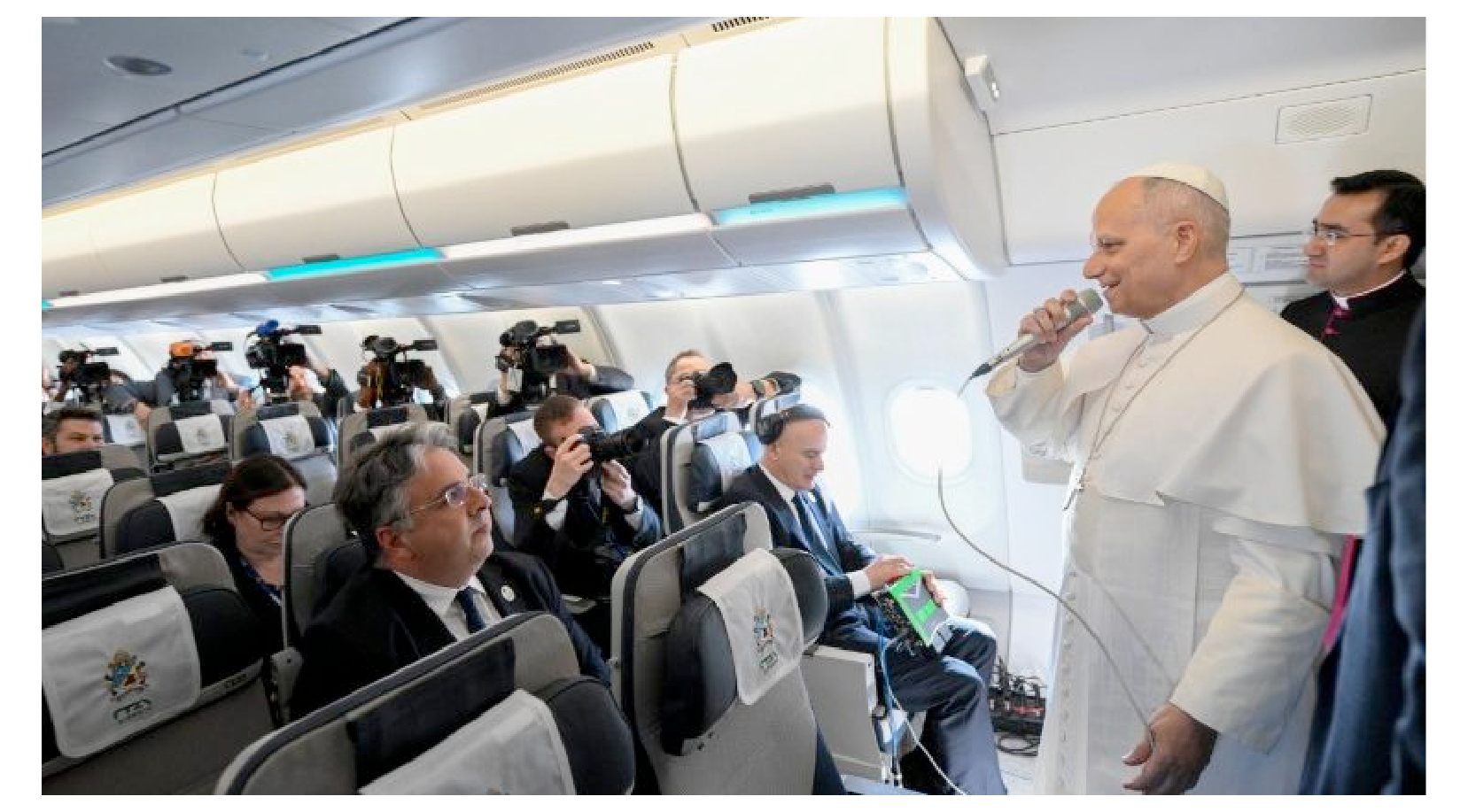
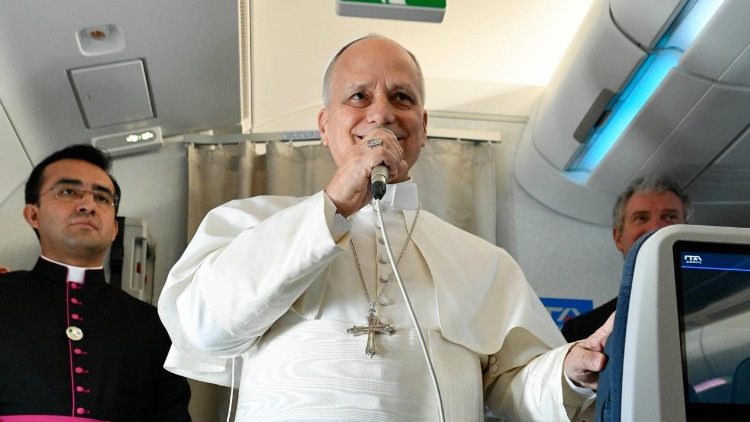
The Pope’s response was not the same. During the flight to Algeria on April 13, the first leg of his third international Apostolic Journey, Leo XIV opted for a clear approach: avoiding personal confrontation and reaffirming the nature of his mission. Before the journalists — nearly 70 of whom accompanied him on the plane — he insisted that he did not consider himself a political actor and that his reference point was exclusively the Gospel. From this perspective, he reiterated his commitment to «raise his voice against war» and to promote dialogue between nations as the only way to resolve conflicts
On at least two occasions during the flight, Leo XIV remarked that «I do not consider my role to be that of a politician, I am not a politician, I do not want to enter into a debate with him. I do not believe that the message of the Gospel should be abused as some are doing. I continue to raise my voice against war, trying to promote peace, fostering dialogue and multilateralism with the States to find solutions to the problems. Too many people are suffering today, too many innocent people have been killed, and I believe that someone must stand up and say that there is a better way.» The Holy Father was also clear and forceful when, moments later, he affirmed: «I am not afraid of the Trump Administration. I will continue to speak out loudly about the message of the Gospel, for which the Church works (…) We are not politicians, we do not view foreign policy from the same perspective. But we believe in the message of the Gospel as peace builders.»
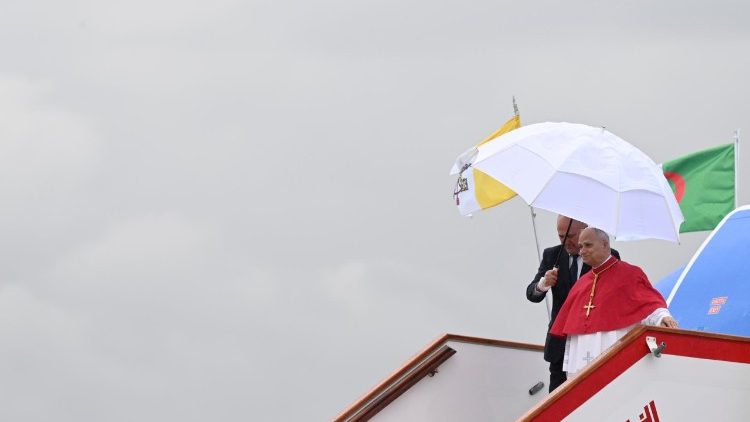
This stance is not insignificant when considering the context of the trip. The African tour, which will extend until April 23 and includes stops in Algeria, Cameroon, Angola, and Equatorial Guinea, had been conceived from the beginning of his pontificate as a strategic priority. The Pope himself explained that he wanted his first international trip to be to Africa, emphasizing the symbolic and pastoral value of that Continent, especially in terms of reconciliation and coexistence among peoples.
Algeria, the first stop on the itinerary, also holds a strong historical and theological significance. There lies Hippo, now Annaba, the episcopal see of Saint Augustine, a key figure in Christian thought and also a cultural bridge between Africa and Europe. For the Pope, this legacy represents an opportunity to strengthen interreligious dialogue in a region marked by historical tensions.
Meanwhile, the backdrop to the controversy with Washington reveals a deeper divergence regarding the role of religion in the public sphere. In his statements, Trump reproached the Pope for not emphasizing certain events that occurred during the pandemic — such as restrictions on religious celebrations — and criticized his stance on international issues, including conflicts in Latin America and the nuclear dispute with Iran. He also expressed disagreement with the Pope’s meetings with figures linked to the American political sphere.
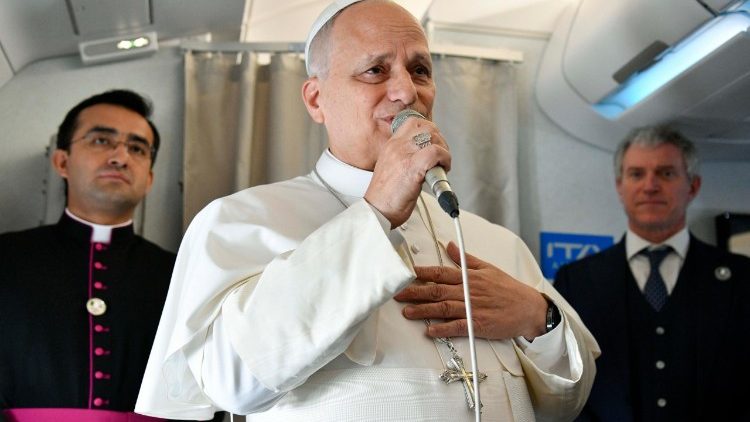
In contrast to that interpretation, Leo XIV insisted on a classic principle of Vatican diplomacy: independence from political blocs. In his address during the event, he emphasized that the Church does not analyze foreign policy with the criteria of States, but rather adopts a moral logic centered on human dignity. Hence his insistence on multilateralism and the need to «build bridges,» a recurring expression in the Church’s contemporary Social Doctrine.
The ecclesial reactions were swift. From the United States, Archbishop Paul S. Coakley of Oklahoma City expressed his concern about the tone of the criticism, reminding everyone that the Pope is not a political adversary, but the Successor of Peter and universal Shepherd of the Church. In Italy, the Episcopal Conference echoed this sentiment, emphasizing that the Pope’s voice responds to a spiritual mission oriented towards peace and truth, especially in a time of global conflicts.
In parallel, the African trip offers a different image of the papacy: that of a Pope seeking a direct presence in territories where the Church is growing and where challenges — from poverty to religious coexistence — take on a concrete dimension. In this context, even symbolic gestures become relevant. Among the gifts received during the trip, a fragment of a canoe stood out from the migration route to the Canary Islands, one of the most dangerous in the world. In 2025 alone, some 10,600 people reached the Island of El Hierro by this route, a figure close to the territory’s almost 12,000 inhabitants.
The object, laden with meaning, connects two axes of the papacy: concern for migrants and denunciation of the silent tragedies at sea. It also anticipates the Pope’s upcoming visit to Spain, scheduled for June, where the migratory phenomenon will continue to occupy a central place on his agenda.
Thus, while the political debate attempts to place the Pope within ideological frameworks, Leo XIV himself insists on a different one. His intervention in the Monument of the Martyrs in Algiers massacre he made it clear once again: peace is not merely the absence of war, but a construction that exacts justice, dignity, and, above all, the capacity to break the cumulative logic of resentment.
In an international arena where words are as powerful as gestures, the tension between Washington and the Vatican does not seem to be reduced to a mere specific exchange. Rather, it reveals two ways of understanding moral authority and its place in the contemporary world: one anchored in the logic of political power, the other in the persistent — and often uncomfortable — evangelical appeal to conscience

Publicaciones relacionadas:
 The Middle East, the spread of war, and the position of the Pope and the Catholic Church
 A Church Against the Logic of War: Vatican Voices, Middle East Realities, and the Risk of a Vanishing Christianity
 Ceasefire on the Brink: Pope Leo XIV, Global Powers and the Moral Battle Over War in the Middle East
 German president visits the Pope: invitation to the country, role of the Holy See in the current situation, and ecclesial life in Germany are the topics
