

(ZENIT News / Jerusalem, 06.15.2026).- The shrinking Christian presence in the Holy Land has long been a concern for Church leaders. Today, however, many local Christians fear that what was once a gradual demographic decline is becoming a crisis accelerated by violence, intimidation and growing social hostility.
Representatives of Christian communities from Israel, Jerusalem and the West Bank recently gathered to deliver a stark message: unless conditions improve, some of the oldest Christian populations in the world may continue to disappear from the very places where Christianity was born.
«We feel like orphans,» said Wadie Abunassar, coordinator of the Holy Land Christian Forum, summarizing a sentiment increasingly heard among local believers. Christian leaders describe a combination of challenges that extends beyond isolated incidents of hostility. They point to inadequate responses from authorities, political indifference, economic pressures and a growing sense of vulnerability that is prompting families to consider emigration.
The concerns are supported by new data. According to the Rossing Center for Education and Dialogue, 155 incidents targeting Christians were documented in Israel during 2025. These included 61 physical assaults, 52 attacks against Church property, 28 cases of harassment and 14 acts of vandalism against Christian signs and symbols.
More recent figures suggest the trend may be worsening. The Religious Freedom Data Center reported that more than 88 incidents had already been recorded during the first months of 2026, with 63 occurring in the second quarter alone. If the pace continues, the current year could surpass the 181 cases documented in 2025.
Many of the reported incidents involve behavior that clergy describe as routine rather than exceptional: spitting at priests and religious sisters, verbal abuse, vandalism of Christian sites, desecration of graves, damage to crosses and anti-Christian graffiti. Jerusalem’s Old City, Mount Zion and areas surrounding the Armenian Patriarchate have emerged as particular flashpoints.
What troubles Christian leaders is not only the number of incidents but the perception that many cases receive little attention. Legal advocates working with affected communities argue that investigations are often limited and that numerous complaints are closed without meaningful results. Some victims choose not to report incidents at all, convinced that doing so will change little.
At the same time, researchers caution against portraying the problem as representative of Israeli society as a whole. Surveys indicate that many Israelis reject anti-Christian hostility, and a growing network of Jewish academics, volunteers and civil-society activists has begun assisting efforts to document abuses and accompany victims. Hundreds of volunteers now participate in initiatives designed to monitor incidents and provide support when attacks occur.
Yet Christians warn that the challenge extends beyond harassment in Jerusalem.
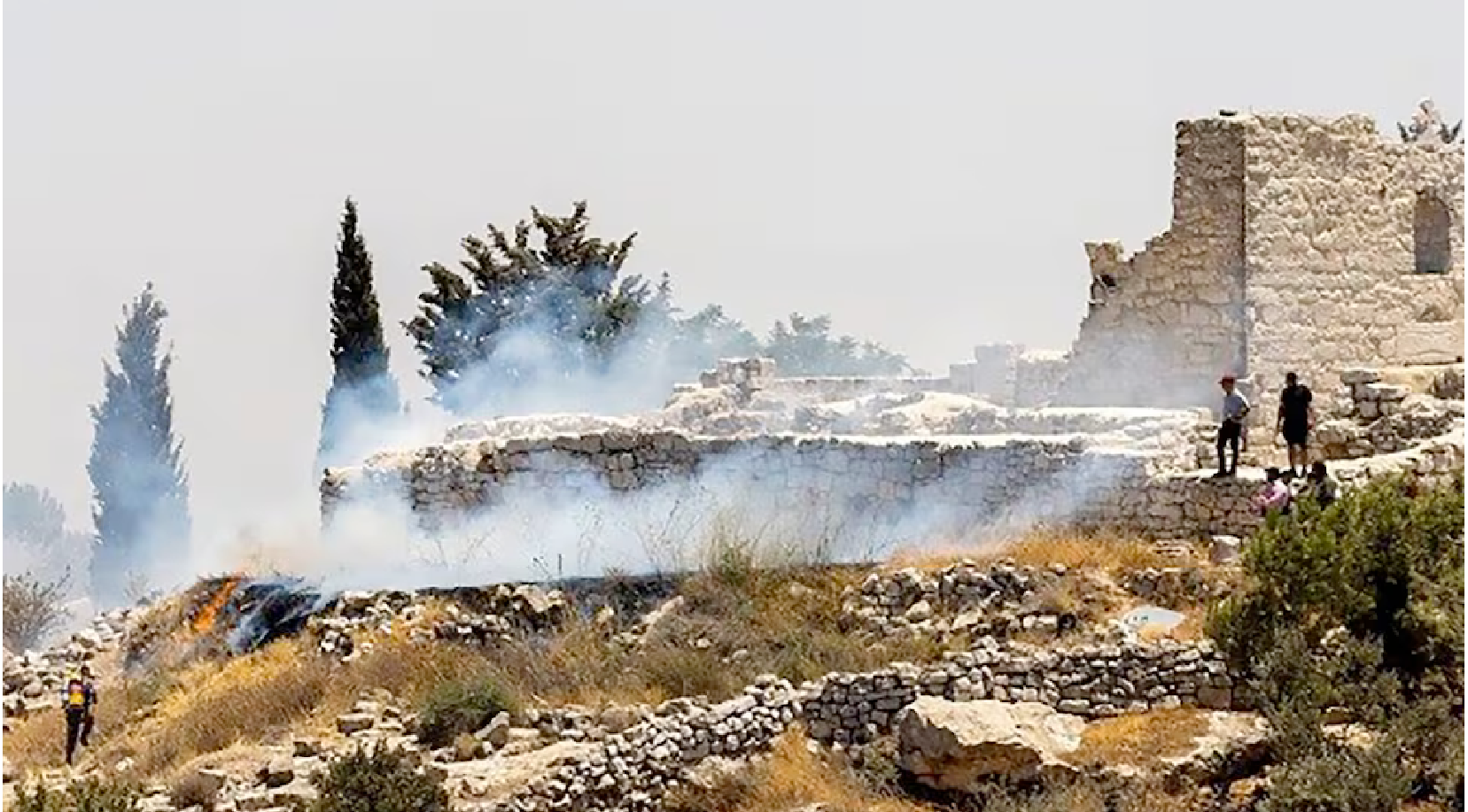
In the West Bank town of Taybeh, the last entirely Christian Palestinian community, local leaders describe a far more dramatic situation. Home to roughly 1,500 residents belonging to Latin Catholic, Greek Orthodox and Melkite communities, the town has become a symbol of the pressures facing indigenous Christians.
According to parish priest Father Bashar Fawadleh, repeated attacks by Israeli settlers have damaged agricultural lands, restricted access to olive groves and threatened the economic survival of families. He reports that approximately 15 families—around 80 people—have already left the town because they no longer see a viable future there.
For a community whose identity is deeply tied to the land, such departures carry significance beyond mere statistics. Agriculture remains a primary source of income, and attacks on olive trees, fields and livestock directly affect families’ ability to remain in their ancestral homes.
The demographic backdrop makes these developments even more concerning. Although the number of Christians holding Israeli citizenship has grown to around 180,000 people, they still represent only about 2 percent of the country’s population. In other historic Christian centers, the decline has been far more severe. Christians once constituted roughly half of the population of East Jerusalem; today they account for less than 2 percent. In Bethlehem, the city traditionally associated with Christ’s birth, the Christian share has fallen from approximately 80 percent to about 10 percent over recent decades.
These figures help explain why Church leaders increasingly frame the issue not merely as one of religious freedom but of cultural and historical survival.
The Holy Land’s Christian communities are unique in global Christianity. They are not immigrant congregations or recently established churches; they are descendants of some of the oldest continuous Christian populations in the world. Their liturgies preserve ancient traditions, their institutions predate many modern states and their presence provides a living connection to the origins of the faith.
For that reason, local Christian representatives insist that protecting freedom of worship alone is not enough. They argue that preserving a viable Christian future in the region also requires security, equal protection under the law, economic opportunity and the ability of families to remain on their land without fear.
Thank you for reading our content. If you would like to receive ZENIT’s daily e-mail news, you can subscribe for free through this link.

Publicaciones relacionadas:
 Israel continues to violate human rights of Christians just because they are Palestinians
 The 50 Countries that Persecute Christians the Most Today and The Role of Communism and Islamism
 Chinese Bishop Is Arrested for Celebrating Mass, Marking the Beginning of the Jubilee Year, Without the Permission of the Communist Government
 The Other Global Shortage: A Hundred Million Christians Still Waiting for a Bible
