

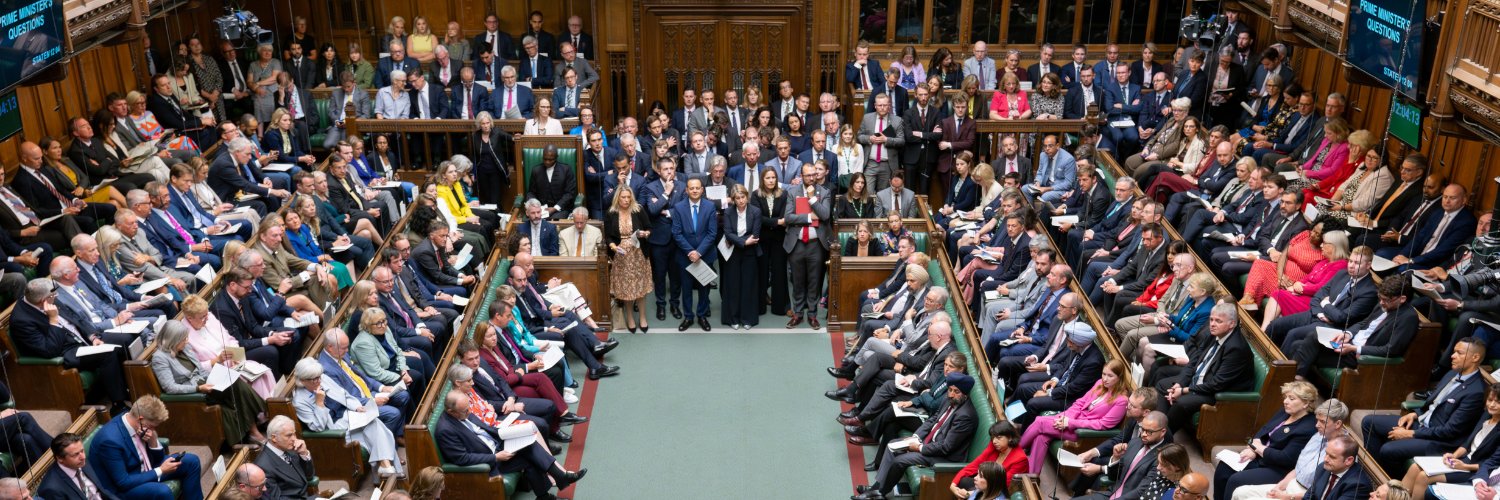
(ZENIT News / London, 09.14.2026).- The United Kingdom has rejected, for now, one of the most consequential attempts in decades to change the legal meaning of medical care at the end of life. In a closely divided House of Commons, MPs voted 286 to 270 against legislation that would have allowed certain terminally ill adults in England and Wales to seek an assisted death.
The 16-vote defeat on September 11 was striking not only because the proposal failed, but because of how dramatically the political landscape had shifted. An almost identical bill had passed its second reading in November 2024 by 55 votes and cleared its third reading in June 2025 by 314 votes to 291. It subsequently ran out of time in the House of Lords after around 1,200 amendments were tabled.
The renewed bill, introduced by Labour MP Lauren Edwards after the previous measure failed to complete its passage, would have applied to adults in England and Wales expected to have less than six months to live. Applicants would have required approval from two doctors and an expert panel. The government remained neutral, allowing MPs to vote according to conscience rather than party instructions.
That unusual political arrangement helps explain why the result cannot easily be read as a straightforward victory for one party or ideological camp. MPs from different political traditions opposed the legislation, while others supported it. Prime Minister Andy Burnham did not vote, saying he did not want to influence the debate improperly.
At the center of the opposition was a question more difficult than the legal mechanics of assisted dying: what happens when a person’s desire to die is shaped, even subtly, by the circumstances in which they are living?
An assessment by the Department of Health and Social Care warned that legislation could create subtle pressure on disabled people to end their lives. Disability-rights organizations raised a related concern from a different starting point: whether people who already struggle to obtain assistance with eating, washing, leaving their homes or working could genuinely be said to have a free choice about the end of their lives.
Assist Us To Live, a group representing people with disabilities and terminal illnesses, welcomed the defeat while arguing that palliative care and social care are dangerously underfunded. Its position exposes one of the central tensions in the debate. A legal right to choose death can appear very different depending on whether a person is making that decision amid excellent care, family support and pain management or while confronting loneliness, inadequate services and the fear of becoming a burden.
Medical uncertainty also featured prominently. Labour MP and surgical oncologist Dr. Zubir Ahmed challenged the premise that doctors can reliably determine who has six months left to live, telling Parliament that when asked to make such a prognosis, he is wrong “as often as right.”
The objections extended well beyond religious organizations. The Royal College of Psychiatrists and other medical bodies had expressed serious concerns about the safeguards and the protection of people with mental illness. Organizations representing disabled people, social workers, geriatricians, palliative-care specialists and victims of domestic abuse also raised objections or called for stronger protections. More than 350 disability organizations were among those opposing the proposal, according to campaigners, alongside more than 1,000 doctors and overseas medical experts.
The possibility of coercion was particularly troubling to critics. Archbishop John Sherrington of Liverpool, the Catholic bishops’ lead for life issues in England and Wales, had warned that vulnerable people could be placed under pressure to choose assisted suicide, including victims of domestic abuse.
Catholic opposition was therefore not presented simply as an abstract prohibition against assisted death. Archbishop Richard Moth, the Catholic leader in England and Wales, described the bill as wrong in principle and deeply flawed, while Sherrington argued that society’s response to serious illness, disability and old age should begin with solidarity, care and respect.
The Anglican Church of England reached a similar conclusion from within a different theological tradition. Archbishop of Canterbury Sarah Mullally argued that society’s commitment to preventing suicide should also apply to people who are terminally ill. Other religious leaders likewise welcomed the vote, including Archbishop Mark O’Toole of Cardiff-Menevia and Anglican Bishop Helen-Ann Hartley of Newcastle.
Yet the religious response was accompanied by a practical demand: improve care.
Sherrington thanked not only MPs but also doctors, lawyers, disability advocates, members of other faiths and people with no religious belief who had opposed the bill. He insisted that high-quality palliative and end-of-life care should be more widely available, so that people approaching death can experience comfort, dignity and support rather than feel that they have become a burden.
That argument intersects with a wider British political problem. Social care has become an increasingly urgent issue for elderly and disabled people who depend on assistance with everyday life. The debate over assisted suicide has consequently raised a question that cannot be resolved by changing criminal or medical law alone: whether Britain is prepared to invest sufficiently in helping vulnerable people live before it gives them a new legal pathway to die.
The political campaign against the bill appears to have benefited from that broader concern. A Whitestone Insight poll published on the day of the vote found that 82 percent of respondents agreed that Parliament should first ensure that nobody is driven toward assisted suicide because they cannot obtain the care and support they need at the end of life. Only 8 percent disagreed.
The result was also welcomed by the Society for the Protection of Unborn Children, which described the defeat as a victory for vulnerable people and credited campaigners from disability rights, social work, domestic-abuse prevention, palliative care, medicine and the wider pro-life movement.
The British vote follows another significant defeat for assisted-suicide legislation in Scotland in March. Together, the two results mark a substantial reversal from the momentum the proposals appeared to have gathered in Westminster only two years ago. Campaigners against assisted suicide have even been described by a leading pollster as having achieved one of the most successful social-issue campaigns in Britain in the 21st century.
But the vote does not settle the philosophical or medical questions permanently. It does, however, shift the immediate focus. Rather than asking whether Parliament should establish a legal mechanism for assisted death, Britain now faces the less dramatic but arguably more demanding task of ensuring that people who are elderly, disabled or terminally ill have access to care that makes continued life bearable and meaningful.
That distinction matters. A society’s commitment to human dignity is tested not only by the laws it refuses to enact, but by the support it provides when people are most dependent on others.
For Britain’s Catholic bishops and their allies in the wider campaign, the parliamentary defeat is not an endpoint. It is an invitation to make the alternative concrete: better palliative care, stronger social support and a culture in which no dying person is made to feel that his or her continued existence is an unreasonable cost to others.
The question that now remains for Westminster is not simply whether assisted suicide should be legal. It is what Britain is willing to do so that those nearing death can be assured that they are still worth caring for.
Thank you for reading our content. If you would like to receive ZENIT’s daily e-mail news, you can subscribe for free through this link.

Publicaciones relacionadas:
 France and England: Two Pro-Life Victories in the Face of the Culture of Discard (Assisted Death and Euthanasia)
 California sees record assisted suicide deaths after 150% rise in five years
 USA: Landmark Alabama Supreme Court decision protects the life of human embryos
 Catholic President of Chile Will Not Support Pro-Life Bill Requiring Women to Hear Baby’s Heartbeat Before Undergoing An Abortion
