

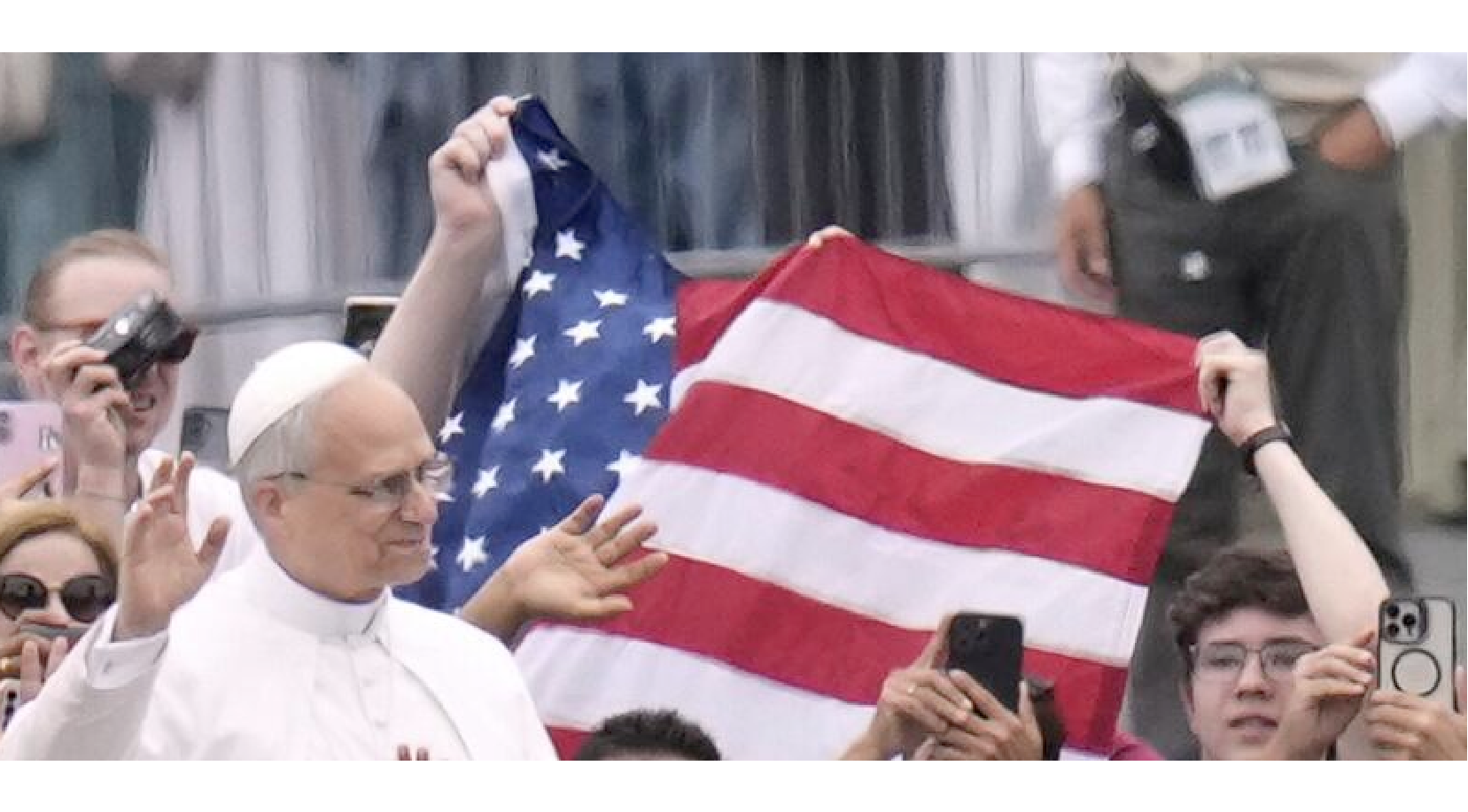
(ZENIT News / Washington, 07.29.2025).- In an unprecedented intersection of faith, diplomacy, and tax law, a freshman U.S. congressman has introduced legislation aimed at insulating the newly elected Pope Leo XIV—born Robert Prevost of Chicago—from possible American legal entanglements. The bill, titled the Holy Sovereignty Protection Act (H.R. 4501), seeks to address what its sponsor, Representative Jeff Hurd of Colorado, calls “the extraordinary uniqueness of a citizen ascending to global spiritual leadership.”
Though the Vatican’s sovereign status has long offered protection from foreign jurisdiction, the election of an American-born pope has raised novel questions for both canonists and constitutional lawyers. Chief among them: Can the IRS compel the Bishop of Rome to file tax returns?
That theoretical quandary is now a legislative one. If passed, Hurd’s bill would formally exempt any U.S. citizen who becomes pope from tax obligations to the United States during his pontificate. It would also protect the pope’s American citizenship from revocation—a fate not required by law, but not unthinkable, given the complexities of assuming head-of-state status for a foreign power.
“The election of Pope Leo XIV is not just a religious milestone—it’s a constitutional curiosity,” says Clara Beauchamp, a professor of law and religion at Georgetown. “You have an American who is now both a spiritual sovereign and a legal one. That opens a thicket of questions we’ve never had to ask before.”
Prevost, who holds dual U.S.-Peruvian citizenship, spent nearly two decades in Peru as a missionary and bishop before rising rapidly through the Roman Curia. His election two months ago as the 268th successor to Saint Peter marked the first time an American has occupied the papal throne, prompting both celebration and legal concern.
According to Vatican insiders, officials in the Holy See’s Secretariat of State began quietly consulting legal experts almost immediately after the conclave. Chief among their concerns was whether Leo XIV’s U.S. citizenship might trigger mandatory financial disclosures under IRS rules—disclosures that could, at least in theory, encompass sensitive Vatican funds or charitable disbursements under papal authority.
To date, no pope has accepted a formal salary. Leo XIV is reportedly following suit. Yet that may not be enough to avert scrutiny. The IRS could still require reports on any accounts linked to the pope’s office—even those used for global charity work like Peter’s Pence.
Beyond taxation, another worry looms larger: civil liability. Over the past two decades, a growing number of plaintiffs in the United States have attempted to name the Vatican in civil lawsuits related to clerical abuse, arguing that the Holy See bears ultimate responsibility for diocesan mismanagement. Though most of these cases have been dismissed due to the Vatican’s sovereign immunity, the election of an American pope could shift the legal calculus.
“If a U.S. court were to treat Robert Prevost not as a head of state, but as a citizen, it could, in theory, attempt to pierce that immunity,” says Anthony Lucero, a retired federal judge. “It’s a long shot, but one that any Vatican lawyer would want to preempt.”
The Holy Sovereignty Protection Act does not go so far as to grant blanket immunity in civil suits. A spokesperson for Rep. Hurd confirmed that the bill “does not interfere with existing legal processes involving civil litigation.” However, it would effectively prevent any federal agency from requiring tax-related documentation or attempting to question the pope’s national loyalty through citizenship revocation.
The measure has gained six Republican co-sponsors, four of whom are Catholic. Notably, the bill avoids theological language, framing the issue instead in terms of legal consistency and international norms. In a statement, Hurd said, “No American should have to choose between their faith and their citizenship—especially not someone who’s been called to lead over a billion believers.”
Still, critics have raised concerns about the symbolism of congressional action on behalf of a religious leader. “We are stepping into uncharted waters,” warns Evelyn Hartwell, an expert in church-state relations. “It’s one thing to celebrate an American pope; it’s another for Congress to tailor law around a specific religious office. That makes many constitutional scholars nervous.”
The U.S. State Department, when asked in May whether it was reviewing Leo XIV’s citizenship, declined to comment. Its website, however, does note that Americans who become foreign heads of state may undergo review, and such cases raise “complex issues of international law.”
Back in Rome, Vatican officials have maintained public silence but continue to track the legislation closely. While Pope Leo XIV has yet to speak directly on the bill, sources suggest he remains focused on his pastoral mission, not his passport. Privately, however, some within the Curia worry that his dual nationality could become a long-term liability for the papacy itself—especially if hostile governments or litigious plaintiffs attempt to exploit the loophole.
For now, the Holy Sovereignty Protection Act remains in committee. But its implications ripple far beyond Capitol Hill.
Thank you for reading our content. If you would like to receive ZENIT’s daily e-mail news, you can subscribe for free through this link.

Publicaciones relacionadas:
 Pope Leo’s visit to Argentina unofficially confirmed after audience with President Milei
 The Middle East, the spread of war, and the position of the Pope and the Catholic Church
 Pope confirms new Custos of the Catholic Church for the Holy Places in the Holy Land
 Pope Leo XIV Receives Nobel Prize Laureate Maria Corina Machado: This Is What the Venezuelan Leader Asked Him
