

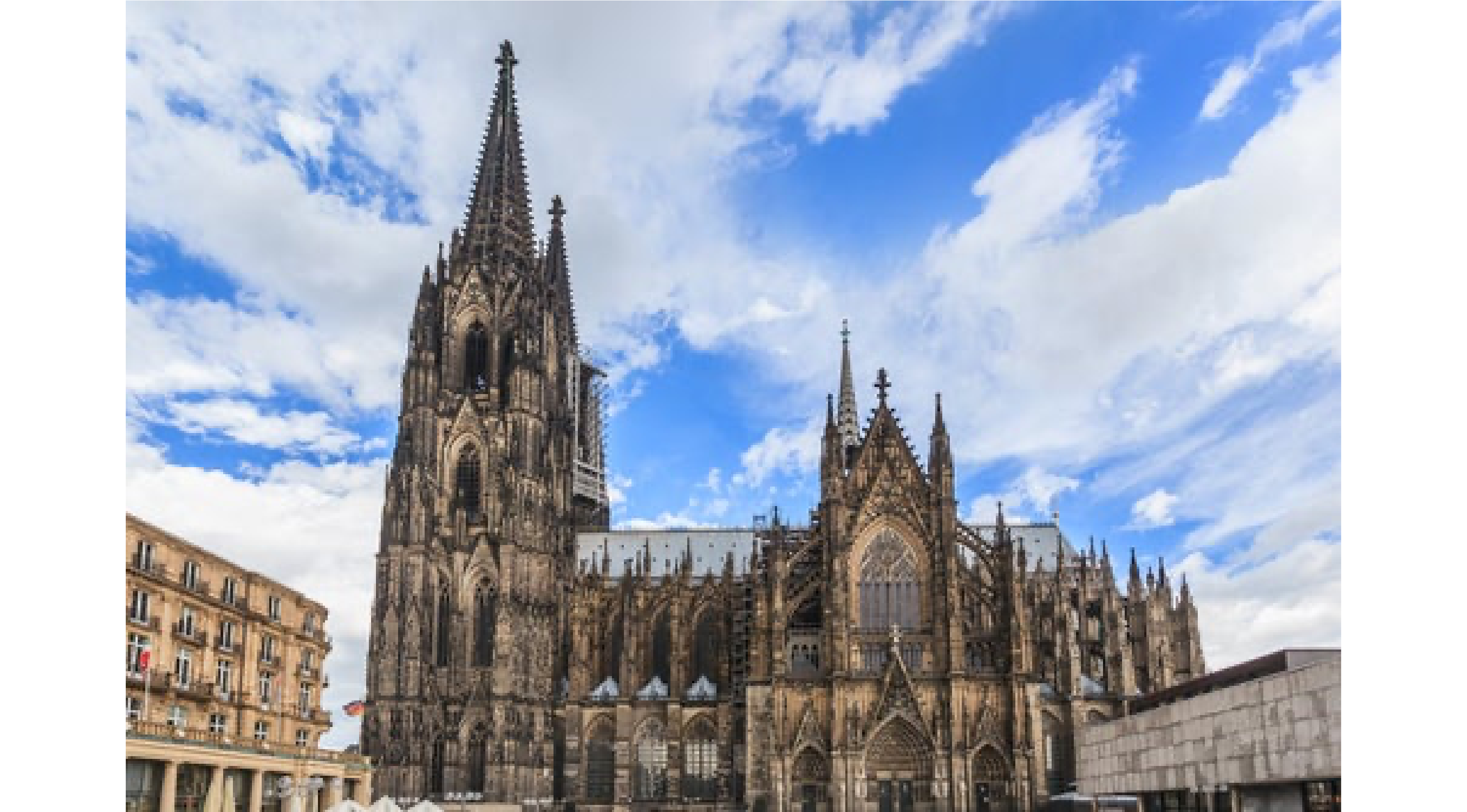
(ZENIT News / Cologne, 03.07.2026).- One of the most recognizable landmarks of Christian Europe is preparing for a historic change. Beginning in the second half of 2026, visitors to Cologne Cathedral will be required to pay an entrance fee, a decision driven by mounting maintenance costs and shrinking financial reserves.
Church authorities announced the measure on March 5, explaining that the iconic Gothic cathedral—visited by millions each year—faces increasing financial pressure due to inflation and rising personnel expenses. While the cathedral chapter confirmed that an entrance charge will be introduced for tourists, the exact price has not yet been disclosed.
The decision marks a significant shift for one of the most visited religious sites in Europe. Towering above the city’s central railway station and overlooking the Rhine River, the cathedral dominates the skyline of Cologne. Its twin spires, rising more than 150 meters, have become synonymous with the city itself.
Construction of the vast Gothic church began in 1248, in the Middle Ages, when Cologne was one of the most important ecclesiastical centers in the Holy Roman Empire. Work continued intermittently for centuries before the cathedral was finally completed in 1880. In recognition of its architectural and cultural significance, the building was designated a UNESCO World Heritage Site in 1996.
Today, however, preserving such a monumental structure comes at a steep cost. According to the cathedral chapter, maintaining the building is expected to require approximately 16 million euros in 2026—about 18.6 million U.S. dollars.
At the same time, financial buffers that had helped offset these expenses in previous years have largely been exhausted. One reason lies in the disruption caused by the global health crisis. During the COVID-19 pandemic, the cathedral was forced to suspend paid access to two of its traditional revenue sources: the climb to the towers and visits to the cathedral treasury. Those closures lasted for extended periods, significantly reducing income.
Administrators have attempted to cut costs where possible. Among other measures, vacancies within the cathedral’s architectural office were not filled when staff members left their positions. But church officials say such internal savings are insufficient to guarantee long-term financial stability.
The introduction of an entrance fee is therefore intended primarily for tourists, who account for the overwhelming majority of the cathedral’s visitors. According to Cathedral Dean Guido Assmann, roughly 99 percent of those who enter the building do so as tourists rather than as worshippers.
To preserve the cathedral’s religious character, the new policy will include important exemptions. Individuals attending liturgical services or entering designated areas for prayer will not be required to pay.
The distinction reflects a tension increasingly faced by many historic churches across Europe. Buildings originally constructed exclusively for worship have become global tourist destinations, drawing millions of visitors whose presence helps sustain local economies but also accelerates wear on fragile historic structures.
With approximately 6 million visitors each year, Cologne Cathedral ranks among the most visited religious monuments on the continent. Its immense stone surfaces, stained-glass windows and intricate sculptures require constant conservation work carried out by a permanent team of specialists.
For centuries, the cathedral has been both a spiritual center and a symbol of Catholic identity in Germany. Yet maintaining such a vast medieval structure in the twenty-first century requires financial models that balance openness to pilgrims with the realities of modern preservation.
Thank you for reading our content. If you would like to receive ZENIT’s daily e-mail news, you can subscribe for free through this link.

Publicaciones relacionadas:
 Church Rejects Anti-Judaism: Pope’s Letter to Jews Living in Israel
 How Many People Visited the Fatima Shrine in Portugal in 2023? Record Numbers Are Released
 Kidnappings (not only of priests and nuns) in Nigeria are out of control: solidarity of the Dicastery for Evangelization
 Towards a hybrid church, half digital, half face-to-face? In Korea they are considering it
