

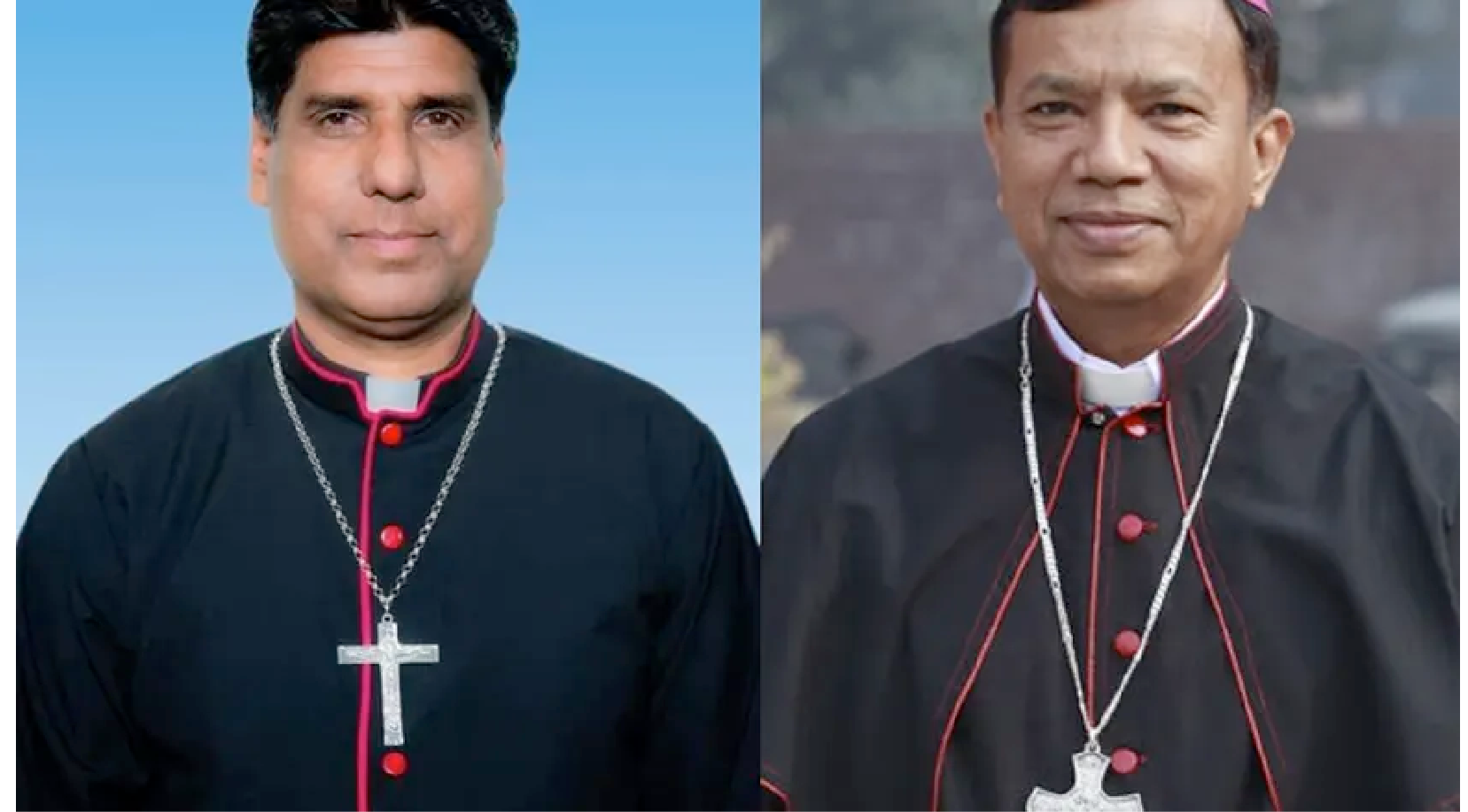
(ZENIT News / Lahore, 03.13.2026).- The Catholic Church in Pakistan is entering a new phase after a complex period marked by controversy, investigations and uncertainty. Pope Leo XIV has decided to reorganize the leadership of two key ecclesiastical jurisdictions in the country, appointing Capuchin Bishop Khalid Rehmat as the new metropolitan archbishop of Lahore while assigning Franciscan Archbishop Sebastian Francis Shaw to head the Apostolic Vicariate of Quetta.
The appointments, announced by the Vatican on March 10, are widely interpreted as an attempt to restore stability and rebuild confidence among the faithful after more than a year of tension within one of the country’s most important dioceses.
A troubled chapter in Lahore
The Archdiocese of Lahore, located in Pakistan’s most populous province of Punjab, has been at the center of ecclesial and public debate since August 15, 2024, when the Vatican removed Archbishop Sebastian Francis Shaw from office following serious accusations against him.
The allegations included abuse of power, financial mismanagement and controversial real estate transactions involving Church property that was allegedly sold below market value. Reports also claimed that funds linked to a Catholic hospital and an educational commission had been improperly used. In addition, a suspended priest accused Shaw of sexual misconduct, though those claims were later dismissed by Church authorities.
In response, the Holy See opened a formal investigation. The inquiry was led by Cardinal Patrick D’Rozario, the retired archbishop of Dhaka in Bangladesh, together with Archbishop Benny Mario Travas of Karachi, a canon lawyer who was appointed apostolic administrator of Lahore during the investigation. Shaw himself was asked to step aside for what Vatican officials described as a “sabbatical period” intended to allow the process to unfold without interference.
After more than a year, the Vatican concluded that the accusations against Shaw were unfounded. Nevertheless, the investigation also made clear that tensions within the archdiocese had reached a point where a pastoral change was considered necessary.
A new archbishop for a key diocese
That responsibility now falls to Bishop Khalid Rehmat, a 57-year-old Capuchin friar originally from the Diocese of Islamabad-Rawalpindi. Until now he had been serving as apostolic vicar of Quetta, a missionary territory in the remote and fragile region of Baluchistan.
His transfer to Lahore places him at the helm of one of the two metropolitan sees of Pakistan and at the center of Catholic life in the country. Punjab alone is home to the vast majority of Pakistan’s roughly 3.3 million Christians, nearly 80 percent of the national total.
Rehmat’s supporters describe him as a pastor with significant experience in challenging environments. As apostolic vicar in Baluchistan since 2021, he led a small and widely dispersed Christian community in Pakistan’s largest and most underdeveloped province, bordering Afghanistan and Iran. Christians represent only about 0.43 percent of the population there.
Within the Catholic Bishops’ Conference of Pakistan he currently presides over the commissions for consecrated life and evangelization and also oversees the Pontifical Mission Societies. He was among the delegates participating in the global Synod on Synodality, which increased his visibility in the broader life of the Church.
Father Qaiser Feroz, executive secretary of the bishops’ conference commission for social communications, welcomed the appointment, saying Rehmat’s leadership skills in a difficult region could make “a significant difference” in Lahore.
A new mission for Shaw
While the Vatican cleared Archbishop Shaw of the accusations that led to his removal, Pope Leo XIV chose not to restore him to his former position. Instead, the 68-year-old Franciscan has been entrusted with the Apostolic Vicariate of Quetta, effectively swapping roles with Rehmat.
Shaw’s appointment has been interpreted in different ways within the Pakistani Catholic community. Some see it as a sign that the Vatican continues to trust his pastoral experience, while others consider the move a practical demotion from leading a major metropolitan archdiocese to overseeing a missionary vicariate.
One official from the Archdiocese of Lahore, speaking anonymously, described the decision as “a new beginning” for Shaw. During the investigation, the archbishop reportedly lived in relative seclusion in a Franciscan residence in Karachi and was not allowed to travel abroad.
Born in 1957 in Sindh within the Diocese of Hyderabad, Shaw was ordained a priest in 1991. He became auxiliary bishop of Lahore in 2009 and was appointed metropolitan archbishop in 2013. Over the years he also held several leadership roles within the national bishops’ conference, including chairing commissions on interreligious dialogue, family and education, and Caritas Pakistan.
His tenure in Lahore was not without controversy even before the recent allegations. In 2017 he faced criticism after allowing Maryam Nawaz, daughter of former prime minister Nawaz Sharif and now chief minister of Punjab, to address a gathering inside Lahore’s cathedral during an election campaign. The episode eventually led the archdiocese to ban political speeches and activities in church buildings.
Debate among the faithful
The Vatican’s decision has sparked mixed reactions among Pakistani Catholics. Some welcome the leadership changes as a path toward reconciliation and renewal after months of uncertainty. Others believe deeper questions about accountability still need to be addressed.
Catholic activist Rojar Randhawa, who had previously filed complaints to the Vatican regarding Shaw’s leadership, questioned whether the new arrangement fully responds to earlier concerns. According to him, the credibility of the Church depends on handling such matters with transparency and a clear commitment to the Gospel values of truth and responsibility.
Yet many within the local Church are choosing to focus on the opportunity for a fresh start. Kashif Anthony, secretary of the Catholic Commission for Interreligious Dialogue and Ecumenism, described the Pope’s decision as wise, emphasizing the importance of filling the vacant see of Lahore with stable leadership.
Others echo that sense of cautious hope. Yousaf Benjamin, executive director of the human rights organization Dignity First, said the appointment of Rehmat could help rebuild trust between clergy and laity. He hopes the new archbishop will foster greater participation among young Catholics and pay special attention to the spiritual and social needs of marginalized communities.
The broader context
For Pakistan’s small Christian minority, leadership within the Church carries particular significance. Christians make up only a small fraction of the country’s population, but they maintain a visible presence through schools, hospitals and charitable institutions.
The Church’s two metropolitan sees—Karachi and Lahore—play a central role in coordinating pastoral and social initiatives, while missionary territories such as Quetta represent the frontier of Catholic presence in remote regions.
In this context, Pope Leo XIV’s decision appears designed to accomplish two goals at once: to stabilize a major archdiocese that had been shaken by controversy, and to ensure that a seasoned bishop continues serving in one of the country’s most challenging mission territories.
For many Pakistani Catholics, the reshuffle marks the closing of a difficult chapter and the beginning of another whose success will depend less on administrative decisions and more on the ability of the Church’s leaders to rebuild trust among the faithful.
Thank you for reading our content. If you would like to receive ZENIT’s daily e-mail news, you can subscribe for free through this link.

Publicaciones relacionadas:
 Capuchin Bishop Who Supported a Transgender Hermit Is Recognized by LGBT Activist Group in the USA
 National controversy in Brazil over an archbishop’s disparaging remarks about receiving communion in the mouth
 Pope Leo XIV accepts resignation of bishop whom Pope Francis appointed cardinal, but who “did not want” to receive the appointment
 Cardinal Ouellet Faces Defamation Lawsuit in Canadian Court Over Abuse Allegations
