

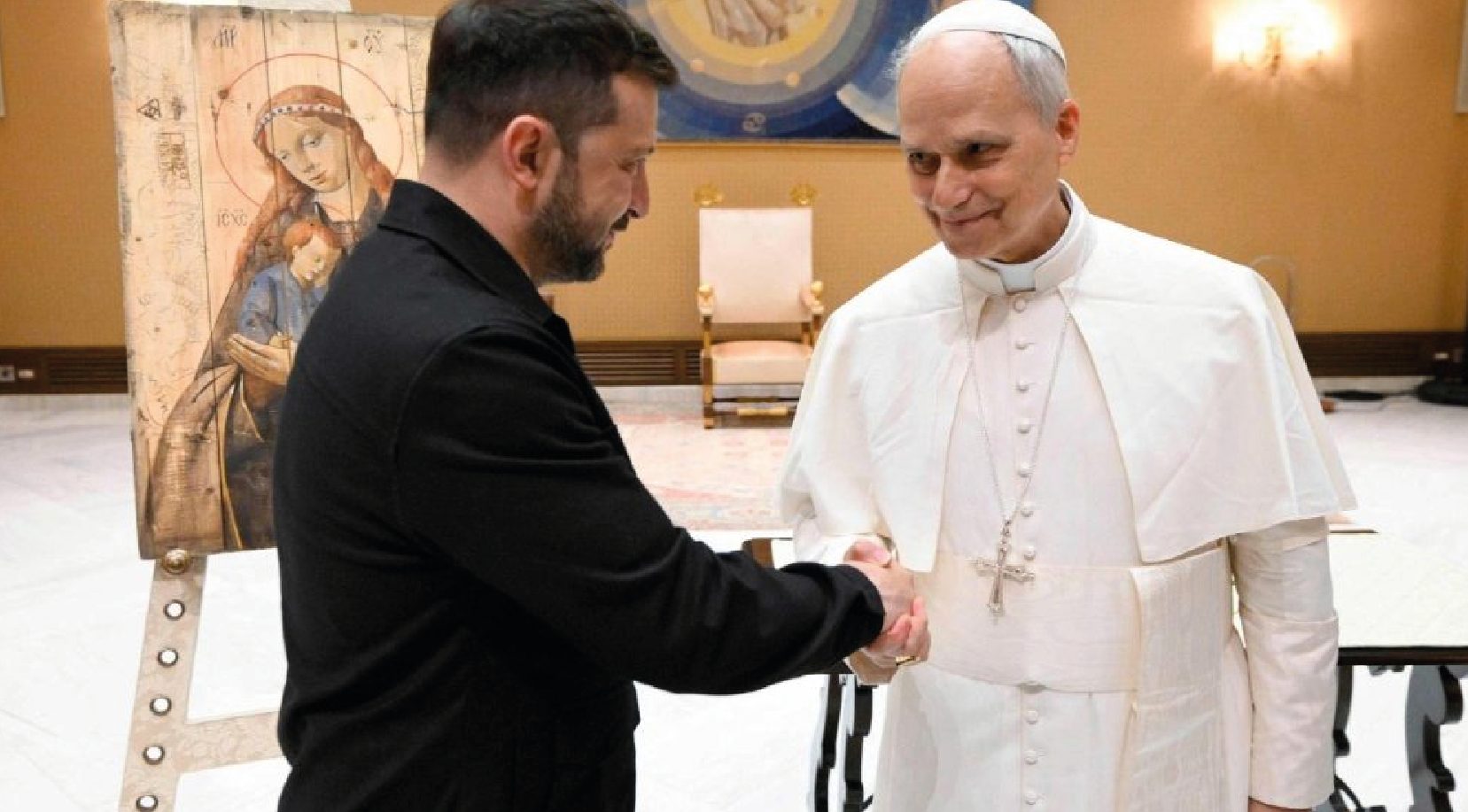
(ZENIT News / Vatican City, 04.03.2026).- On a Good Friday marked by overlapping religious calendars and intensifying in Ukraine crises, Pope Leo XIV stepped into a familiar yet increasingly urgent role: that of a moral interlocutor in a fractured geopolitical landscape. His separate phone conversations on April 3 with Isaac Herzog and Volodymyr Zelenskyy reveal a Vatican strategy that privileges humanitarian imperatives, multilateral dialogue, and symbolic timing—particularly as Easter approaches under the shadow of war.
The Vatican confirmed that both calls included an exchange of greetings for Easter—Christian and Jewish alike—but quickly moved into substantive discussions on the conflicts in Ukraine and the Middle East. Leo XIV emphasized the continuity of humanitarian assistance and reiterated a message he had already delivered publicly on March 31: the need for an unconditional ceasefire and, at minimum, an Easter truce. That appeal now appears to have been overtaken by events on the ground.
In his conversation with Herzog, the Pope returned to a core Vatican principle: diplomacy must not be allowed to collapse, even under extreme conditions. According to the Holy See Press Office, both parties acknowledged the “need to reopen all possible channels of diplomatic dialogue” with a view to achieving “a just and lasting peace in the entire Middle East.” The emphasis was not merely procedural. Leo XIV also stressed the protection of civilians and adherence to international humanitarian law—language that aligns with longstanding Vatican diplomatic doctrine but carries renewed weight amid escalating hostilities.
This morning, I spoke with @Pontifex Pope Leo XIV to exchange greetings for the Passover and Easter holidays.
During our call, we discussed the war with Iran, including the ongoing threat of missile attacks by the Iranian regime and its terror proxies against people of all… pic.twitter.com/TQ1CjLgAUc
— יצחק הרצוג Isaac Herzog (@Isaac_Herzog) April 3, 2026
Herzog, for his part, offered a stark assessment of the regional security environment. In public remarks following the call, he pointed to what he described as the persistent threat posed by Iran and its allied groups, including missile attacks that have recently struck Jerusalem, affecting sites sacred to Jews, Christians, and Muslims alike. He also highlighted the continued volatility along Israel’s northern border, warning that Hezbollah remains a destabilizing force threatening both Israeli and Lebanese populations, including Christian communities.
These exchanges unfolded against a broader escalation involving the United States and Iran, with Donald Trump signaling a readiness to intensify military action. The convergence of these tensions has effectively widened the scope of the Middle Eastern بحران, placing additional strain on diplomatic efforts and complicating the Vatican’s calls for de-escalation.
Notably absent from official readouts, however, was any reference to a sensitive incident in Jerusalem just days earlier. On March 29, Pierbattista Pizzaballa was reportedly denied access by Israeli police to the Church of the Holy Sepulchre on Palm Sunday—an episode that raised concerns about religious freedom amid heightened security restrictions. While subsequent negotiations allowed limited access for clergy to celebrate liturgies, neither the Vatican nor the Israeli presidency confirmed whether the issue surfaced during the Pope’s call with Herzog.
If the Middle East conversation centered on diplomacy and deterrence, the call with Zelenskyy unfolded under the immediate pressure of ongoing ռազմական violence. According to Ukrainian accounts, Russian forces launched waves of attacks during the very hours of the papal conversation, striking at least five regions with missiles and causing what Zelenskyy described as “hundreds of martyrs.” The timing underscored the fragility—if not the futility—of proposals for a temporary Easter ceasefire.
I spoke with His Holiness Pope Leo XIV @Pontifex today. At the very moment of our conversation, the Russians attacked Ukraine yet again – hundreds of “shaheds” and dozens of missiles against our cities and communities. In fact, the attack has been ongoing in waves since last… pic.twitter.com/RWKvjyDt3B
— Volodymyr Zelenskyy / Володимир Зеленський (@ZelenskyyUa) April 3, 2026
In that context, Leo XIV’s message to Kyiv combined pastoral solidarity with concrete humanitarian priorities. The Pope expressed closeness to the Ukrainian people, now entering their fourth Easter under wartime conditions, and reiterated the urgency of ensuring continued aid to a population exhausted by prolonged conflict. Particular attention was given to initiatives aimed at the release of prisoners, an area where the Vatican has quietly sought to exercise diplomatic leverage.
Zelenskyy acknowledged the Holy See’s role in facilitating humanitarian efforts, including assistance in the return of deported Ukrainian children and winter aid for vulnerable populations. He also extended an invitation for a future apostolic visit—an idea that, while symbolically potent, would carry significant logistical and political implications in an active war zone.
Across both conversations, a consistent pattern emerges: the Vatican positioning itself not as a power broker, but as a persistent advocate for humanitarian norms and dialogue, even when those appeals appear outpaced by military realities. Leo XIV’s insistence on reopening diplomatic channels and protecting civilians reflects a continuity with his predecessors, yet the simultaneity of crises—from Eastern Europe to the Levant—tests the limits of that approach.
Easter, in this context, becomes more than a liturgical milestone. It is a rhetorical and moral reference point, invoked by the Pope as a horizon for peace, even as missiles continue to fall.
Thank you for reading our content. If you would like to receive ZENIT’s daily e-mail news, you can subscribe for free through this link.

Publicaciones relacionadas:
 Israeli Prime Minister Calls Pope After Military Attack on Catholic Parish in Gaza
 Between Gaza and Jerusalem: Pope Leo XIV and Israel’s Herzog Navigate Fragile Paths to Peace
 Pope Leo XIV, the US-Iran war, and a forceful call in a Middle East on the brink of the abyss
 A Church Against the Logic of War: Vatican Voices, Middle East Realities, and the Risk of a Vanishing Christianity
