

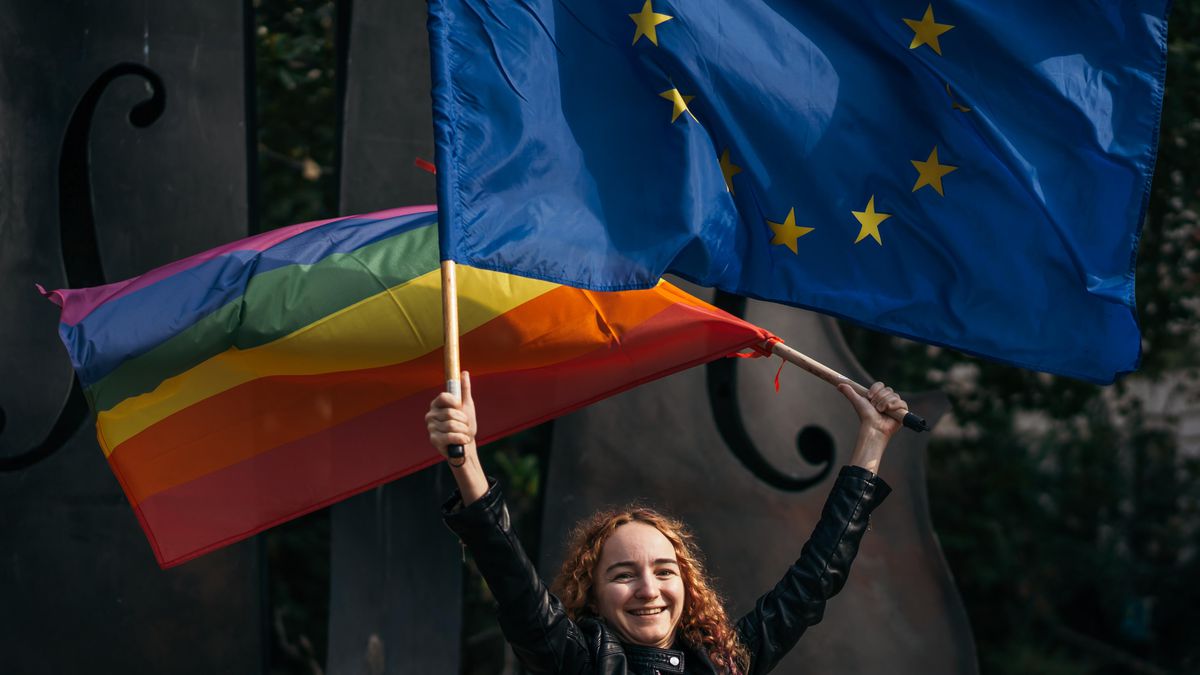
(ZENIT News / London, 10.16.2025).- A new Europe-wide study suggests that the Catholic Church in England and Wales is emerging as one of the most progressive branches of global Catholicism when it comes to welcoming LGBTQ+ believers.
According to the latest Rainbow Index of Churches in Europe (RICE), published on October 11 by the European Forum of LGBTI+ Christian Groups, the Catholic Church in England and Wales now ranks second in inclusivity among Catholic communities across the continent, tied with Belgium and just behind Germany. The report marks a notable shift from previous years, when Catholicism in Britain was often viewed as hesitant or divided on matters of sexuality and pastoral outreach.
The RICE index, developed by a coalition of ecumenical academics and theologians, measures 46 European churches across 52 criteria — from institutional equality and non-discrimination to public policy, language, and liturgical practices. Its findings reveal significant progress in certain Catholic contexts, particularly those influenced by Pope Francis’ emphasis on local dialogue and pastoral discernment through the global Synod process.
Dr. Regina Elsner, professor of Eastern Church Studies and Ecumenical Theology at the University of Münster, noted that “the data show the tangible impact of local dialogue initiatives that began with the first RICE survey in 2020 and were reinforced by the synodal reforms encouraged by Pope Francis. There’s a growing awareness of diversity within the Church and a visible pastoral shift toward affirmation.” Yet she also warned that “harmful language, double standards, and alliances with reactionary forces continue to hinder progress across Europe.”
In England and Wales, advocates attribute the country’s strong showing to a quiet but steady pastoral evolution. Martin Pendergast, secretary of the Westminster LGBT+ Pastoral Council, said that “the seven diocesan ministries formally recognized as serving the LGBT+ community have made a real difference in practice, not just in rhetoric.” Still, he added, “The Church here must now build on that foundation — by revising outdated pastoral guidance from 1979, adopting more inclusive language, and urging the Vatican’s Dicastery for the Doctrine of the Faith to open the way for blessings and liturgies for same-sex couples.”
The Westminster LGBT+ Pastoral Council, long a member of the European Forum, has operated within the Catholic Church in England and Wales for years, often serving as a bridge between LGBTQ+ faithful and diocesan leadership. Pendergast’s call for a new pastoral framework echoes many voices in the ongoing synodal consultations, where Catholics have repeatedly asked for clearer and more compassionate approaches to sexuality, identity, and belonging.
The European Forum’s co-chair, Misza Czerniak, underlined the scale of the issue: “Roughly one in three LGBTQ+ people in Europe identifies as religious. That’s an enormous community, largely invisible because of inadequate inclusion. RICE helps us see where faith communities are growing in welcome — and where they’re still falling short. The message is clear: change is coming, but it’s taking too long.”
Founded in 1982, the European Forum of LGBTI+ Christian Groups represents more than 40 organizations in 20 countries, spanning Catholic, Protestant, Orthodox, and ecumenical communities. Its goal is to promote dignity, equality, and freedom of religion for LGBTQ+ people within the Christian tradition.
While the new index celebrates progress in the Catholic Church in England and Wales, it also highlights the uneven landscape of acceptance across Europe — from Germany’s dynamic reforms to more resistant regions in the East. Still, the trend line points unmistakably toward a more open and dialogical Catholicism.
Thank you for reading our content. If you would like to receive ZENIT’s daily e-mail news, you can subscribe for free through this link.

Publicaciones relacionadas:
 Scotland: Church voices concern as government looks into banning ‘conversion practices’
 About the Scandal in New York’s Cathedral of Gay Irreverence During a Funeral and What This Has To Do with Fiducia Supplicans
 On the controversy in the German episcopate regarding Leo XIV’s clear “no” to liturgical blessings for gay couples
 Vatican contradicts German bishops: text for blessing same-sex couples was not approved
