

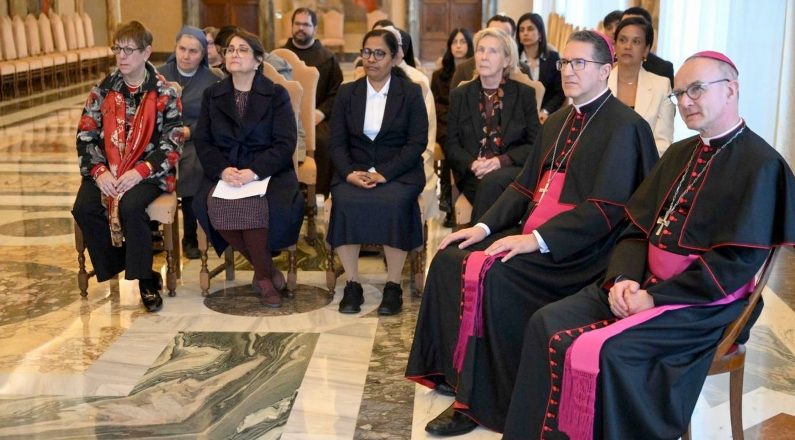
(ZENIT News / Rome, 06.13.2026).- The Holy See today published the updated Statutes of the Pontifical Commission for the Protection of Minors, reinforcing the Church’s ongoing commitment to the protection of minors and vulnerable persons worldwide.
“The Statutes mark an important step in deepening our shared responsibility to protect and care for the most vulnerable,” said Commission President, Archbishop Thibault Verny. “They reflect listening—to victims/survivors, to safeguarding experts, and to the experience of local Churches—and reaffirm that safeguarding remains a central priority.”
The revised Statutes strengthen the Commission’s role in promoting safeguarding practices across the universal Church and further clarify its mandate, structure, and working methods. The update forms part of the broader effort of the Holy See to ensure that safeguarding is fully integrated into the life and structures of the Church.
Commitment to Safeguarding
Pope Leo XIV has consistently affirmed that the protection of minors and vulnerable persons is a fundamental responsibility of the Church. The revised Statutes reaffirm this commitment and support for the Commission in its mission to accompany local churches in strengthening their safeguarding frameworks.
The Statutes at a Glance
Why new Statutes?
The previous Statutes of the Pontifical Commission for the Protection of Minors date to 2015. With the promulgation of the Apostolic Constitution Praedicate Evangelium governing the entities of the Roman Curia, the Commission’s Statutes needed to be aligned to the renewed mandate and structure as designated in the Constitution. The new statutes have been approved by Pope Leo XIV ad experimentum, for a trial period of three years.
What’s new?
- Nature:
The Commission advises the Holy Father on the protection of minors and vulnerable persons from abuse (Art. 2 §1) and reports directly to him through the President (Art. 1 §2). It is established alongside the Dicastery for the Doctrine of the Faith and therefore collaborates closely with the Dicastery in the exchange of information, the development of safeguarding methodologies, preparation of the Annual Report and formation programs. The President or Secretary are nominated members of the Dicastery and one or more Dicastery officials are nominated by the Prefect as observers at the Commission’s Plenary Assemblies (Art.3). The Commission helps to guide, but does not govern, service to the Universal Church through the promotion of local responsibility and the competences of the Dicasteries of the Roman Curia in safeguarding matters.
- Competency:
Reporting systems and listening centers: The Commission assists local churches and promotes local responsibility (Art. 2§3 and Art 6 § 1,2,3) in the development of stable and accessible reporting systems as well as listening centers at a regional and national level that that welcome, listen to and accompany victims/survivors, while protecting confidentiality, personal data and the rights of all persons involved.
Church leadership: The Commission can be involved in the Ad limina process, in collaboration with the Dicastery for the Doctrine of the Faith, and in accordance with the procedures established by it (Art. 2 §4). It also assists Consecrated Life through the Conferences of Major Superiors who are valuable partners for formation, best practice, and coordination in the promotion of the responsibility of Superiors and the proper law of each Institute (Art. 2 §5; 5 §1).
The Annual Report: It is the Commission’s responsibility to prepare an Annual Report on Church Policies and Procedures for Safeguarding. The Annual Report is prepared with contributions from Dicasteries and local ecclesial bodies, and after consultation with the Secretariat of State, submitted to the Holy Father for his consent for publication (Art. 2 §6; Art. 7 §1; Art. 7 §8; Art. 7 §9). The Annual Report maps the status of safeguarding in the global church by distinguishing between verified policies, declared practices, information received, systemic issues and recommendations.
Collaboration with the Roman Curia: The Commission collaborates with the Dicasteries of the Roman Curia on safeguarding matters and can, in coordination with the Secretariat of State (Art. 2 §7), submit recommendations to the Prefects of the Dicasteries. In the event of repeated violations or serious shortcomings in local safeguarding systems the Commission can directly submit assessments to the competent Dicastery which retains decisional power proper to its function (Art. 6 §4).
A Universal Safeguarding Framework: The Commission promotes a common framework of safeguarding principles through the conformity of local guidelines with the indications of the Holy See. The safeguarding principles are articulated and implemented locally with due regard for local specificities and taking civil law into account (Art. 2§2; 5 §2).
- Composition:
The Commission is composed of a maximum 23 members appointed by the Holy Father and is represented by the President, who is also nominated by the Holy Father. The President is assisted by a Secretary who is a member of the Commission (Art. 8). The Commission meets twice yearly in Plenary Assembly and acts collegially under the President’s direction (Art. 9). It comprises Regional Groups and Study Groups (Art. 10). The President and Secretary are assisted and advised by the Executive Council, which is a permanent body composed by the President, Secretary and three commissioners, chosen from among the membership and Holy See Officials in service to the Commission. The Executive Council can be assisted by two external members, experts in financial and administrative matters (Art 11). The Commission can avail of regional consultants in the implementation of its mandate (Art. 12).
Thank you for reading our content. If you would like to receive ZENIT’s daily e-mail news, you can subscribe for free through this link.

Publicaciones relacionadas:
 Commission for the protection of minors signs agreement with a second dicastery of the Roman Curia
 The Pontifical Commission for the Protection of Minors launches global consultation on updated Guidelines to prevent sexual abuse in the Church
 Vatican: A French bishop succeeds Cardinal O’Malley as head of the Pontifical Commission for the Protection of Minors
 Rupnik case: proceedings move forward with the Vatican appointing five judges
