

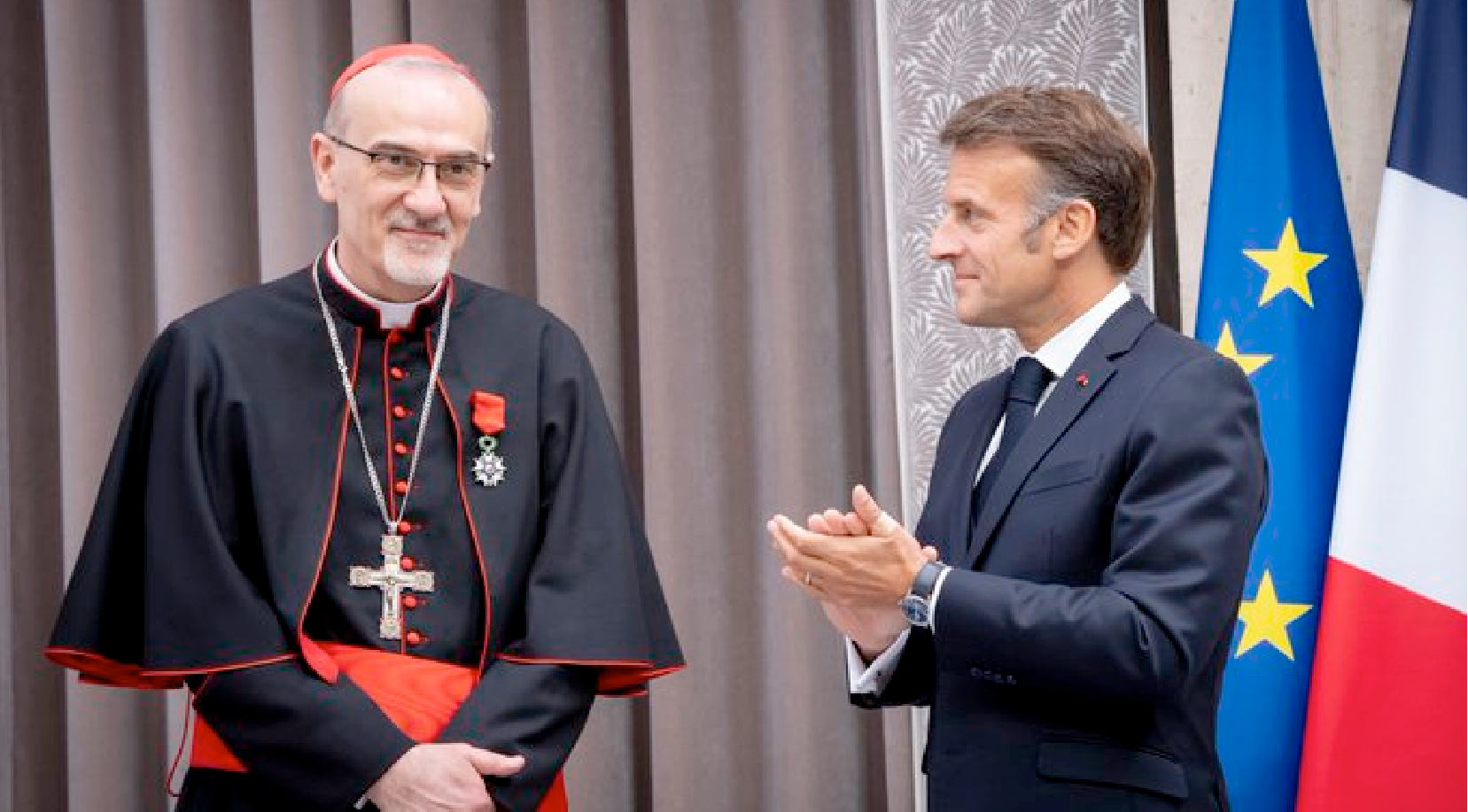
(ZENIT News / Paris, 06.13.2026).- As war, instability, and uncertainty continue to reshape the Middle East, Cardinal Pierbattista Pizzaballa arrived in Paris carrying a message that extended far beyond diplomacy. The Latin Patriarch of Jerusalem was honored by French President Emmanuel Macron with the insignia of Knight of the Legion of Honor, yet the visit quickly became an opportunity to draw international attention to the increasingly fragile future of Christian communities in the land where Christianity was born.
Presenting France’s highest distinction on June 9, Macron praised Pizzaballa as a “tireless apostle of interreligious dialogue, justice, and peace,” while expressing the gratitude of the French Republic for the cardinal’s “courage and humanity.” The French president framed the award not merely as recognition of a religious leader, but as a tribute to a figure who has sought to maintain dialogue and human dignity amid one of the world’s most enduring conflicts.
The ceremony also carried a broader geopolitical significance. Macron reaffirmed France’s historic commitment to Christians in the Holy Land and reiterated his country’s support for preserving the status quo governing Jerusalem’s holy sites. He argued that the continued presence of Christians in the region is essential not only because of history, but because it remains a vital expression of the religious pluralism upon which any lasting peace must rest.
“Christianity was born in this land,” Macron noted, stressing that the Christian presence is an integral part of the region’s identity and a factor of balance in a society increasingly marked by tensions and fragmentation.
Behind the honors and diplomatic courtesies, however, lay a more troubling reality. During his meetings with Macron and French Foreign Minister Jean-Noël Barrot, Pizzaballa spoke candidly about the deteriorating conditions affecting communities throughout Israel, the West Bank, Jerusalem, and Gaza.
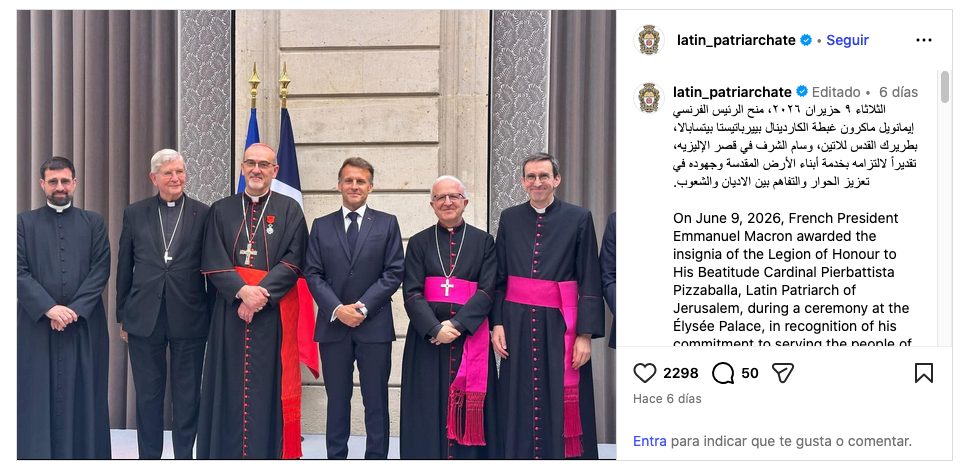
The cardinal described a growing climate of insecurity, economic hardship, and social instability. He pointed to the expansion of settlements, difficulties faced by local populations in accessing land, and continuing incidents of violence that contribute to a sense of vulnerability among residents. According to Pizzaballa, Palestinian Christians share the same hardships experienced by the broader Palestinian population and cannot be viewed separately from the wider humanitarian crisis.
Particularly alarming, he suggested, is the steady growth of emigration. As employment opportunities diminish and economic prospects worsen, increasing numbers of Christian families are considering leaving the region altogether. For the Church, this trend represents more than a demographic challenge. It raises fundamental questions about the future of Christian life in the very places where the Gospel first took root.
Pizzaballa therefore used his visit to issue an appeal that was both practical and pastoral. Expressions of solidarity, he argued, are valuable but insufficient on their own. What is needed are concrete initiatives capable of helping families remain in their homeland: jobs, educational opportunities, economic development, and long-term stability for younger generations.
The patriarch also emphasized what he sees as the Church’s indispensable role in the current crisis. In a region where mistrust often overshadows dialogue, the Church must continue reminding all sides of the dignity and humanity of every person. Its mission, he said, includes speaking the truth, denouncing injustice, and resisting the temptation to reduce human beings to political categories.
The French visit unfolded just days before a conference bringing together Israeli and Palestinian civil society representatives to explore prospects for a two-state solution. Ahead of that meeting, Foreign Minister Barrot strongly condemned attacks and acts of intimidation directed against Christians, churches, and Christian institutions in Jerusalem, Israel, and the Palestinian territories. He also reiterated the urgency of achieving an effective ceasefire and improving humanitarian access to Gaza.
After Paris, Pizzaballa continued his journey to Paray-le-Monial. The itinerary reflected two dimensions of his ministry that have become increasingly intertwined: spiritual leadership and advocacy for communities living under immense pressure.
Thank you for reading our content. If you would like to receive ZENIT’s daily e-mail news, you can subscribe for free through this link.

Publicaciones relacionadas:
 Preserving Christianity in Iraq 10 years after Daesh invasion
 From Oklahoma and Brownsville: these are the new bishops chosen to lead the US episcopate
 Palestinian president announces investment in restoration of Jesus Christ’s birthplace
 The Tallest Image of Our Lady of Fatima Was Inaugurated in Brazil’s Most Catholic City.
