

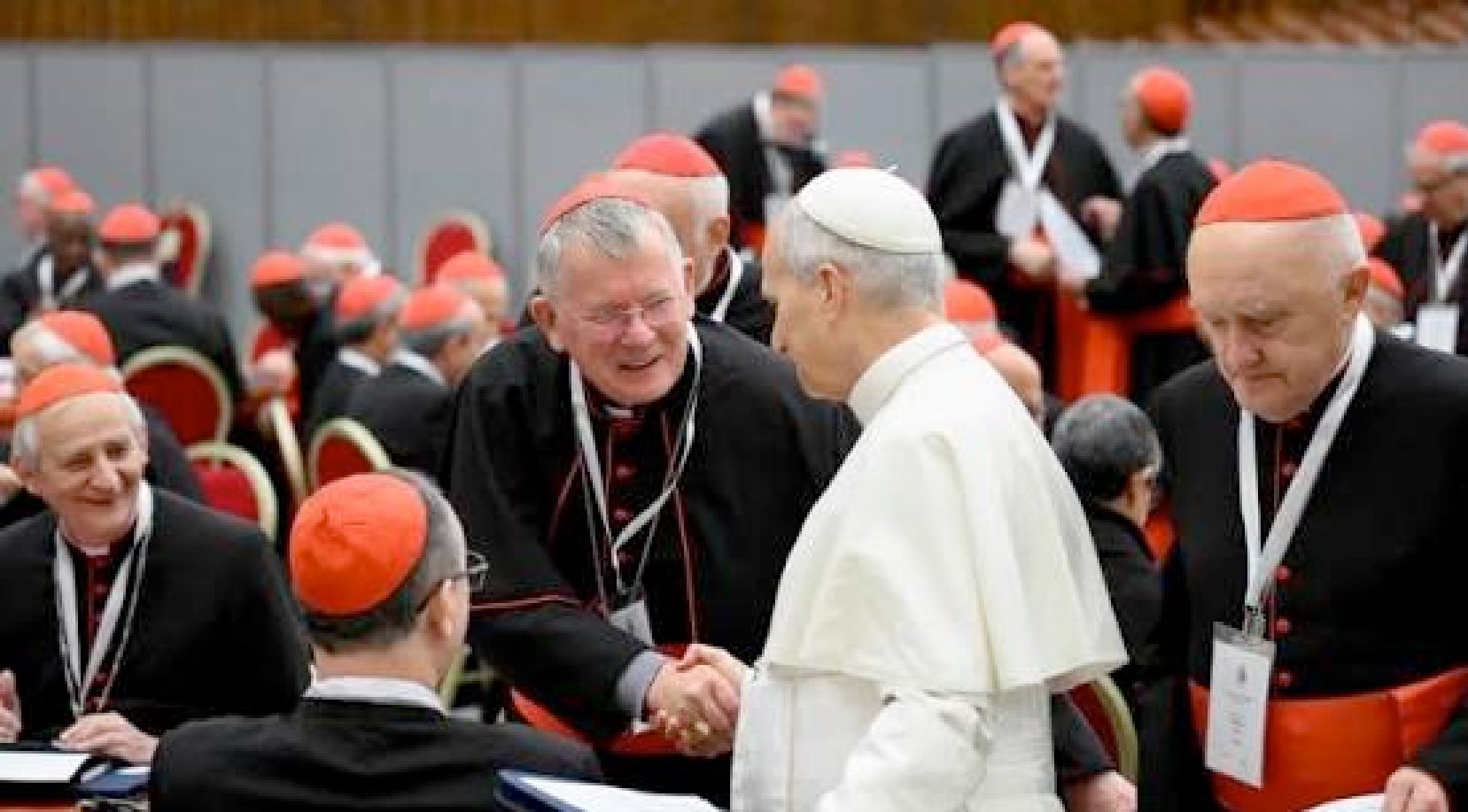
Cardenal Stephen Brislin
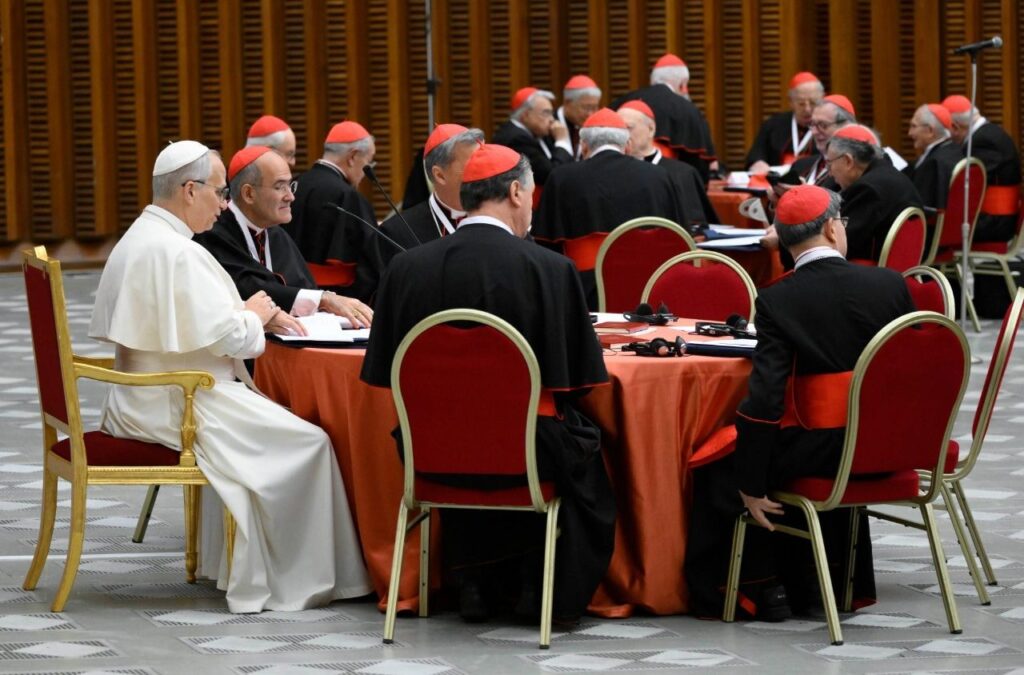
(ZENIT News / Vatican City, 06.27.2026).- On the morning of Saturday, June 27, in the presence of the Holy Father, the Archbishop of Johannesburg, Cardinal Stephen Brislin, delivered an introductory address on the topic the cardinals were discussing that day in the consistory. This was the third session, following the two held on Friday, June 26. Cardinal Brislin’s address was titled “Building for the Common Good: The Construction Projects of Our Time.” The full text of the address is provided below:
***
‘Building for the common good: the building sites of our time’
Holy Father and Most Reverend Eminences,
In my reflection, I would like to focus on the relationship between the introduction and the conclusion of Magnifica Humanitas, as I believe that their complementarity unveils the theological framework underpinning the entire encyclical. The reading I suggest is straightforward: the opening pages pose some crucial questions about the way in which humanity shapes its own future, while the closing pages show how these questions find a Christian answer in the form of the theological virtues, lived out in history and sustained by prayer.
The encyclical begins its path with a comparison between Babel and Jerusalem. This choice is significant, because both cities evoke shared human endeavour. In both, people build, and they build together, in a collective building site, each with its own plan and organisation.
The decisive point, however, concerns the direction taken by the desire that animates the basic nature of building. Babel turns in on itself, transforming human intelligence into a project of self-sufficiency. It demonstrates that unity sought without God ultimately leads to the confusion of tongues—that is, to fragmentation and disintegration.
The reconstruction of the walls of Jerusalem, on the other hand, points to an endeavour in which human intelligence, placed at the service of God, reaches the highest form of building: an activity capable of promoting the dignity of every person and allowing it to flourish.
In this way, Magnifica Humanitas raises, right from the outset, a question that runs through the entire encyclical: what form does human endeavour take when it has access to ever more effective tools? The question certainly concerns artificial intelligence and new technologies, but it extends even more broadly: does a greater sense of responsibility accompany progress in the realm of technical means?
or does such progress expose the human person to new forms of exclusion and reductionism?
I. The Introduction: Four Phases of Synodal Construction
The introduction addresses this question through a hermeneutical exercise that shifts the focus from an assessment of the power of technical means to the way of life they help to generate. We must ask ourselves, not only to what extent these means are capable of transforming reality, but in what direction they do so. In other words, do the possibilities opened up by innovation foster more just relationships, institutions that are more attentive to the person, and a truly shared future.
For this reason, the encyclical begins with an appeal to everyone to pay attention to the way in which we are building together. Clearly, technical tools are embedded within political, economic, social and educational processes that profoundly shape the quality of our shared life. Building together thus appears as a response to the temptation to indulge in technological progress for its own sake and, at the same time, as a bulwark against its potentially disruptive effects.
For believers, this call takes on a particular significance: to rediscover and value synodality as a specific form of building together as the Church (no. 10).
Synodality, in fact, is the visible, concrete trace of the communion from which the Church is born and grows. As a concrete way of being present, listening and sharing responsibility, synodality enables believers to enter the building site of history without fear of getting their hands dirty (no. 16). However, the introduction does not merely issue a generic call for cooperation. Rather, it offers a ‘grammar of building’, as it sets out a number of essential anthropological principles aimed at understanding how this common endeavour can truly be directed towards the good of the person. This grammar is structured around four elements: desire, limitation, shared responsibility, and discernment.
The first element of this grammar is the human desire for happiness (no. 11). New technologies promise a more comfortable life, one less exposed to suffering. The encyclical takes this desire seriously, for such desire belongs to the very fabric of the human condition, so it deserves to be safeguarded in its truth. When happiness is reduced to performance or control, it impoverishes the person; when it is shaped by faith, it rediscovers its proper measure in our relationship with God, with others and with our common home.
Desire must, however, come to terms with the reality of limits (no. 12) inherent in our condition as creatures, reminding us that life is a gift to be received and safeguarded. For this reason, rediscovering a sense of our limitations helps to educate the human mind to move beyond the illusion of self sufficiency. Whereas when fragility is viewed merely as an imperfection to be corrected or eliminated, it becomes more difficult to recognise the value of lives marked by illness, disability or old age.
From the recognition of limits springs courageous shared responsibility (no. 13). The image of ‘each person building their own section of the wall’ concretely illustrates the principle of subsidiarity: the common good flourishes when every individual can contribute their part and be supported in doing so. No one possesses the entire project; no one builds alone. Subsidiarity thus appears as a form of orderly participation, in which individuals, communities and institutions contribute according to their own expertise and vocation.
This shared responsibility requires criteria for discernment (no. 14). The principles of the Church’s social doctrine help us to interpret historical processes, to assess the promises of technology, and to distinguish what serves the person from what exposes them to new forms of dependence or exclusion.
II. The Conclusion: Theological Fulfilment
The conclusion takes up the ‘grammar of building’ outlined in the introduction and shows how it is fulfilled in the life of the believer. In the age of technology, discernment regarding human action should consider the theological form of Christian existence: faith shapes our outlook or perspective, charity fosters communion, and hope sustains the building of the civilisation of love. Prayer in the Spirit, contemplated through the figure of Mary, safeguards the inner unity of this spiritual topography.
Faith opens the way, first and foremost, to contemplate the plan of mercy that runs through history (no. 230). To build for the common good, we must recognise that the human journey is sustained by a logic of gift, at the heart of which lies the mystery of the Incarnation. The Word takes on the human condition, enters into the fragile flesh of humankind and transforms it into a place of salvation (no. 232). In this light, the theme of limitation, introduced in the preface, receives its Christological answer: what appeared as a sign of finitude is taken up by the Son and opens up to redemption. The recapitulation in Christ brings this dynamic to fulfilment: what is authentically human is purified, transformed and handed over to the Father (no. 233). Limititation thus appears as the place where the human and the divine meet.
Charity finds its sacramental source in the Eucharist. Building together, which was described in the introduction as a synodal form of action for believers, finds here its deepest foundation: the Body of Christ, given for the life of the world, brings forth the Church as a body called to communion (nos. 234–235). Eucharistic communion thus shapes the Christian way of living out history, teaching us to recognise others as brother and sister, to bear their burdens and to share responsibility with them for our common endeavour. From this perspective, the synodality of building emerges as a historical expression of charity, which the Eucharist nourishes and makes possible.
Hope gives the journey its historical concreteness. Building the civilisation of love means continuing to cooperate with the work that Christ inaugurated in the Paschal Mystery (no. 236). In this light, we can understand the ‘situated anthropocentrism’ proposed by the encyclical: technical possibilities are welcomed within a journey of wisdom, oriented towards the dignity of the person and the care of our common home (no. 237). The discernment outlined in the introduction thus becomes a practical responsibility, capable of being translated into education, the nurturing of relationships, appreciation of physical presence, and union between prayer and active commitment (nos. 238–241). The courageous shared responsibility mentioned at the outset thus takes the form of ecclesial service capable of living in the present with confidence and clarity.
Finally, prayer opens theological life to the action of the Holy Spirit. Mary is held up before the Church as the one who knows how to recognise, within the fabric of history, the hidden workings of God who directs all things towards their fulfilment in Christ (no. 243). Her gaze teaches us to interpret events from the perspective of the little ones, recognising what the logic of efficiency has difficulty seeing (no. 244). Fostering hope therefore also means guiding artificial intelligence so that, in the concrete reality of the present time, it may become a possible step towards the civilisation of love (no. 245).
III. The coherence of the document
The virtuous circle between the introduction and the conclusion reveals the profound coherence of Magnifica Humanitas. The encyclical opens by asking what form human building should take in the age of technological power; it closes by showing that, for believers, this question concerns the very form of Christian life. Building for the good means allowing oneself to be shaped by faith, fostering communion through charity, and sustaining commitment through hope. The conclusion thus completes the metaphor of building introduced at the beginning: Babel and Jerusalem raise the question of the direction of human endeavour; the civilisation of love reveals its fulfilment.
In this sense, Magnifica Humanitas entrusts the Church with a specific responsibility: to engage with the struggles of history in its own distinctive way, adopting a synodal approach, rooted in the theological virtues, and focused on serving the individual.
Thank you for reading our content. If you would like to receive ZENIT’s daily e-mail news, you can subscribe for free through this link.

Publicaciones relacionadas:
 Bishop Who Visited the Pope in Hospital Talks About the Pope and the Church’s Prayer of Intercession for Him
 Cardinal Parolin gives details on Pope in Vatican and raises juncture for new form of government
 This is the new archivist and librarian of the Holy Roman Church chosen by Pope Francis
 «Hope Should Not Be Confused with a Solution»: ZENIT’s Interview with Cardinal Pierbattista Pizzaballa, Latin Patriarch of Jerusalem
