

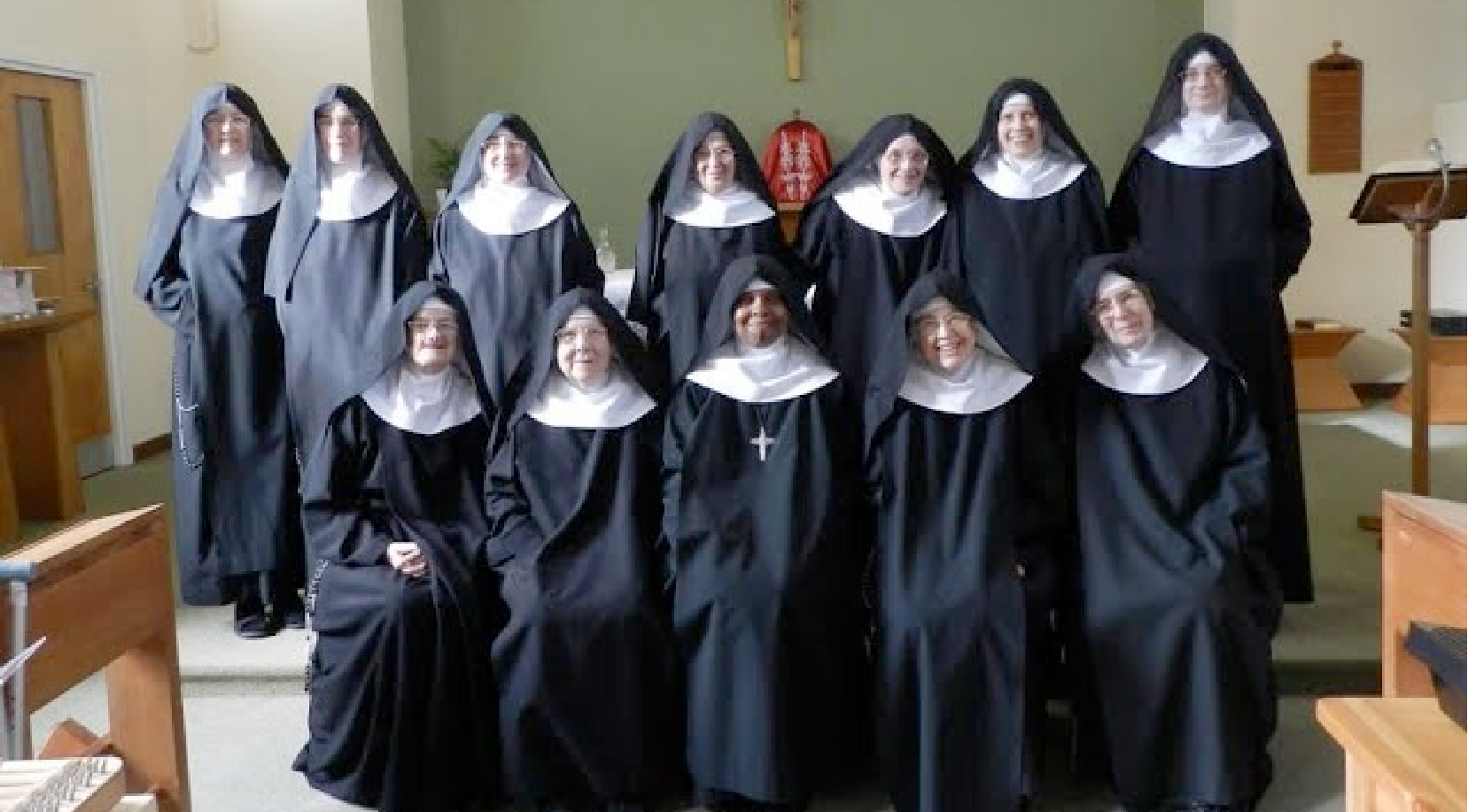
(ZENIT News / Guadalajara, 06.30. 2026).- When the Church of England separated from the Catholic Church in the 16th century, monasticism virtually disappeared from the Anglican Communion in England. King Henry VIII dissolved the convents and monasteries and confiscated their properties.
Today, Religious Communities exist within Anglicanism that, while not being «Orders» exactly like those in the Catholic Church, do live a consecrated lifestyle characterized by vows, a Rule, and a mission. Many emerged in the 19th century alongside the Oxford Movement, which revived ancient monastic elements.
It was during this revival of Anglican monasticism that William John Butler, a young Anglican Vicar from Wantage, England, founded the Anglican Community of St. Mary the Virgin in 1848. Its Rule was based on that of St. Augustine.
Over the years, the Community grew and dedicated itself to various charitable works, ranging from schools to residences for young mothers, the elderly, and those recovering from addiction. More recently — towards the end of the 20th century — they gradually shifted from institutional work to «more individual ministries» in hospitals, parishes, and schools, as well as to spiritual direction.
Pope Benedict XVI was well aware that, largely due to the theological evolution of the Anglican Communion, and of the Church of England in particular, a significant number of Anglicans were interested in converting to Catholicism.
The Move from Anglicanism to Catholicism
Today in England, there are Contemplative or Apostolic Orders that combine prayer with education, mission work, or social service, as well as mixed or new Orders that include celibate members, married individuals, and laypeople living under a shared Rule.
They differ from Catholicism in that there is no central authority, equivalent to Rome, that governs all the Orders. The vows tend to be more flexible.
Several Anglicans from Religious Communities have entered into full communion with the Catholic Church, particularly following the creation of Personal Ordinariates by Benedict XVI, who responded to requests from entire groups — priests, lay faithful, and even communities — wishing to convert together.
A Personal ordinariate is similar to a Diocese, but it is defined by the people belonging to it rather than by a specific territory.
They may retain certain liturgical forms, hymns, and traditional English liturgical language, along with their own spirituality and pastoral traditions.
In other words, it is possible to enter fully into the Catholic Church while preserving authentic elements of one’s own tradition — purified and integrated.
Many view it as one of the most original ecumenical initiatives of Benedict XVI’s pontificate. Moreover, it bears a certain connection to the insight of Saint John Henry Newman regarding the continuity between the best of the English tradition and Catholic fullness.
Testimony of the Mother Superior
On one hand, Mother Winsome, Superior of the Community of St. Mary the Virgin, explains on her Website that they already wore the traditional habit, sang Gregorian chant, reserved the Blessed Sacrament, took vows of poverty, chastity, and obedience, and essentially sought to replicate the practices of a traditional Catholic monastic community. On the other hand, they felt that «over time, religious life in the Church of England […] had been relegated to second place.”
Mother Winsome explains that the Sisters had reached a point where the Community required profound spiritual renewal. Elected Mother Superior in 2006, she discovered that some Sisters were at risk of losing their monastic vocation, replacing it with the notion of an informal association of well-intentioned women performing good works. Yet that, she points out, is not the monastic consecrated life.
As she and other Sisters strove to regain spiritual ground, they encountered obstacles stemming from the structure and nature of the Church of England as a whole. They began to feel the need for the guidance of the Vicar of Christ and the Magisterium, rather than that of an elected synod.
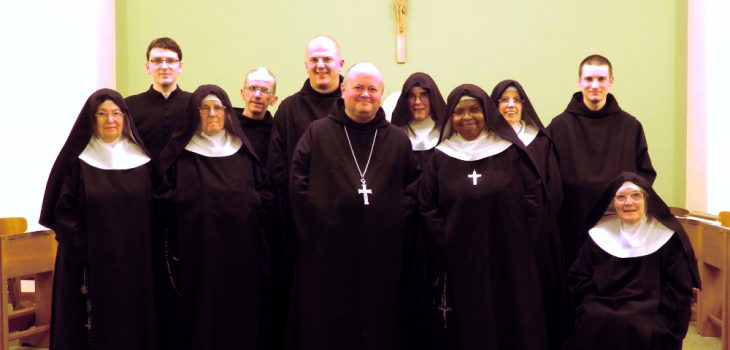
Initially, they had no intention of leaving the Community of St. Mary the Virgin. Many of the Sisters had independently expressed a shared vocation, as part of a Community,” while also feeling a call to remain together. In fact, the Ordinariate was prepared to receive women religious in groups. The hope was that those nuns wishing to convert to Catholicism could do so while remaining alongside their Anglican Sisters.
This proposal was approved by the entire Community, and they began a period of spiritual exploration and discernment under the guidance of representatives from the Catholic Church — specifically, the Ordinariate. Ultimately, eleven decided they were called to full communion with the Catholic Church. They also realized they were called to follow the Rule of St. Benedict.
As might be expected, not everyone agreed with their decision. The Superiors of the nuns within the Church of England did not support them. The Sisters wishing to convert to Catholicism would have to find a new home and establish a new Community.
Received into the Catholic Church
God does not abandon those who entrust themselves to Him, and the Benedictine Catholic community of St. Cecilia’s Abbey in Ryde, on the Isle of Wight, opened its doors to them. They had twelve empty rooms that had been prepared for nuns from Paraguay who were due to arrive for a year of formation; however, those plans did not materialize.
It so happened that the eleven nuns of the Community of St. Mary the Virgin had been joined by a Sister from another Community, making them twelve in total. As Mother Winsome observed: «Twelve empty cells, twelve Sisters!» It was a providential opportunity that had to be seized.
The twelve nuns were received into the Catholic Church on January 1, 2013. The process took four years, and they faced a lack of understanding and painful opposition from many of their Anglican Brothers and Sisters, but it was worth it. «It seems to me that each of us was granted a very special gift of healing grace so, that we could experience true joy upon finally being received into full communion with the Catholic Church,» writes Mother Winsome.
As another sign of Divine Providence, the ferry they took to reach the Abbey on the Isle of Wight turned out to be named «Saint Cecilia.» «Welcome home» were the first words they heard from a nun at St. Cecilia’s Abbey.
Eventually, they became a new Catholic community: the Sisters of the Blessed Virgin Mary. They also found a permanent home at Aston Hall in Aston-by-Stone, Staffordshire, a building with significant Catholic ties to two English Saints, including Saint John Henry Newman. They are the only monastic Community within the Ordinariate of Our Lady of Walsingham.
At a conference she attended, Mother Winsome concluded with these words, summarizing the long journey that had brought them to this point: «This is the God in whom we believe, the God we proclaim: the One who calls us, who goes before us, who provides for us in ways we do not expect, and who never ceases to love us.»

Publicaciones relacionadas:
 Convert Jew Is Baptized in Madrid While His Son Prepares for His First Communion
 Brazilian Nun Becomes World’s Oldest Person, Embraces Life of Prayer and Quiet Devotion
 The testimony of faith of Christian cricket champion Sanju Samson
 Beautiful Stories of Priestly Longevity! These Are the Greatest Priests in the World
