

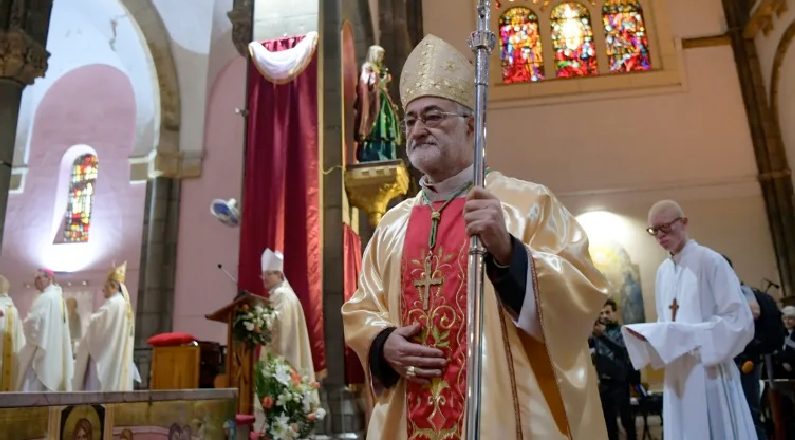
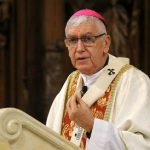
(ZENIT News / Rabat, 07.13.2026).- The Catholic Church has entered a delicate new chapter in its ongoing effort to address allegations of misconduct with transparency and due process after Cardinal Cristóbal López Romero, Archbishop of Rabat, voluntarily stepped aside from his pastoral responsibilities while the Vatican conducts a preliminary investigation into accusations of sexual misconduct involving adult women.
The 74-year-old Spanish-born cardinal announced his decision on July 7, stressing that he is fully cooperating with the Holy See and firmly denying any criminal or abusive behavior. His temporary withdrawal reflects the Church’s established practice of allowing investigations to proceed without interference while safeguarding both the integrity of the inquiry and the rights of all those involved.
«I have committed neither assault, violence nor sexual harassment,» López Romero said in a brief statement to Spanish media and in a public letter explaining his decision. He acknowledged that he has been accused of «inappropriate behavior toward adult women,» adding that the preliminary canonical investigation is now being handled by the competent Vatican authorities.
According to reports based on an investigation published by Agence France-Presse, at least five women have accused the cardinal of alleged sexual misconduct. At this stage, however, the allegations remain under ecclesiastical examination and have not resulted in criminal proceedings in Morocco.
Judicial sources consulted by ZENIT stated that no complaint has been filed against the archbishop before Moroccan courts. The absence of a criminal case does not determine the outcome of the Church’s internal investigation, which follows its own canonical procedures, but it highlights the distinction between civil judicial processes and ecclesiastical inquiries.
Under Catholic canon law, a preliminary investigation is intended to establish whether sufficient evidence exists to justify further proceedings. Opening such an inquiry does not constitute a judgment of guilt. Rather, it is the mechanism through which the Church determines whether formal canonical charges should be pursued while respecting the presumption of innocence and ensuring that allegations are examined seriously.
López Romero has been one of the most recognizable Catholic figures in North Africa. Born in Almería, Spain, he joined the Salesians of Don Bosco and later studied journalism in Barcelona before spending 18 years as a missionary in Paraguay. His years in South America proved so formative that he eventually acquired Paraguayan citizenship alongside his Spanish nationality.
In 2017, Pope Francis appointed him Archbishop of Rabat, placing him at the head of one of the world’s smallest Catholic communities, where Christians represent only a tiny minority within predominantly Muslim Morocco. Two years later, Francis elevated him to the College of Cardinals, recognizing both his pastoral leadership and his contribution to interreligious dialogue.
His ministry in Morocco has often centered on fostering peaceful relations between Christians and Muslims while serving migrant communities and the country’s small Catholic population. These responsibilities now remain suspended pending the outcome of the Vatican’s investigation.
The case once again illustrates the increasingly consistent approach adopted by the Catholic Church in recent years: allegations involving bishops and cardinals are subject to formal canonical review, regardless of the public standing of those involved. At the same time, Church authorities continue to emphasize that investigations must protect both those who bring accusations and the fundamental principle that no conclusion should be reached before the evidence has been thoroughly examined.
For now, the central facts remain clear. A Vatican preliminary investigation is underway, Cardinal López Romero has voluntarily stepped aside from active ministry while it proceeds, he categorically denies the allegations, and Moroccan judicial authorities report that no criminal complaint has been filed in the country’s courts. The outcome of the canonical process will determine whether the case advances to further ecclesiastical proceedings or is ultimately dismissed.
Thank you for reading our content. If you would like to receive ZENIT’s daily e-mail news, you can subscribe for free through this link.

Publicaciones relacionadas:
 Pope Francis removes Belgian bishop convicted of abuse from the clerical state
 New Zealand Cardinal acquitted by Vatican and Police in unproven abuse case
 Cardinal Dolan takes insurer to court for non-compliance in sexual abuse cases
 Crisis Deepens in Lima Archdiocese Amid Abuse Allegations and Accusations of Mismanagement Under Cardinal Castillo
