


(ZENIT News / Auckland, Australia, 03.12.2026).- For Father Robert Steele, a Catholic priest in New Zealand who has spent years accompanying people struggling with addiction, the growing global consumption of online pornography is not simply a moral issue. It is, he argues, a crisis affecting mental health, spiritual life and even the capacity of young people to imagine their future.
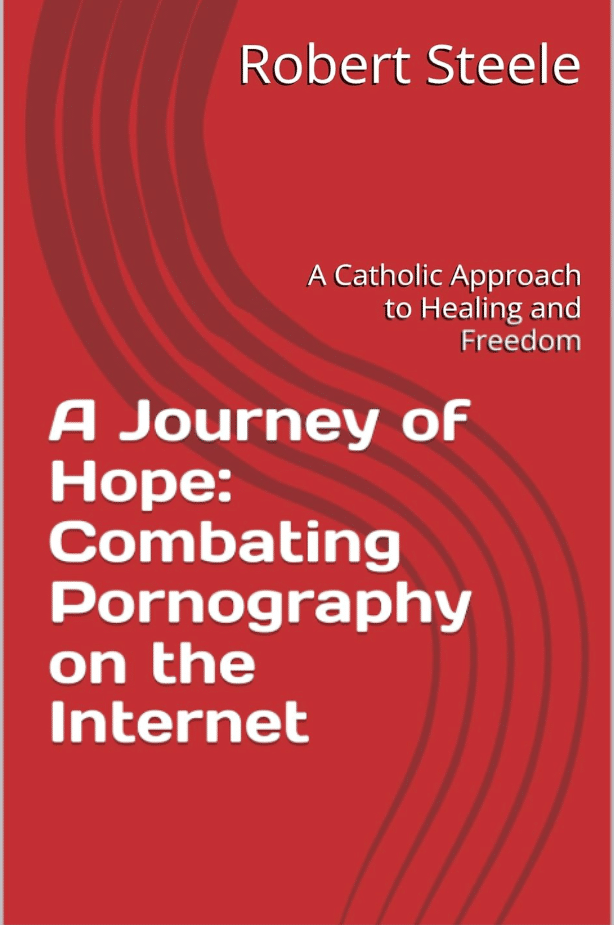
Steele, parish priest of St. Patrick’s in Pukekohe, south of Auckland, addressed the topic in a recent book published in 2025 titled “A Journey of Hope: Combating Internet Pornography.” The short work proposes what he describes as a Catholic path toward healing and freedom for people trapped in compulsive patterns of online sexual content.
His reflections emerge from pastoral experience but also from his own personal story of recovery.
Before entering the seminary, Steele struggled with alcoholism during his younger years. After confronting the addiction and embracing sobriety, he eventually discerned a priestly vocation and was ordained in 2008 at the age of 57. Today he marks 25 years without alcohol, a milestone he often cites as proof that personal wounds can become the foundation of a life of service.
“I discovered that God had not wasted my suffering,” he said in an interview with The Catholic Weekly. “The experiences I once felt ashamed of became part of my pastoral vocation.”
A widespread phenomenon with early exposure
Steele’s warnings come against the backdrop of striking statistics about pornography consumption among young people.
A recent survey published in an academic journal found that 54 percent of young men in Australia view pornography at least once a week, compared with 14 percent of young women. Researchers also emphasize another trend that worries many specialists: the increasingly early age at which children encounter explicit content online.
According to Steele, many young people today first encounter pornography between the ages of nine and eleven—an age at which neither the brain nor moral judgment is prepared to process such material.
“What concerns me even more than the percentages is the age of first exposure,” he said. “At that stage their brains and moral structures are not remotely ready for what they are seeing.”
The priest believes the phenomenon now resembles a public health emergency. Studies, he notes, increasingly link habitual pornography consumption with anxiety, depression, sexual dysfunction, relationship breakdown and addictive behavioral patterns. Neurologically, he says, the brain’s reward circuits can be altered in ways that resemble the mechanisms involved in drug addiction.
But Steele insists the consequences go beyond psychology.
“Pornography educates the heart to consume rather than to love,” he said. “It erodes the capacity for self-giving, fidelity, reverence for the body and authentic intimacy.”
The impact on faith and vocations
Among the less discussed effects, according to Steele, is the way pornography may influence religious commitment.
He does not claim it is the only factor behind declining religious practice or priestly vocations, but he believes it plays a significant role.
“When men live in chronic shame, secrecy and compulsive sexual behavior, it becomes much harder for them even to imagine the priesthood, marriage or a deep commitment to God,” he said.
The dynamic is partly psychological. Shame and secrecy often isolate individuals, creating a cycle in which the addiction deepens while the person feels increasingly unable to seek help.
Breaking the cycle, Steele argues, requires addressing three interrelated dimensions: neurological, emotional and spiritual.
While therapy, accountability groups and scientific approaches to addiction can be helpful, he believes they are incomplete if they neglect the deeper spiritual wounds that often accompany compulsive behaviors.
“Addiction is not just a behavioral problem,” he said. “It is a relational and spiritual wound.”
The sacramental path to recovery
In his pastoral practice, Steele frequently encourages people struggling with pornography addiction to rediscover traditional spiritual disciplines within the Catholic Church.
Among these, he highlights regular participation in the sacrament of reconciliation.
For many people, he says, confession has been misunderstood as a ritual centered on guilt. In reality, he describes it as one of the most powerful sources of healing for those trapped in shame.
“Pornography addiction isolates people,” Steele writes in his book. Fear of judgment often prevents them from seeking help, reinforcing secrecy and despair.
Regular confession—weekly or every two weeks—can help rebuild resilience, he says, because it not only offers forgiveness but also what Catholic theology describes as sacramental grace, strengthening the person to resist temptation.
Many people in recovery, he notes, speak of confession as a “reset button”: a place where they can begin again without fear.
Steele also recommends frequent reception of the Eucharist, spiritual direction, fasting and small acts of sacrifice, along with devotion to the Virgin Mary. Together, these practices help anchor recovery in a broader spiritual framework.
“Without faith,” he said, “something essential is missing—meaning, forgiveness, hope and transcendence.”
The silence in churches
Despite the scale of the problem, Steele believes the subject is still insufficiently addressed in many Christian communities.
Some priests hesitate to speak openly about pornography because they fear embarrassing parishioners or provoking backlash. Others feel inadequately prepared to address sexual addiction.
But silence, he argues, comes at a cost.
“When young people and their parents never hear the Church speak clearly, compassionately and practically about chastity and pornography, they assume the Church doesn’t understand their world,” he said. “That’s tragic.”
Instead, he calls for more preaching, catechesis and pastoral honesty—approaches that address the issue without moralism or condemnation.
Guidance for families
Parents, Steele adds, cannot afford to assume their children will avoid exposure to explicit material.
The priest advises families to begin conversations about sexuality, the body and internet safety earlier than many parents might expect. He also encourages creating an environment where children can speak openly if they encounter disturbing content online.
If a child confesses such an experience and is met with anger or panic, he warns, the likely result is silence and secrecy.
Practical tools—such as internet filters, accountability apps and clear rules for devices—can help. But Steele insists that technology alone cannot replace trust and open communication within the family.
Looking toward future witnesses
Alongside his pastoral guide, Steele has also written a short fictional work titled “Michael’s Journey: A Novel of Struggle, Grace and Freedom,” which tells the story of a young man gradually escaping pornography addiction with the help of prayer and a compassionate priest. He hopes it may help teenagers and parents approach the topic more openly.
Asked whether the Church has a patron saint specifically associated with overcoming pornography addiction—comparable to the Irish figure Matt Talbot, widely invoked by recovering alcoholics—Steele notes that none has yet emerged.
However, he points to the young Italian Catholic Carlo Acutis, known for his devotion to the Eucharist and his use of technology for evangelization, as a figure many young believers already admire for his purity and faith.
For Steele, the digital age represents a new spiritual battlefield. Yet he remains convinced that the struggle will eventually produce new examples of holiness.
“I truly believe God is raising up modern witnesses who will one day be recognized as saints in this fight,” he said. “Whenever humanity faces a new challenge, heaven always provides new heroes.”
Thank you for reading our content. If you would like to receive ZENIT’s daily e-mail news, you can subscribe for free through this link.

Publicaciones relacionadas:
 The Pope’s Meeting with the Third Seminary of Spaniards in Rome: That of Seville
 Germany: research reveals that young clergy are conservative and opposed to ecclesiastical progressivism
 Surprising research data among French clergy: the younger they are, the more conservative… and happy they are
 Mass Attendance Boom: The Case of the US Diocese of Bridgeport
