

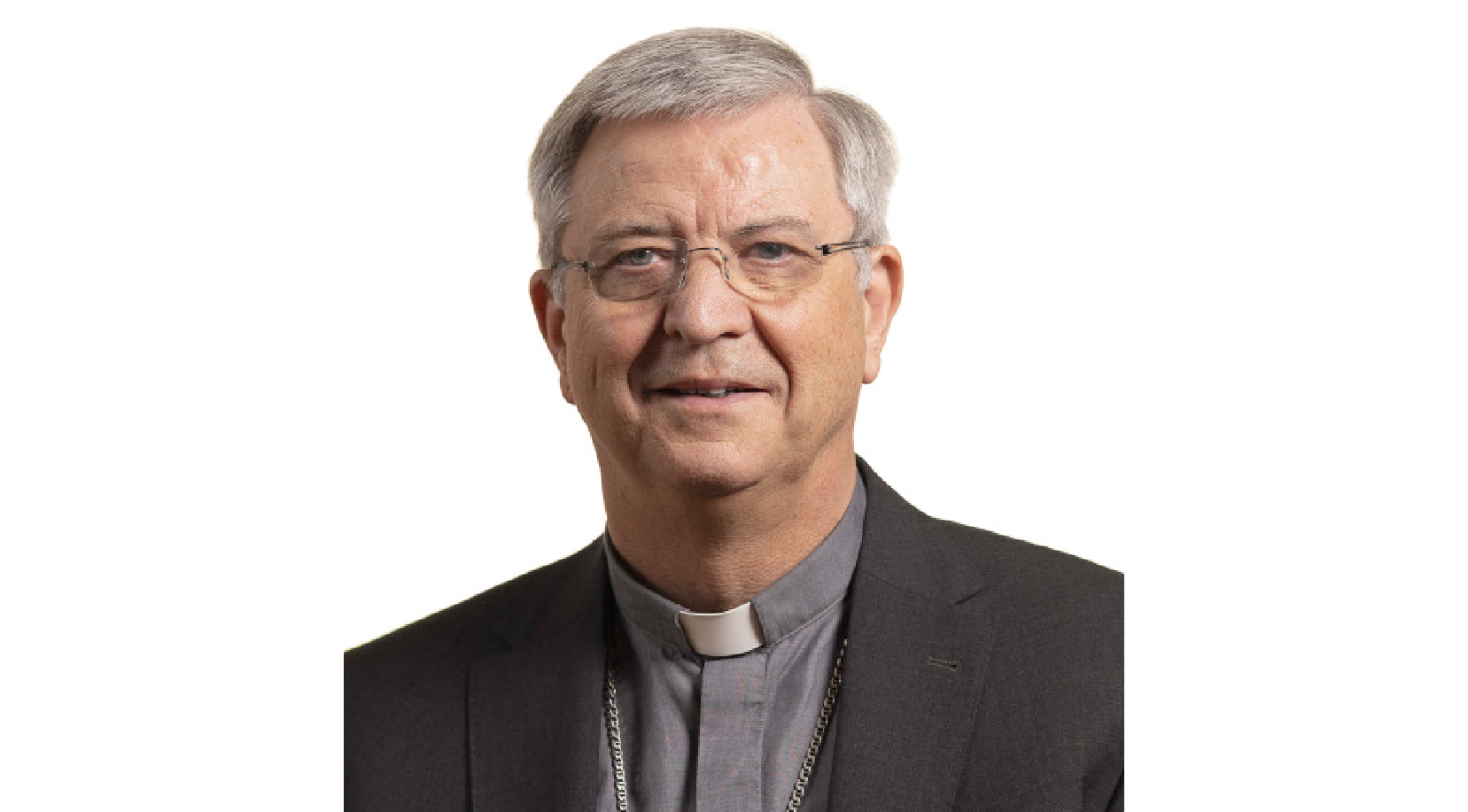
(ZENIT News / Antwerp, Belgium, 03.21.2026).- A rare and pointed challenge has emerged from northern Europe that could force the Vatican to confront one of the most sensitive questions in Catholic life: whether priestly celibacy can be reconsidered in the face of a deepening vocational crisis.
At the center of the controversy is Johan Bonny, bishop of Antwerp since 2009, who has publicly declared his intention to press Rome for authorization to ordain married men as priests by 2028. In a letter addressed to his faithful and published on March 19, Bonny pledged to do “everything possible” to move in that direction within two years, even indicating he would begin identifying and preparing candidates.
Such a statement is highly unusual within the hierarchical structure of the Catholic Church, where bishops vow obedience to the Pope and typically avoid publicly floating initiatives that could contradict established universal discipline. While celibacy is not a dogma—meaning it could, in principle, be modified by papal authority—it remains one of the most deeply rooted and symbolically charged practices in the Catholic Latin Rite.
Bonny frames his proposal not as a rupture but as a pastoral necessity. The shortage of clergy, he argues, has reached a critical threshold. In his diocese, the “replacement rate” of priests is “barely above zero,” a stark formulation that captures the scale of the decline. The situation has already forced Antwerp to rely increasingly on foreign clergy, particularly from Eastern Europe and the Middle East—regions where, notably, married men may be ordained in Eastern Catholic Churches.
The bishop’s intervention revives a debate that has surfaced repeatedly but never fully matured into reform. During the pontificate of Pope Francis, the issue gained renewed attention, especially during the 2018 Amazon synod, where the ordination of married men—so-called viri probati—was formally proposed as a response to acute pastoral shortages in remote regions. Yet Francis ultimately declined to authorize such a step, reaffirming the value of celibacy even amid mounting pressures.
The current pontificate of Pope Leo XIV now finds itself indirectly drawn into the same unresolved tension. Bonny’s timeline, explicit and public, effectively places a decision point on the Vatican’s horizon.
The stakes are not merely administrative. Advocates of ordaining married men argue that it could broaden the pool of candidates and align the Latin Church more closely with the lived realities of many Catholic communities worldwide. Critics, however, insist that celibacy is not simply a practical rule but a spiritual and ecclesiological sign: a total availability to God and the Church that, they contend, would be diluted by a married clergy.
There is also a pragmatic counterargument, often overlooked in public debate. The experience of Eastern Catholic Churches—where married priests are permitted—does not suggest that relaxing celibacy automatically resolves vocational shortages. Seminaries in those traditions have not seen an overabundance of candidates, indicating that the roots of the crisis may lie deeper than disciplinary norms alone.
Bonny himself does not clarify whether he would proceed without Vatican approval, a step that could expose him to canonical sanctions. That ambiguity leaves open a critical question: is this a strategic attempt to provoke discussion within ecclesial structures, or a genuine readiness to test the boundaries of episcopal authority?
What is clear is that the issue can no longer be treated as peripheral. Since 2012, the number of men entering seminaries globally has declined steadily, according to Vatican data. In parts of Europe, the erosion is particularly acute, reshaping parish life and accelerating the consolidation of diocesan structures.
In this context, Antwerp becomes more than a local case. It is a laboratory for a broader ecclesial dilemma: how to reconcile fidelity to tradition with the urgent demands of pastoral reality. Whether the initiative of one bishop will catalyze a wider shift—or prompt a reaffirmation of the status quo—will depend on how decisively Rome chooses to respond.
Thank you for reading our content. If you would like to receive ZENIT’s daily e-mail news, you can subscribe for free through this link.

Publicaciones relacionadas:
 Capuchin Priest Passed Himself Off as a Doctor and Nobleman to Swindle: His Order Makes Him Face Justice
 Burkina Faso: 100 Christians killed in three months
 Pope leaves Indonesia with 7 people in jail: they were planning attack against him
 After the Supreme Court’s Landmark Ruling, Northern Ireland Faces a New Conversation on Faith in Schools
