

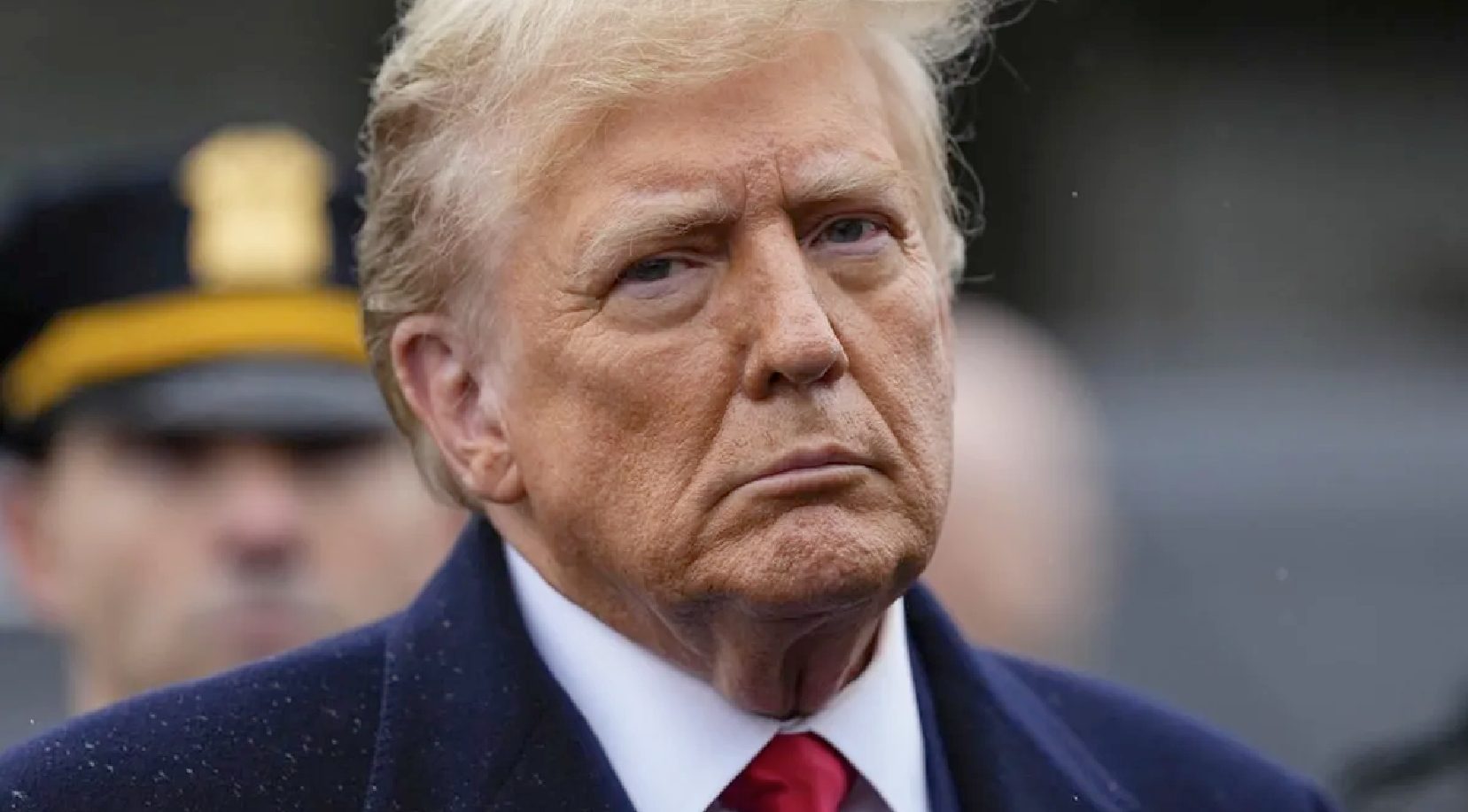
(ZENIT News / Rome, 04.13.2026).- The electoral alliance that helped return Donald Trump to the White House in 2024 is showing visible strain less than two years later. Nowhere is this shift more revealing than among Catholic voters, a constituency that has historically oscillated between parties but proved decisive in Trump’s last victory. A new 2026 survey suggests that this support is no longer holding, and that the war with Iran may be accelerating a deeper realignment shaped as much by moral unease as by political calculation.
According to a poll conducted between March 20 and 23 by Shaw & Company Research and Beacon Research, Trump’s approval rating among Catholic voters has dropped to 48 percent, with 52 percent expressing disapproval. The internal breakdown is even more telling: only 23 percent strongly approve of his performance, while 40 percent strongly disapprove. With a margin of error of plus or minus three percentage points, the figures point to a clear erosion compared to the electoral momentum of 2024, when Trump secured 55 percent of the Catholic vote, defeating Kamala Harris by a 12-point margin. That result itself had marked a recovery from 2020, when Catholic voters were almost evenly split between Trump (49 percent) and Joe Biden (50 percent).
The decline cannot be understood in isolation from the broader national mood. The same survey places Trump’s overall approval rating at just 41 percent among the general electorate, with 59 percent disapproving. Yet among Catholics, the shift carries a distinctive dimension: it intersects directly with the Church’s moral teaching on war and peace, which has been forcefully reiterated in recent weeks by Pope Leo XIV.
From the Vatican, the Pope has issued a series of unusually direct appeals urging de-escalation and diplomacy. In one of his most striking interventions, he declared that “God does not bless any conflict” and insisted that military action cannot produce genuine peace, which instead requires “the patient promotion of coexistence and dialogue among peoples.” Such language, rooted in the Church’s long-standing just war tradition but sharpened by contemporary conflicts, has resonated uneasily with a segment of Catholic voters who supported Trump’s promise to avoid new military entanglements.
The data suggest that this tension is not merely theoretical. On the specific issue of Iran, only 40 percent of Catholic respondents approve of Trump’s handling of the conflict, while 60 percent disapprove. A similar pattern emerges regarding the use of force: 45 percent support military action against Iran, but a majority of 55 percent oppose it. When asked about effectiveness, again 45 percent believe the military approach is yielding results, compared to 55 percent who do not.
At the same time, the survey reveals a more complex strategic outlook among Catholic voters. Large majorities continue to support key geopolitical objectives associated with the confrontation. Seventy-one percent consider it important to prevent Iran from acquiring nuclear weapons, and the same proportion emphasizes the importance of safeguarding the flow of oil from the region. An even higher figure, 73 percent, prioritizes reducing Iran’s support for terrorism, while 61 percent favor promoting political change within the country. These responses suggest that the disagreement is not over ends, but over means: Catholics appear divided on military methods while largely aligned on strategic goals.
This ambivalence is further reflected in perceptions of security. Only 39 percent believe that military strikes against Iran will make the United States safer, while 38 percent think they will have the opposite effect and 23 percent foresee little impact. Meanwhile, concern about Iran’s nuclear ambitions remains widespread, with 74 percent of Catholics expressing worry about the possibility of Tehran acquiring such weapons.
Analysts see in these numbers the fragmentation of a coalition that once seemed durable.
Complicating the picture further are recent diplomatic efforts that have failed to deliver results. Vice President JD Vance, himself a Catholic, engaged in direct negotiations with Iranian leaders in Pakistan during a two-week ceasefire period. The collapse of those talks has reinforced the sense of strategic uncertainty, leaving military options once again at the forefront.
The survey predates another potentially consequential development: Trump’s public criticism of Pope Leo XIV, expressed both on social media and in verbal remarks. While its electoral impact remains to be measured, such a confrontation risks deepening the divide between political authority and religious leadership in the eyes of Catholic voters.
What emerges from this convergence of data and events is not simply a decline in approval ratings, but a more profound recalibration. For many Catholic voters, the question is no longer confined to partisan preference. It touches on the coherence between faith and political judgment, particularly in matters of war, peace, and the moral limits of power.
In that sense, the current moment may mark less a temporary fluctuation than the beginning of a reconfiguration whose contours are still unfolding. The Catholic vote, often decisive in American elections, is once again in motion—this time under the pressure of a conflict that has revived enduring questions about conscience, authority, and the cost of war.
Thank you for reading our content. If you would like to receive ZENIT’s daily e-mail news, you can subscribe for free through this link.

Publicaciones relacionadas:
 Gays in Seminaries? In Regard to Homosexuals and the Priesthood, the Norms Have Not Changed at All
 Pope Francis yes, Church no: survey reveals that the Pope is the most trusted person in Italy
 Reopening the Archives: New Findings Challenge Accusations Against John Paul II in Poland’s Abuse Debate
 How many Catholic radio stations are there in the U.S., and how many listeners tune in via streaming? Major study on religious radio released
