

(ZENIT News / Rome, 03.02.2026).- Pope Leo XIV has issued what Vatican observers describe as one of the starkest warnings of his pontificate: the region stands at the edge of “a tragedy of enormous proportions.”
Speaking after the Angelus on March 1 in St. Peter’s Square, the Pope did not limit himself to diplomatic platitudes. He urged governments directly involved in the spiraling confrontation among the United States, Israel and Iran to assume what he called their “moral responsibility” to halt the escalation before it descends into “an irreparable abyss.” Stability, he insisted, cannot be constructed through reciprocal threats or weapons that “sow destruction, pain and death,” but only through “reasonable, authentic and responsible dialogue.”
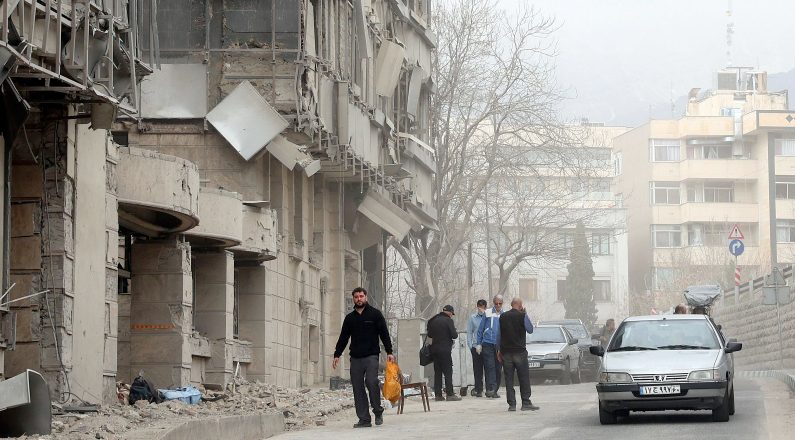
His appeal came within hours of dramatic developments: joint U.S.–Israeli airstrikes across Iran on February 28, reportedly killing Iran’s Supreme Leader, Ayatollah Ali Khamenei, and other senior officials. Tehran responded with waves of missiles and drones targeting Israel and U.S.-linked sites across the Gulf. According to Iranian state television, more than 200 people have died and over 700 have been wounded in Iran. Israeli authorities reported at least nine fatalities from Iranian strikes in central regions. The Pentagon confirmed that at least three U.S. service members were killed in retaliatory attacks on bases in the Gulf.
The White House described the campaign—dubbed “Operation Epic Fury”—as a precise military effort to dismantle Iran’s nuclear and ballistic missile capabilities. President Donald Trump said the objective was to eliminate an “imminent nuclear threat,” warning that the operation could continue for several weeks. Tehran, in turn, vowed that the strikes would not go unanswered, launching projectiles toward Bahrain, Kuwait, Qatar, Saudi Arabia, the United Arab Emirates and Jordan. Reuters reported that most incoming missiles were intercepted, though five foreign nationals have been killed in Gulf states since February 28—one in Kuwait, three in the UAE and one in Bahrain.
For the Vatican, the strategic calculus is secondary to the human toll. “Let diplomacy regain its role,” Leo urged, framing the crisis not as a clash of regimes but as a test of whether political leaders will safeguard “the good of peoples who long for peaceful coexistence grounded in justice.” The Pope broadened his concern to other flashpoints, citing troubling developments along the India–Pakistan frontier and calling for an “urgent return to dialogue.”
The reverberations are being felt most acutely by Christian minorities already living on fragile ground. Regina Lynch, executive president of Aid to the Church in Need International, warned that another prolonged conflict could push vulnerable communities “beyond the limit of survival.” In Iraq, villages painstakingly rebuilt after extremist violence remain precarious. In Syria, radical ideologies persist. In southern Lebanon, Christian families—many of them elderly or economically vulnerable—have once again been displaced. In Gaza, the small Catholic parish that shelters thousands depends on uninterrupted humanitarian deliveries. Any further disruption, Lynch cautioned, could prove catastrophic.
Lebanon illustrates the dilemma. Jesuit Father Samir Bechara reports that parishes are sheltering migrant workers from the Philippines, Sudan and Sri Lanka as Israeli airstrikes hit areas believed to host Hezbollah fighters. Schools and universities have closed. Although many Lebanese Christians criticize Iran’s regional policies, Bechara fears that each new round of violence entrenches instability rather than resolving it. Lebanon, where roughly 30 percent of the population is Christian—the highest proportion in the Arab world—has long balanced eighteen officially recognized religious communities within a delicate parliamentary system. That equilibrium now appears increasingly strained.
Across the Gulf, church life has been curtailed by security directives. In Bahrain, a Catholic community of approximately 80,000 has suspended public liturgies. The Vicariate Apostolic of Southern Arabia, shepherding 1,122,659 Catholics in the UAE, Oman and Yemen—many of them expatriate workers—has moved catechesis and devotions online. Bishop Paolo Martinelli has urged calm, daily recitation of the rosary and strict adherence to civil safety instructions. In Kuwait, where drones struck near the U.S. embassy and military aircraft were reportedly downed close to Ali al Salem Air Base, Apostolic Nuncio Archbishop Eugene Nugent described nights punctuated by explosions and sirens.
In Israel, the Home Front Command has banned public gatherings, shuttering not only schools and workplaces but also synagogues, mosques and churches. The Old City of Jerusalem—home to the Western Wall, Al-Aqsa Mosque and the Church of the Holy Sepulchre—has been largely closed to non-residents. On February 27, some 80,000 Muslims had prayed at Al-Aqsa on the eve of Ramadan; days later, communal worship stood suspended. Christian clergy celebrated Mass before nearly empty pews, uncertain how Holy Week observances at the end of March might unfold.
The psychological dimension is as palpable as the military one. In Jerusalem, Benedictine monks and pilgrims sheltered together at Tabgha, the traditional site of the multiplication of the loaves and fishes. In Erbil, Chaldean Archbishop Bashar Warda closed schools, including the Catholic University of Erbil, while missiles were intercepted overhead. In Beirut, parish halls have become temporary refuges. In Dubai and Abu Dhabi, explosions have shattered the sense of Gulf invulnerability long cultivated by those cities.
The World Council of Churches, through its secretary general Rev. Jerry Pillay, called for an immediate cessation of military actions, protection of civilians under international humanitarian law and urgent diplomatic engagement through established international mechanisms. In the United States, Archbishop Paul S. Coakley, president of the United States Conference of Catholic Bishops, echoed Leo’s warning that the conflict risks widening into a regional war and urged “all possible efforts” to avoid further escalation.
What distinguishes this moment is the convergence of sacred seasons: Christian Lent and Muslim Ramadan overlap this year, intensifying appeals to prayer and fasting. Vatican diplomats note that such coincidences have historically created opportunities for shared spiritual reflection, even amid political fracture.
Yet prayer alone, Leo XIV has made clear, cannot substitute for policy. His insistence that “only peace, a gift of God, can heal the wounds between peoples” is not escapism; it is a reminder that war reshapes societies long after headlines fade. The presence of ancient Christian communities in Iraq, Syria and the Holy Land—already diminished by decades of conflict—hangs in the balance.
For now, radar screens and air-defense systems dominate the region’s horizon. From St. Peter’s Square to parish basements in Beirut and shelters in Jerusalem, another message continues to circulate: silence the weapons, restore diplomacy, and prevent the abyss from becoming reality.
Thank you for reading our content. If you would like to receive ZENIT’s daily e-mail news, you can subscribe for free through this link.

Publicaciones relacionadas:
 A Church Against the Logic of War: Vatican Voices, Middle East Realities, and the Risk of a Vanishing Christianity
 Vatican questions “preventive” war in Iran as Leo XIV intensifies diplomatic calls for peace
 A Phone Call in Times of War: Pope Leo XIV Answers a Call from the President of Palestine
 Trump responds to Pope Leo XIV: I don’t want a ceasefire
