

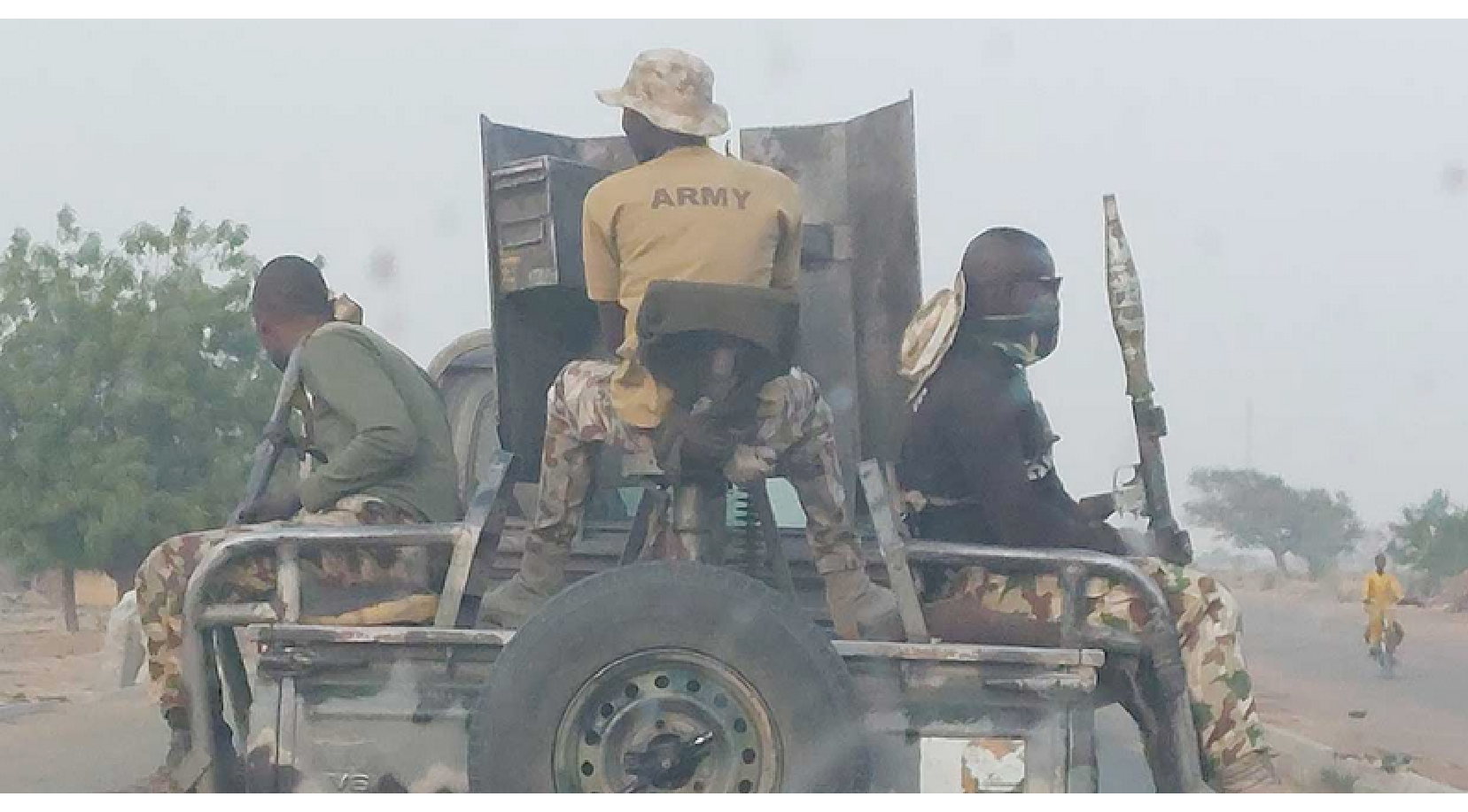
(ZENIT News / Nigeria, 04.07.2026).- The celebration of Easter, the most solemn moment in the Christian calendar, was once again overshadowed by violence in Nigeria, where a series of coordinated and uncoordinated attacks left at least 26 people dead across multiple regions, underscoring the persistent fragility of security in Africa’s most populous nation.
The most dramatic scenes unfolded in the village of Ariko, in Kaduna State, where armed men stormed two churches during Easter Sunday services on April 5, 2026. Worshippers gathered at the Evangelical Church Winning All and St. Augustine’s Catholic Church became targets as attackers, described by several sources as Fulani bandits, surrounded the area and opened fire indiscriminately. Casualty figures remain contested: some reports indicate as many as 12 dead, while others suggest between five and seven fatalities. What is beyond dispute is the scale of the disruption and the terror inflicted on a community at prayer.
Compounding the tragedy, dozens of worshippers were abducted and taken into surrounding forests and savannah areas, terrain that has long served as a refuge for armed groups. Nigerian military authorities claimed that 31 hostages had been rescued following a firefight with the attackers. Yet this account has been sharply challenged by local residents and community leaders, who insist that those kidnapped remain in captivity. The lack of clarity has deepened mistrust and highlighted a recurring problem in Nigeria’s conflict zones: competing narratives between official sources and affected communities.
Local testimonies further suggest that the attackers operated for an extended period without effective resistance, a situation attributed in part to poor telecommunications infrastructure, which delayed emergency alerts and coordination. This logistical weakness, frequently cited in rural areas, continues to hinder rapid response capabilities.
The violence in Kaduna was not an isolated incident. In neighboring Benue State, at least 17 Christians were killed in attacks on rural communities during the Easter period, including the village of Jande and the area of Gwer West. Armed groups, again identified in part as Fulani militias and in some cases reportedly accompanied by Islamist fighters, carried out killings, kidnappings, and the destruction of homes. Governor Hyacinth Alia, himself a Catholic priest, described the attacks as “atrocious” and unacceptable, reflecting growing frustration among local authorities.
A third incident in the northeast, in Borno State, saw militants linked to the so-called Islamic State attack a police facility, killing four officers after a prolonged gun battle. Although not directly targeting churches, the assault forms part of the broader mosaic of insecurity affecting the country.
These events fit into a longer and deeply complex pattern of violence in Nigeria’s central and northern regions. Conflicts often arise from disputes over land and grazing routes between predominantly Muslim Fulani herders and largely Christian farming communities. However, this economic and environmental tension has, in many cases, become entangled with religious identity and, increasingly, with jihadist ideology. Groups such as Boko Haram and Islamic State affiliates have exploited these fractures, while criminal banditry—particularly kidnapping for ransom—has flourished in the resulting instability.
The scale of the crisis is reflected in global data. According to the World Watch List 2026 compiled by Open Doors, Nigeria accounted for 3,490 of the 4,849 Christians killed worldwide for their faith between October 2024 and September 2025—approximately 72 percent of the global total. Despite this, Nigeria ranks seventh on the list of countries where it is most difficult to live as a Christian, indicating that while lethal violence is exceptionally high, other forms of persecution may be more systemic elsewhere.
Church leaders within Nigeria have pointed to structural causes behind the violence. The president of the Catholic Bishops’ Conference of Nigeria, Archbishop Matthew Man-Oso Ndagoso, has cited corruption, nepotism, and poor governance as underlying drivers of insecurity, arguing that the crisis cannot be addressed solely through military means. His assessment aligns with a broader consensus among analysts that the erosion of state authority in certain regions has allowed both ideological and criminal violence to proliferate.
Meanwhile, international attention continues to grow. The United States has recently deployed troops to assist Nigerian forces with training and intelligence, while political rhetoric abroad—particularly from former President Donald Trump—has reignited debate over whether the situation constitutes targeted religious persecution or a more complex, multi-layered conflict affecting diverse populations. Nigerian authorities have consistently rejected the characterization of a “genocide,” insisting that victims include Muslims, Christians, and others alike.
For Christian communities on the ground, however, such distinctions offer little consolation. The repeated targeting of churches during major liturgical celebrations carries both symbolic and psychological weight, reinforcing a sense of vulnerability that extends beyond immediate casualties. As one local church official put it in the aftermath of the Kaduna attack, the question is no longer whether violence will occur, but when and where it will strike next.
In a country where faith remains a central pillar of social life, the persistence of such attacks poses not only a security challenge but a profound test of coexistence. Easter, a season meant to proclaim hope over despair, has instead become a stark reminder of how fragile that hope can be.
Thank you for reading our content. If you would like to receive ZENIT’s daily e-mail news, you can subscribe for free through this link.

Publicaciones relacionadas:
 Indian bishop calls for end to violence against Catholics in India
 India: Hindu persecution against Christians increases and reaches 800 cases. They also seek to apply a new anti-Christian law
 Number of Kidnapped Catholic Priests Grows in One Year Worldwide
 Church authorities in the Holy Land denounce the seizure and encroachment on Christian properties by Jewish settlers
