

(ZENIT News / Abuja, 03.05.2026).- The internal tensions that have simmered for decades within Anglicanism reached a new institutional stage this week in Abuja, Nigeria, where conservative Anglican leaders unveiled a governance structure that could reshape the global balance of authority within one of Christianity’s largest communions.
Meeting in the Nigerian capital during the first week of March, leaders associated with the Global Anglican Future Conference, commonly known as GAFCON, announced what they described as “a historic day for the worldwide Anglican Communion.” Their decision did not formally establish a new church. Instead, it introduced a parallel framework of global leadership intended to represent what the movement considers the doctrinally faithful majority of Anglicans worldwide.
The announcement came only weeks after the installation of Sarah Mullally as the 36th Archbishop of Canterbury. In Anglican ecclesiology the archbishop traditionally serves as primus inter pares—“first among equals”—among the communion’s bishops and primates. While the office carries no centralized authority comparable to that of the papacy in the Catholic Church, it has long functioned as the symbolic focal point of the Anglican world.
For GAFCON leaders, however, that symbolic role no longer reflects the theological and demographic realities of contemporary Anglicanism.
The Abuja meeting brought together more than 400 participants, including primates, bishops, clergy, and lay representatives, many from rapidly growing churches in Africa and other regions of the Global South. These churches have become increasingly influential within Anglicanism, even as their theological positions diverge sharply from those of some Western provinces.
The Anglican Communion currently counts roughly 85 million members spread across about 165 countries and organized into more than 40 autonomous provinces. Historically, the network of churches developed from the Church of England after the English Reformation and expanded globally through British colonial presence and missionary work. Over the past century, however, Anglicanism’s demographic center has shifted dramatically toward Africa and parts of Asia.
GAFCON, founded in Jerusalem in 2008, emerged precisely from that shift. The movement was created by conservative bishops who believed that doctrinal developments in Western Anglican churches—particularly regarding sexuality and ecclesial authority—were moving beyond what they regarded as biblical teaching.
Although the movement insists it is not a separate church, its influence has steadily grown. Some provinces and dioceses aligned with its theological outlook have already distanced themselves from the traditional structures of the Anglican Communion.
At the Abuja gathering, GAFCON leaders went a step further by dissolving the movement’s original Primates Council, which had overseen its activities since its founding eighteen years ago. In its place, they established a new body called the Global Anglican Council.
The new council represents a significant departure from earlier structures. Instead of concentrating leadership primarily among national primates, the Global Anglican Council includes bishops, clergy, and lay representatives, each with full voting rights. According to the announcement, the goal is to create a more conciliar form of governance—one in which authority is shared across a broader range of church leaders.
The shift also comes with a symbolic change. The council’s president will not bear the traditional Anglican title of primus inter pares. GAFCON leaders argued that if they are building new structures, they must also move beyond inherited titles associated with what they see as outdated institutional arrangements.
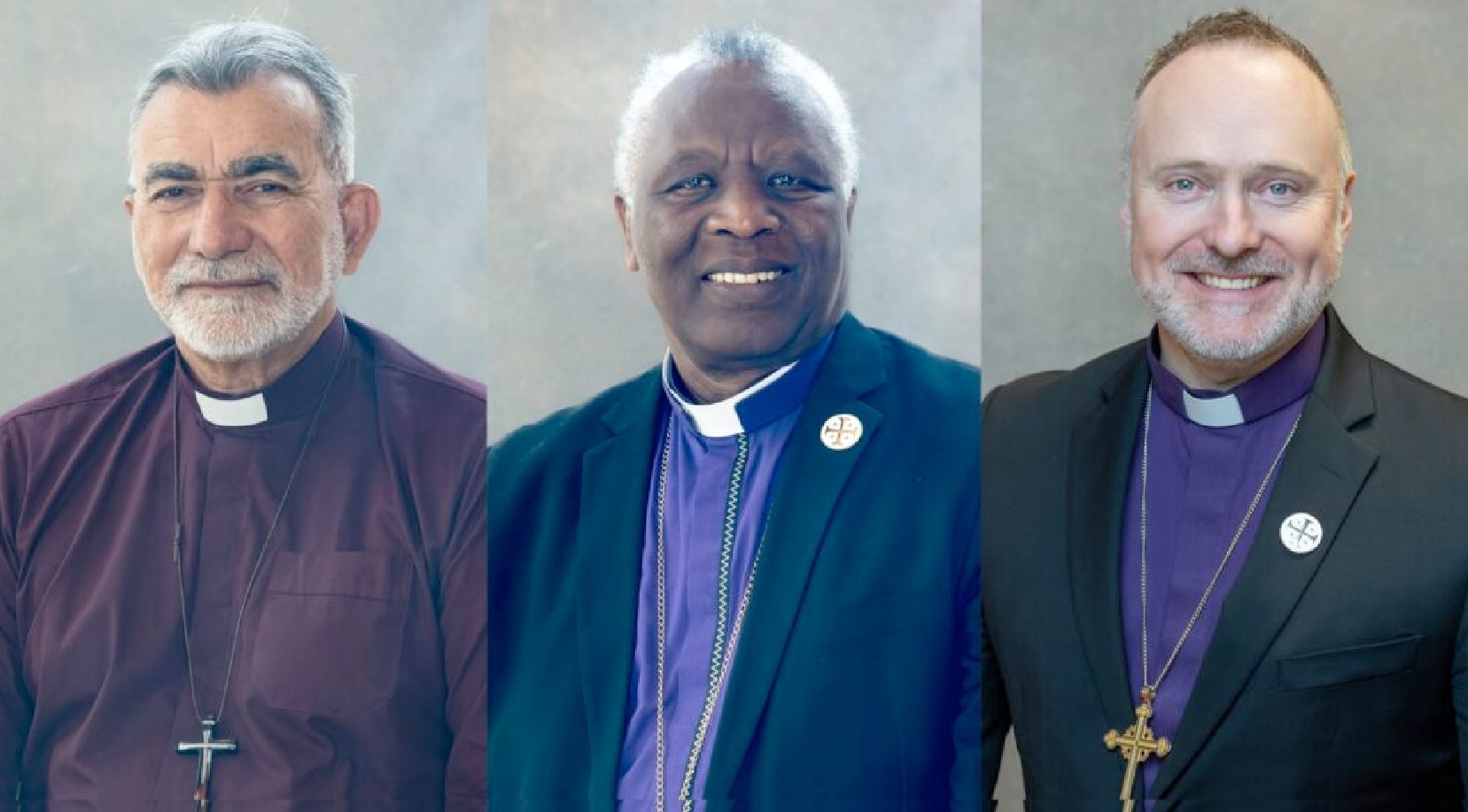
Archbishop Laurent Mbanda of Rwanda, who previously chaired GAFCON’s governing body, was unanimously elected president of the new Global Anglican Council. Archbishop Miguel Uchoa was chosen as vice president, while Bishop Paul Donison will serve as secretary general. Their terms are expected to last until the next major GAFCON assembly, scheduled for Athens in 2028.
The decision to form a new governing structure reflects frustrations that have been building for years within conservative Anglican circles. The movement has repeatedly criticized the official “Instruments of Communion”—the loose set of institutions linking Anglican churches worldwide—for failing to address theological divisions.
Those divisions have deep historical roots. In 1930, the Lambeth Conference of Anglican bishops approved the limited use of birth control, marking a significant shift in moral teaching. Later decades saw further changes: many Anglican provinces began ordaining women, and by 2014 the Church of England approved women bishops.
Disputes intensified further in the twenty-first century. In 2015 the Episcopal Church in the United States authorized same-sex marriage and made it mandatory in all its dioceses by 2018. Other Western churches introduced similar policies and opened ordination to openly LGBTQ clergy.
Conservative provinces, particularly in Africa, rejected those developments. Churches such as the Anglican Church of Nigeria, the Church of Uganda, the Anglican Church of Kenya, the Anglican Church of Tanzania, and the Anglican Church in North America have maintained traditional teaching on marriage and do not allow women to serve as bishops in their jurisdictions.
Tensions escalated again in 2025 when Cherry Vann was elected Archbishop of Wales. Her appointment marked two milestones: she became the first woman archbishop within the Anglican churches of the United Kingdom and the first openly lesbian bishop living with a partner to serve as a primate within the wider communion.
The reaction from some African leaders was swift. Henry Ndukuba, primate of the Church of Nigeria—the largest Anglican province in the world—criticized the decision as evidence that parts of the communion were abandoning what he described as the historic faith.
Yet the most recent catalyst for confrontation appears to have been the election of Mullally as Archbishop of Canterbury. Although she has maintained the Church of England’s official definition of marriage as the union of a man and a woman, she has supported proposals allowing blessings for same-sex couples and has spoken about the church’s need to acknowledge harm caused to LGBTQ individuals.
For many leaders within GAFCON, those positions confirmed long-standing concerns. Archbishop Mbanda has argued that the majority of the global Anglican community still believes Scripture requires a male episcopate and traditional teaching on sexuality.
Commentators sympathetic to the movement describe the moment as the culmination of a long theological struggle. According to theologian Gavin Ashenden, the current developments amount to an “open civil war” within Anglicanism between progressive and conservative visions of the church.
Even so, the situation remains more fluid than a classic denominational schism. Anglicanism lacks a centralized hierarchy capable of enforcing institutional unity or separation. Provinces operate independently and cooperate voluntarily, meaning that multiple leadership structures could coexist for some time.
Meanwhile, leaders of the official Anglican Communion are attempting reforms of their own. Earlier this week, representatives in London unveiled proposals to decentralize the communion’s leadership structures, acknowledging that most Anglicans now live far from England. The plan would distribute some of the Archbishop of Canterbury’s traditional roles among other primates around the world.
The proposals will be presented to the Anglican Consultative Council—one of the communion’s principal governing bodies—later this year.
Whether such reforms will persuade GAFCON leaders to remain within existing structures remains uncertain. For now, the creation of the Global Anglican Council signals that many conservative Anglicans are preparing for a future in which the traditional authority associated with Canterbury no longer defines the center of the Anglican world.
If that shift continues, historians may eventually look back on the Abuja meeting not simply as another conference in an ongoing dispute, but as the moment when global Anglicanism began reorganizing itself around a new axis of leadership—one increasingly shaped by the churches of the Global South.
Thank you for reading our content. If you would like to receive ZENIT’s daily e-mail news, you can subscribe for free through this link.

Publicaciones relacionadas:
 Anglicans use for the second time a Catholic basilica in Rome for their «mass»
 Russian Orthodox Church issues formal document condemning Fiducia Supplicans
 Orthodox Patriarch of Constantinople: open to celebrating Easter on the same date as Catholics
 Pope Leo XIV Meets Russian Orthodox Envoy Amid Hopes and Hurdles for Dialogue
