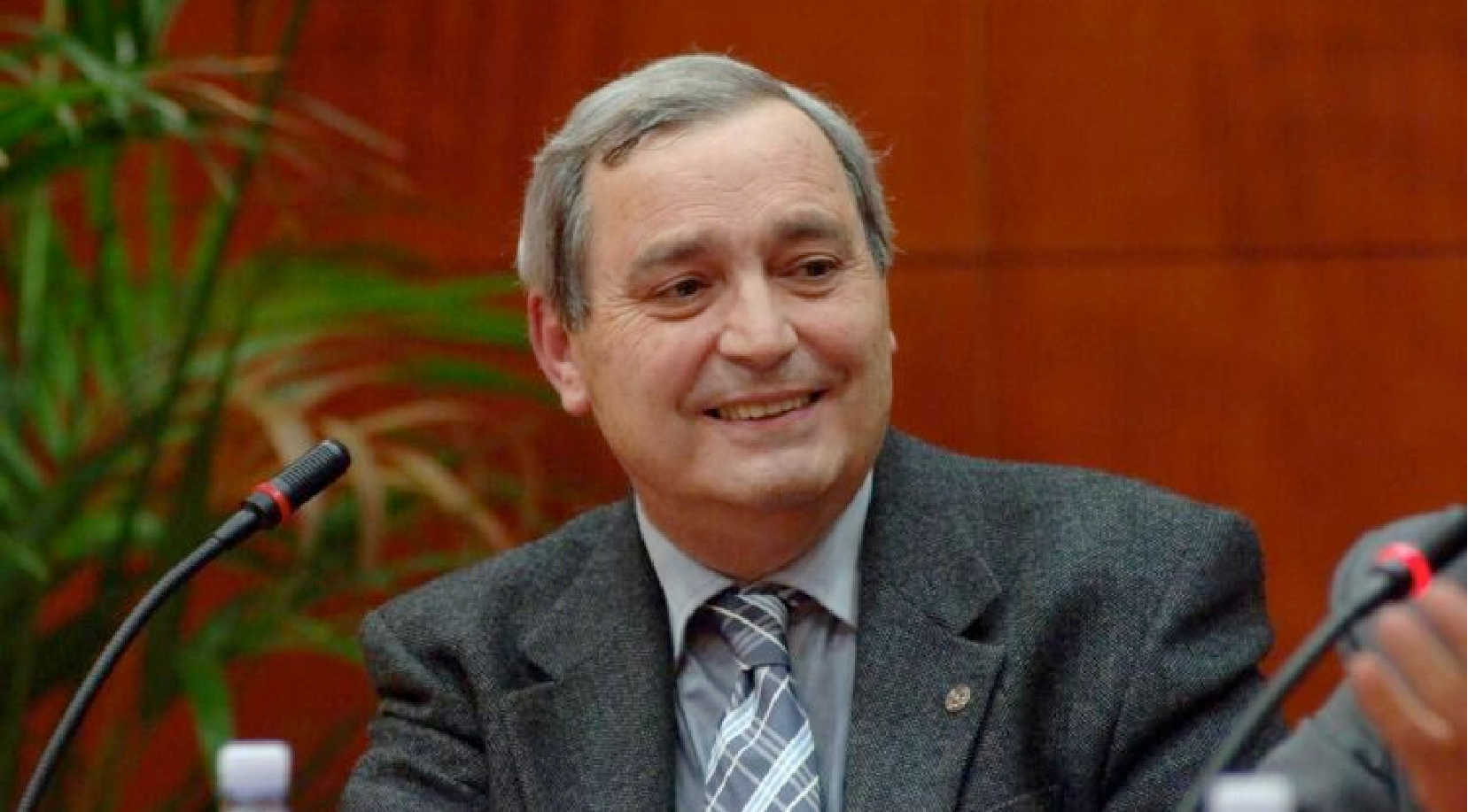
(ZENIT News / Rome, 04.07.2026).- The death of Vittorio Messori on April 3, at his home in Desenzano del Garda, closes a chapter in modern Catholic thought that few journalists have managed to write with such reach and influence. He was 84, just days short of his 85th birthday. His passing, on Good Friday, has been widely noted not as a mere coincidence, but as a striking coda to a life spent interrogating—and defending—the central mystery commemorated on that day.
Messori’s trajectory defies easy categorization. Born on April 16, 1941, in Sassuolo, and raised in an agnostic, even anticlerical environment, he did not inherit the faith he would later spend decades explaining. On the contrary, his early formation—shaped by secular education at the University of Turin and a family wary of clergy—placed him firmly within the cultural mainstream of postwar European skepticism.
The turning point came in the summer of 1964. While studying political science, Messori encountered the Gospels not as devotional literature, but as texts demanding intellectual engagement. What followed was, by his own account, less an emotional conversion than a cognitive rupture: a sudden conviction that the Christian narrative was not only meaningful, but true. He would later describe this moment as entering “a new dimension,” where the figure of Christ ceased to be an abstraction and became a living presence.
That experience did not lead him into the seminary or ecclesiastical life, but into journalism and historical inquiry. Over the next decade, he immersed himself in the study of early Christianity, eventually producing the work that would establish his reputation: Hypotheses on Jesus. Published in 1976 after years of research, the book confronted modern skepticism on its own terrain, assembling historical and textual arguments to support the credibility of the Gospel accounts. Its success was immediate and international, marking what many observers would later identify as the starting point of a renewed Catholic apologetics capable of engaging a secular audience without retreating into confessional language.
Messori’s distinctive contribution lay precisely in this method. He did not write as a theologian addressing believers, but as a reporter addressing doubt. His prose avoided abstraction, favoring instead a forensic style that treated the claims of Christianity as hypotheses to be tested rather than dogmas to be asserted. This approach would define his entire corpus, which eventually exceeded twenty books and sold millions of copies worldwide.
His ability to mediate between ecclesiastical authority and public readership reached its peak in two landmark collaborations. In 1985, he published The Ratzinger Report, based on extended conversations with Joseph Ratzinger. The book offered an unprecedented window into the theological and cultural concerns of the future pope, presenting complex doctrinal issues in accessible language without diluting their substance. Nearly a decade later, Messori achieved an even broader impact with Crossing the Threshold of Hope, drawn from his interview with John Paul II. That volume became a global publishing phenomenon, translated into multiple languages and read far beyond strictly religious circles.
Yet his work extended well beyond these high-profile encounters. In books such as “They Say He Has Risen,” he returned to the foundational question of the Resurrection, examining its historical plausibility with the same rigor that had characterized his earlier writing. In “Black Legends of the Church,” he turned his attention to contested episodes in Catholic history—among them the Spanish Inquisition, the trial of Galileo Galilei, the conquest of the Americas, and the Crusades—seeking to disentangle polemic from documented fact.
Across these varied subjects, a unifying principle emerges. Messori consistently insisted that Christianity stands or falls not on ethical systems or cultural traditions, but on the historical reality of Christ. He was fond of summarizing this view in a stark formulation: without the “nail” of faith, the “coat hanger” of morality cannot hold. In other words, ethical discourse detached from its theological foundation risks collapse.
This emphasis on the kerygma—the proclamation of Christ’s death and resurrection—also explains his relative disinterest in moral debates that have often dominated contemporary religious discourse. For Messori, the priority was always evidential: establishing whether the central claims of Christianity could withstand critical scrutiny. Only then, he argued, could moral teaching acquire coherence.
In his later years, following the death of his wife in 2020, he withdrew to the Lake Garda region, deepening his devotional life and pursuing research into Marian apparitions, particularly those associated with Sanctuary of Our Lady of Lourdes. He also supported the construction of a chapel at the Abbey of Maguzzano, a gesture that reflected a more contemplative phase of a life previously marked by public debate.
Messori died of cardiac arrest in the same home where he had written many of his most influential works. It is a fitting, if understated, conclusion for a man who spent decades addressing the largest possible questions from the most ordinary of settings: a desk, a set of texts, and an insistence that faith must be accountable to reason.
If his legacy can be reduced to a single contribution, it is this: he demonstrated that belief, in an age of skepticism, need not retreat into subjectivity. It can, instead, enter the arena of argument—exposed, contested, and, in his view, ultimately vindicated.
Thank you for reading our content. If you would like to receive ZENIT’s daily e-mail news, you can subscribe for free through this link.