

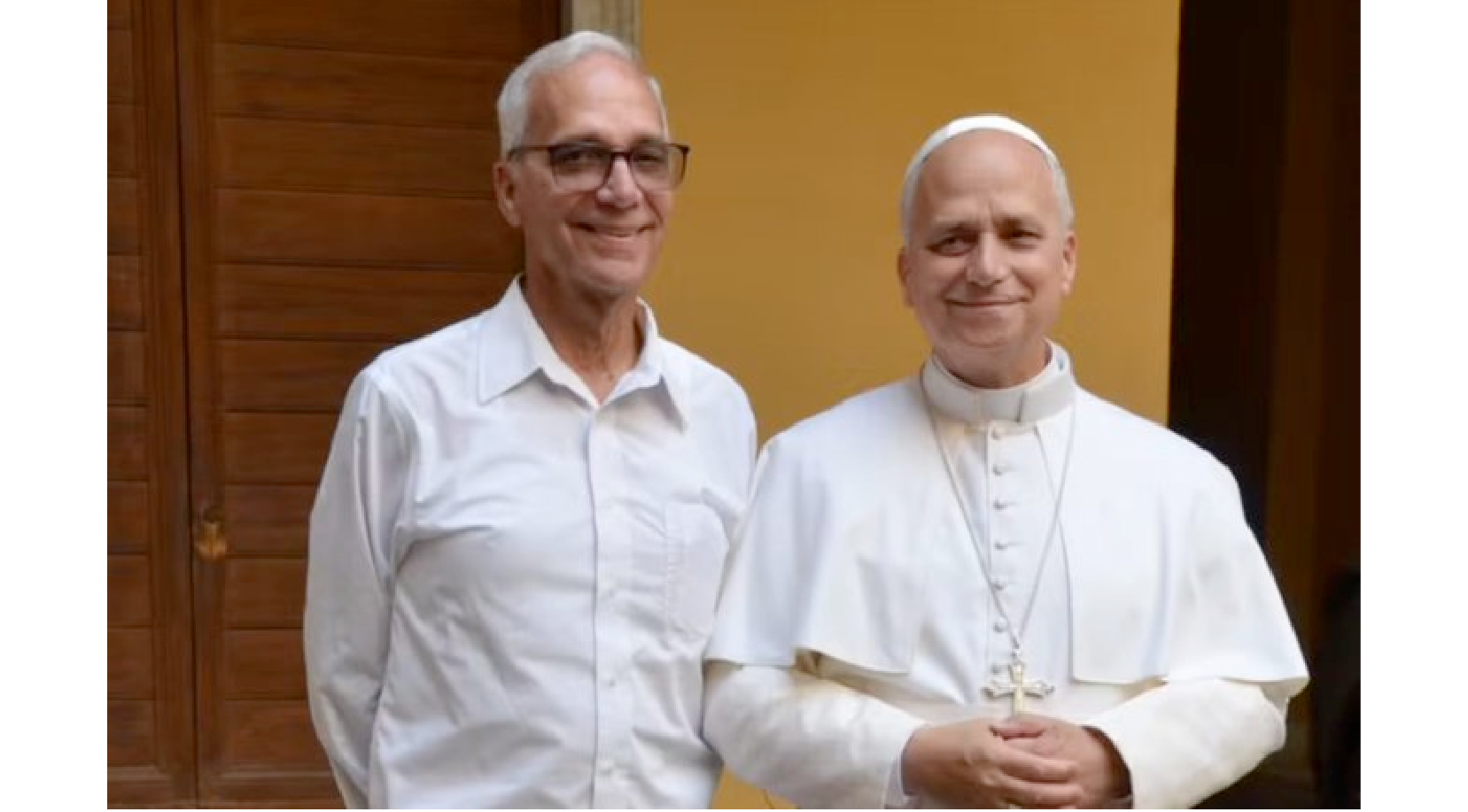
(ZENIT News / Chicago, 04.17.2026).- A bomb threat targeting the residence of Pope Leo XIV’s brother has drawn attention not only for its immediate implications, but also for the context in which it occurred: a period of escalating tensions between the Vatican and the United States administration.
Police in New Lenox, a suburban community outside Chicago, responded on the evening of April 15 at approximately 6:30 p.m. to reports of a bomb threat at the home of John Prevost, one of the Pope’s two older brothers. The response was swift. Officers secured the area, established a safety perimeter, and notified nearby residents, some of whom were asked to evacuate as a precaution.
Specialized units, including bomb-sniffing dogs from the Will County Sheriff’s Office, were deployed to assist in a comprehensive search of the property and surrounding grounds. After a thorough inspection, authorities concluded that the threat was unfounded. No explosive devices or hazardous materials were discovered.
Despite the absence of physical danger, officials have emphasized the seriousness of the incident. The New Lenox Police Department described false reports of this nature as a serious criminal offense that can lead to prosecution. The investigation remains ongoing, with authorities seeking to determine the origin and intent behind the threat.
The episode would likely have remained a localized incident were it not for the identity of the household involved. John Prevost is part of a family that has recently come under unusual public scrutiny following the election of his brother as Pope Leo XIV, the first pontiff born in the United States. The family’s roots trace back to Dolton, another Chicago suburb, while another brother, Louis Prevost, resides in Florida.
The timing of the threat has further amplified its significance. It comes amid a highly visible and increasingly confrontational exchange between President Donald Trump and the Pope, centered on the conflict with Iran and broader questions of war, diplomacy, and moral authority. Trump has publicly criticized Leo XIV on multiple occasions, even making remarks that contrasted the Pope unfavorably with members of his own family, including references to his brother Louis and his political alignment.
While no direct link has been established between the bomb threat and the political climate, the convergence of these elements illustrates how quickly the boundaries between public leadership and private life can erode. In an era where political rhetoric is amplified through social media and globalized news cycles, figures connected to prominent leaders can find themselves unexpectedly exposed.
While popes have long been global figures, the personal backgrounds of recent pontiffs—particularly those with strong national identities—have brought their families into closer public view. In the case of Leo XIV, whose American origins have been a defining feature of his pontificate, that visibility carries both symbolic weight and practical risks.
At a local level, the incident has also raised concerns about community safety and the management of emergency responses. Authorities have reiterated that even unfounded threats require full-scale intervention, diverting resources and potentially placing additional strain on public services. The evacuation of residents, though precautionary, reflects the seriousness with which such alerts are treated.
Thank you for reading our content. If you would like to receive ZENIT’s daily e-mail news, you can subscribe for free through this link.

Publicaciones relacionadas:
 Leo XIV: A Pope Who Ordains Priests Again (And Other Masses During May 2025)
 Leo XIV: a digital phenomenon and the first Pope influencer. Almost 13 million followers in 72 hours
 3 wonderful and inspiring tasks of Pope Leo to Rome priests in first meeting and speech with them
 “We Are Not Perfect but We Are Fiends of Christ,” the Pope’s Great Address That All Priests Should Read
