

(ZENIT News / Rome, 05.12.2026).- A growing controversy inside the Catholic Church has erupted after the publication of a Synod on Synodality study-group report that sharply criticized Courage International, one of the most established Catholic apostolates accompanying men and women who experience same-sex attraction while seeking to live according to the Church’s teaching on chastity.
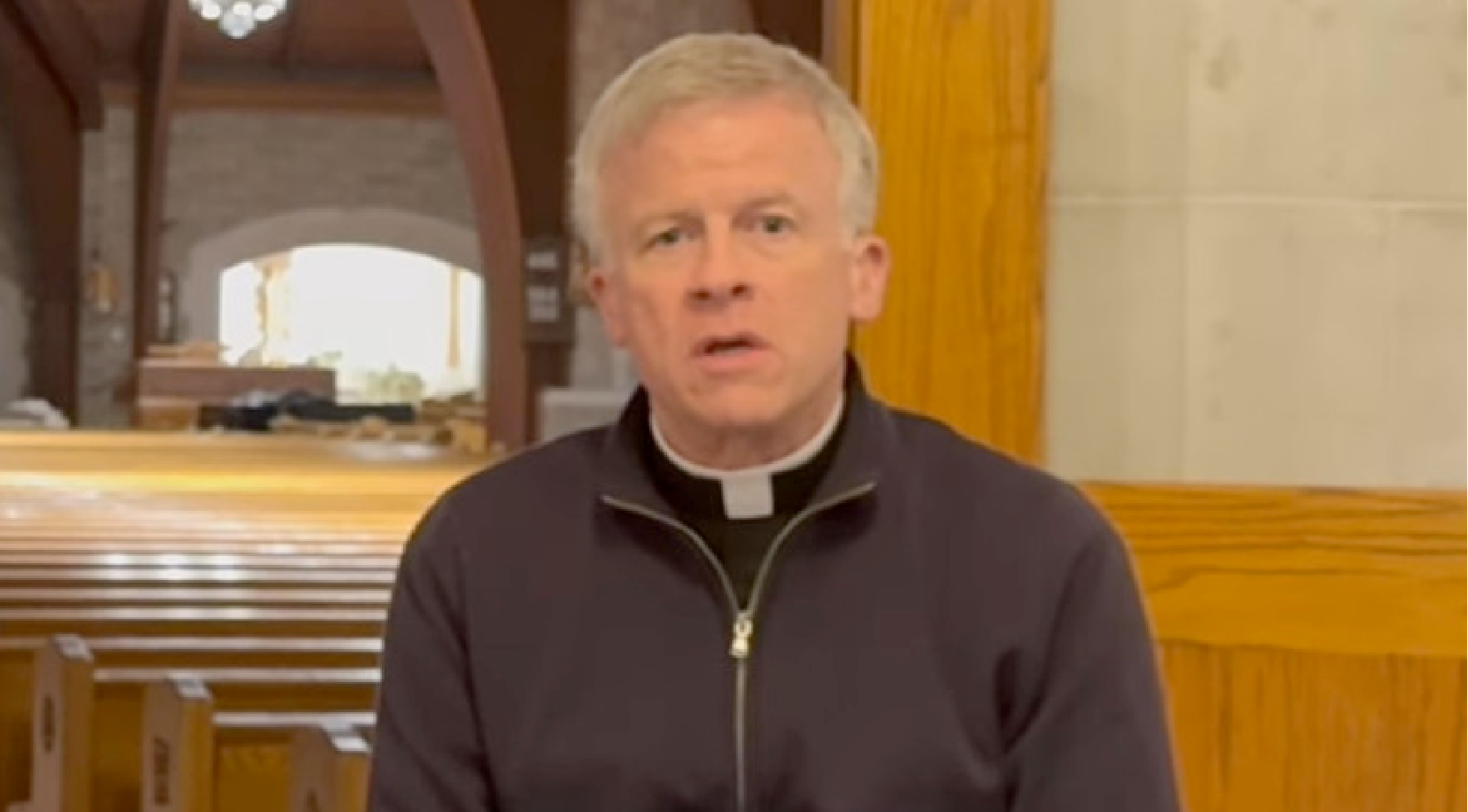
Father Brian Gannon, executive director of Courage International, has now delivered the organization’s most extensive response yet, accusing the Synod’s Working Group 9 report of being “incomplete, erroneous, and hurtful” to Catholics who strive to live chastely in fidelity to Catholic doctrine.
The controversy began after the General Secretariat of the Synod published the final text of Working Group 9 on May 5. The document, dedicated to “shared discernment” on emerging doctrinal and ethical questions, included testimony from individuals in same-sex civil relationships and referenced Courage in a highly critical manner.
An annex accompanying the report described Courage meetings as “secretive and hidden,” while also associating the apostolate with so-called “reparative therapy,” a characterization the organization emphatically rejects.
In earlier statements, Courage had already denounced the report as “calumny and detraction.” But in a lengthy interview, Father Gannon expanded the criticism substantially, arguing that the document suffers from serious methodological, theological, and pastoral flaws.
One of his central objections concerns representation. Courage, he noted, is not a marginal or informal initiative, but a canonically recognized international clerical association with thousands of members, active chapters in numerous countries, and support from bishops around the world. Yet no representative of the apostolate participated in the study group that produced the report.
For Gannon, this omission directly contradicts the very principle of synodality that the process claims to champion.
“If no one from Courage was consulted,” he argued in substance, “then the inquiry itself was structurally incomplete from the beginning.”
He also criticized the report for relying primarily on testimonies from individuals who openly reject Catholic moral teaching regarding same-sex sexual relationships. In his view, the absence of voices from Catholics who experience same-sex attraction yet embrace chastity created a fundamentally unbalanced portrayal.
The debate touches a particularly sensitive area within the Church because Courage occupies a unique place in modern Catholic pastoral life. Founded in New York in 1980 at the request of Cardinal Terence Cooke and initially led by Father John Harvey, the apostolate was created to provide spiritual support, fellowship, sacramental life, and accountability for Catholics seeking to live chastely despite same-sex attraction.
Over more than four decades, Courage developed what it calls its “Five Goals”: chastity, prayer and dedication, fellowship, support, and good example. Its sister apostolate, EnCourage, later emerged to accompany families and relatives of persons who identify as LGBT while encouraging fidelity to Catholic teaching.
Today the organization includes more than 160 Courage chapters in 15 countries and over 100 EnCourage chapters in eight countries.
For supporters of the apostolate, the current controversy is not merely institutional but deeply personal. Many members already feel isolated within both secular culture and parts of the Church. They argue that the Synod report effectively marginalized Catholics who attempt to follow the Catechism’s teaching on sexuality while simultaneously presenting dissenting perspectives as normative.
Father Gannon repeatedly returned to this concern. He insisted that Courage is not built around condemnation, but around accompaniment, fraternity, sacramental grace, and spiritual friendship.
“People often arrive wounded, lonely, or confused,” he explained in essence, “and the role of Courage is to help them encounter Christ, not shame them.”
That pastoral emphasis, he argued, was almost entirely absent from the Synod text.
The theological disagreement became even sharper over one specific passage in the report. The document suggested that the root problem in same-sex relationships is not the relationship itself, but rather a lack of faith in God’s desire for human fulfillment.
To critics of the report, that wording appeared to imply that homosexual sexual relationships are not intrinsically sinful. Gannon rejected that interpretation categorically.
Drawing on the Catechism’s teaching regarding the “moral object” of human acts, he argued that Catholic doctrine has consistently maintained that intentions alone cannot transform an objectively immoral sexual act into a morally good one.
In doing so, he framed the dispute not as a pastoral nuance but as a fundamental doctrinal issue touching the permanence of Catholic moral teaching.
Gannon also appealed to Scripture and to the theological legacy of Pope John Paul II, especially the encyclical Veritatis Splendor, which defended the existence of immutable moral truths against attempts to redefine morality according to subjective experience or changing cultural trends.
According to the Courage director, much of the current opposition to the apostolate stems from “revisionist moral theologies” that emerged after the sexual revolution of the 1960s and sought to reconcile Catholic teaching with contemporary Western sexual ethics.
In this sense, the dispute surrounding Courage is part of a much wider ecclesial conflict that has intensified in recent years, particularly in Europe and North America: whether pastoral adaptation can gradually alter doctrinal understanding without explicitly rewriting doctrine itself.
Supporters of the Synod process often argue that listening to personal experiences is essential for authentic accompaniment and evangelization. Critics, however, fear that the language of accompaniment can become detached from doctrinal clarity and ultimately generate confusion regarding what the Church actually teaches.
Father Gannon made clear that he believes the current report crossed that line.
He called upon Church authorities to publicly identify the document for what he described as “a nonbinding summary of an incomplete inquiry,” rather than allowing it to be perceived as a reliable theological guide.
At the same time, his response avoided personal attacks against Catholics experiencing same-sex attraction. Instead, he repeatedly distinguished between persons and actions, insisting that the Church condemns no individual merely for experiencing same-sex attraction, while continuing to teach that all sexual activity outside sacramental marriage between a man and a woman is morally impermissible.
That distinction has long been central to official Catholic teaching, though it remains one of the most contested issues in contemporary Church debates.
The controversy surrounding the Synod report may ultimately prove significant not because it changes doctrine immediately, but because it reveals how differently various sectors of the Church now speak about sexuality, identity, sin, accompaniment, and conscience.
For many Catholics faithful to teaching, the fear is not simply doctrinal ambiguity, but the possibility that those attempting to live according to the Church’s moral demands may increasingly feel abandoned or caricatured within ecclesial structures themselves.
Thank you for reading our content. If you would like to receive ZENIT’s daily e-mail news, you can subscribe for free through this link.

Publicaciones relacionadas:
 Scotland: Church voices concern as government looks into banning ‘conversion practices’
 German bishops establish new position: bishop in charge of queer pastoral care
 About the Scandal in New York’s Cathedral of Gay Irreverence During a Funeral and What This Has To Do with Fiducia Supplicans
 CA library changes policy, allows women’s sports discussion
