

(ZENIT News / Vatican City, 04.02.2026).- In the span of a few days, Pope Leo XIV has moved decisively on three fronts that reveal the architecture of his governance: financial oversight, institutional culture, and the Church’s long struggle with safeguarding. The appointments and transitions announced on April 1 do not form a single headline, but together they sketch a coherent direction—one that leans on technocratic expertise while reaffirming moral accountability.
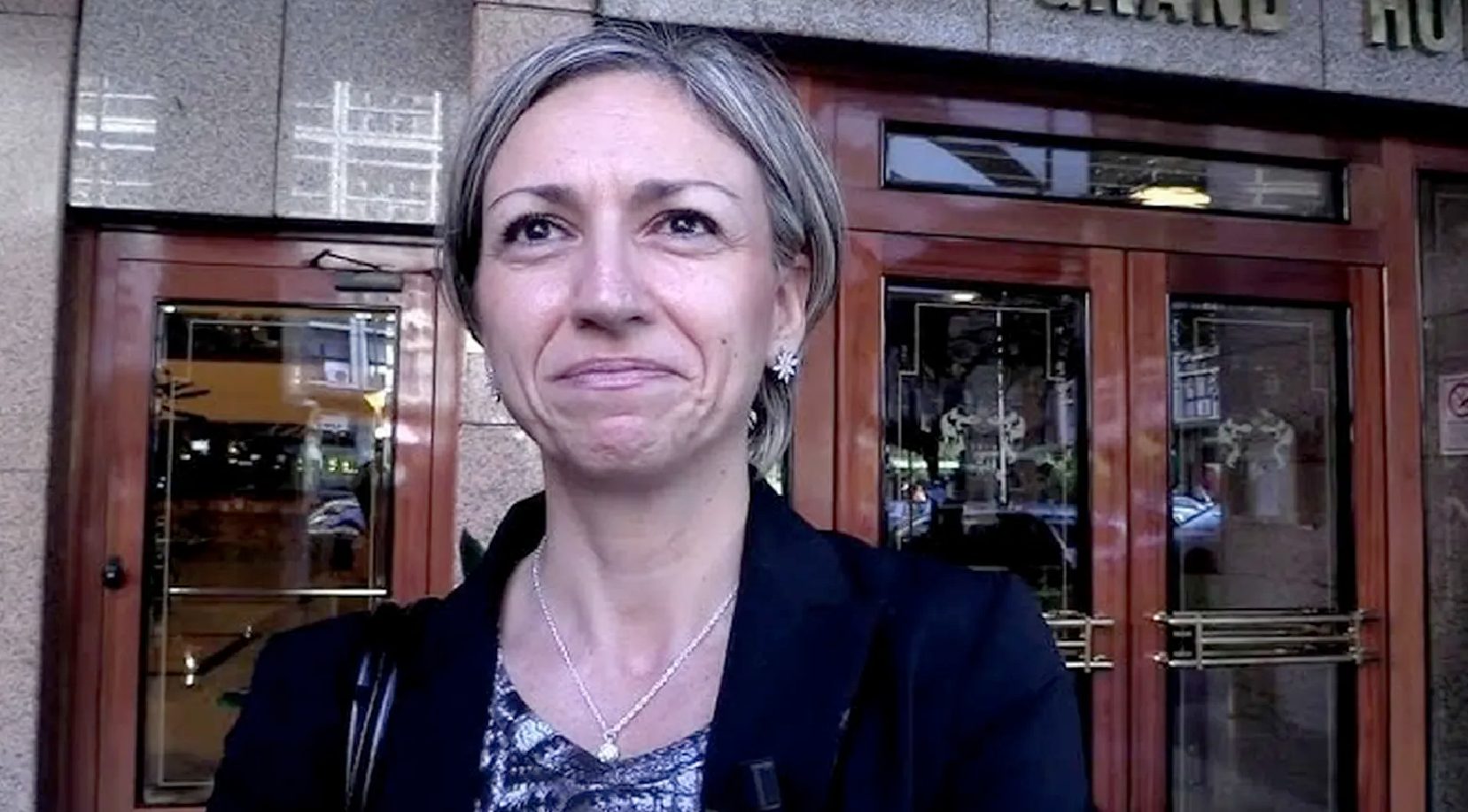
At the Secretariat for the Economy, the Pope has chosen Paola Fanelli to lead the Directorate of Human Resources, a position that has gained strategic importance as the Vatican continues to professionalize its administrative structures. Fanelli arrives with a profile that is atypical for the Roman Curia but increasingly востребованный: a hybrid of academic training and corporate transformation. A graduate with honors from Bocconi University in 1989 in operational research, she built her early career at Accenture, focusing on organizational change and the redesign of human resource processes across industries.
Her trajectory then moved through the banking sector, including a role as program manager at Mediocredito Centrale during the complex merger between Banco di Sicilia and Sicilcassa—an experience that placed her at the intersection of institutional integration and financial restructuring. By 1999, she had become deputy general manager of Cassa di Risparmio di Pescara, where she led innovation in systems and processes, before joining the BNL BNP Paribas in 2001. There, she held senior responsibilities in people management, corporate communication, and social responsibility. Her appointment signals a continued Vatican emphasis on governance not merely as administration, but as cultural change within a historically clerical environment.
If Fanelli’s arrival points to consolidation, the departure of Teresa Morris Kettelkamp from the Pontifical Commission for the Protection of Minors marks the end of a formative chapter. An American and former colonel of the Illinois State Police, Kettelkamp has been one of the key lay figures in the Church’s safeguarding framework over the past decade. She joined the Commission in 2018 and later became its adjunct secretary, a role created to support the expansion of its mandate, including the drafting of annual reports and the development of global guidelines.
Her resignation, effective April 1, was prompted not by institutional tensions but by personal circumstances: the serious health condition of her granddaughter, born prematurely in April 2025 and already subjected to emergency heart surgery. The decision underscores a recurring tension in Vatican service, where global responsibilities often collide with private obligations. In stepping down, Kettelkamp reaffirmed a principle she has consistently articulated—that safeguarding is not reducible to policy but constitutes a moral duty rooted in the dignity of the human person.
The Commission she leaves behind—established in 2014 by Pope Francis—has evolved from an advisory body into a more structured actor in the Church’s global response to abuse. Its current president, Thibault Verny, paid tribute to her “unwavering commitment” to victims and survivors, emphasizing the lasting imprint of her work on integrating survivor voices into ecclesial life. Kettelkamp herself had long insisted that recognition and listening are prerequisites for healing—an approach that has gradually influenced diocesan practices worldwide.
Parallel to these developments, the Vatican’s financial nerve center is undergoing its own transition. The Institute for the Works of Religion (IOR), often described—imprecisely—as the “Vatican bank,” has named François Pauly as the next president of its Supervisory Board. He will succeed Jean-Baptiste Douville de Franssu, who remains in office until April 28, 2026, when the board is scheduled to approve the Institute’s financial statements as of December 31, 2025.
Pauly’s appointment follows a twelve-month succession process conducted jointly by the Supervisory Board and the Commission of Cardinals, reflecting an effort to ensure continuity rather than rupture. A Luxembourg national, he brings decades of experience in European banking, including leadership roles at Banque Internationale à Luxembourg between 2011 and 2016 and earlier executive responsibilities at Dexia Crediop in Italy. His prior service on the IOR board since 2024 positioned him as an internal candidate capable of maintaining the Institute’s current trajectory.
That trajectory has been shaped in no small part by Douville de Franssu, whose tenure coincided with a period of intensified scrutiny and reform aimed at aligning Vatican financial practices with international standards. Giuseppe Petrocchi, president of the IOR’s Commission of Cardinals, explicitly linked Pauly’s nomination to the need to consolidate those gains and deepen the Institute’s integration into the global financial system, both operationally and culturally.
Taken together, these moves suggest that Leo XIV is neither dismantling nor dramatically reinventing the reforms initiated under his predecessor. Instead, he appears to be reinforcing them through targeted appointments and carefully managed transitions.
In the Vatican, where continuity often carries as much weight as change, such decisions rarely produce immediate headlines.
Thank you for reading our content. If you would like to receive ZENIT’s daily e-mail news, you can subscribe for free through this link.

Publicaciones relacionadas:
 Another Woman Appointed to the Dicastery for Bishops. Leo XIV Confirms Other Members
 Prefect of Dicastery for Doctrine of the Faith: there will be no priestly ordination of women
 Vatican anti-abuse body asks Roman Curia not to use Rupnik artwork
 Vatican Dicastery discourages publication of lists of deceased clergy “credibly accused” of sexual abuse and these are the reasons why
