

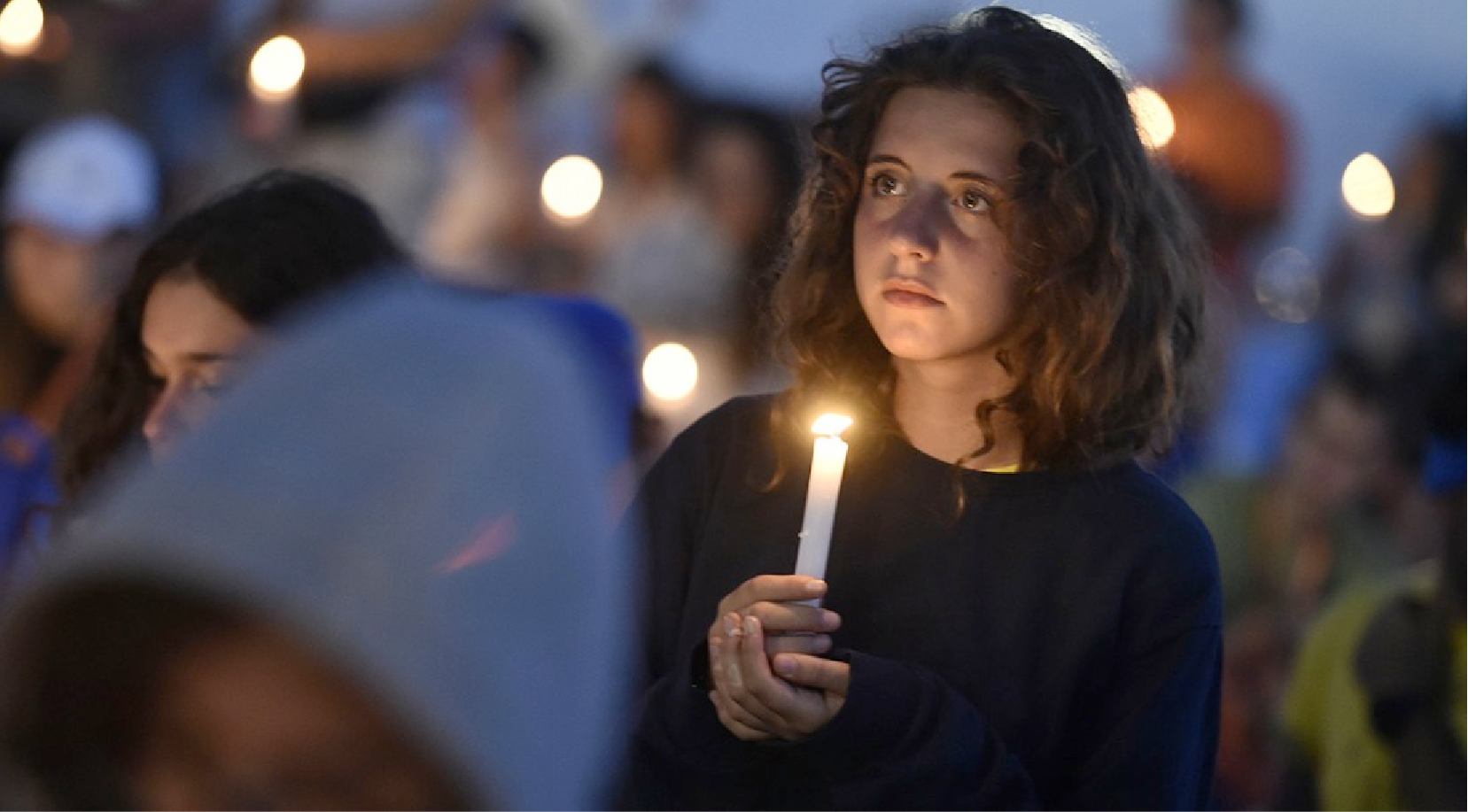
(ZENIT News / London, 04.04.2026).- For nearly a year, a single narrative reshaped the conversation about religion in Britain: that Christianity, long presumed to be in terminal decline, was quietly staging a comeback—especially among the young. That narrative has now been abruptly dismantled.
At the center of the controversy lies the report “The Quiet Revival,” published in 2025 by the Bible Society and based on polling conducted by YouGov. The study’s most striking claim was numerical and clear: monthly church attendance among 18–24-year-olds in England and Wales had reportedly quadrupled, rising from 4 percent in 2018 to 16 percent in 2024—a 12-point increase that suggested a generational shift of considerable magnitude.
That conclusion has now been withdrawn. In a statement issued on March 26, the Bible Society acknowledged that the sample underpinning the report was “defective” and could no longer be considered reliable. The reversal followed an internal review by YouGov, which revealed that essential quality-control mechanisms had not been activated during the 2024 survey. These systems are designed to filter out respondents outside the target geography, detect duplicate entries, and identify careless or automated responses. Their failure meant that a statistically significant portion of the data was compromised.
The admission has triggered a reputational shock affecting both institutions. Paul Williams expressed “deep disappointment” that the error had gone undetected for so long, noting that his organization had sought repeated assurances over a 15-month period regarding the robustness of the methodology. Stephan Shakespeare, in turn, issued an apology, taking full responsibility for the flawed dataset while emphasizing that the Bible Society had reported the findings accurately as received.
Yet the implications extend beyond a single report. The episode has reignited a broader debate about how religion is measured—and mismeasured—in contemporary societies. Critics had already raised concerns when the study was first published, pointing out that it relied on online panels composed of self-selected participants, a methodology that differs fundamentally from probability-based sampling. The Pew Research Center had warned that such approaches can produce misleading results, particularly when they contradict more established data trends.
Academic voices have been sharper still. David Voas argued that the findings were “too good to be true” and criticized the Bible Society for failing to subject its data to wider scholarly scrutiny. He noted that, in contemporary social science, transparency—including the sharing of underlying datasets—is standard practice, a norm he said was not followed in this case. John Curtice added a structural warning: the rise of bots and AI-generated responses is making online polling increasingly vulnerable, particularly in systems that incentivize participation through rewards.
Behind the technical debate lies a deeper question: was the “revival” entirely an illusion, or did the flawed data merely exaggerate a more modest shift?
The Bible Society insists on the latter. While conceding the unreliability of the original survey, it maintains that multiple indicators still point to a changing religious landscape. Among them are a reported 106 percent increase in Bible sales in the United Kingdom over six years and a 35 percent rise in participation in the Alpha course—a widely used introduction to Christianity across Anglican and evangelical settings—within a single year. Additional surveys, including those by Ipsos and Pew, suggest that younger adults may indeed show higher levels of religious engagement than older cohorts, particularly in practices such as prayer and attendance.
Institutional data offers a similarly ambiguous picture. The Church of England recorded an increase in baptisms among teenagers and adults, rising from 7,800 in 2024 to 8,700 in 2025—an increment of nearly 1,000. The Catholic Church has also reported notable growth in adult reception. In the Archdiocese of Westminster, around 800 adults are expected to enter the Church this Easter, the highest figure in 15 years, while the Archdiocese of Southwark anticipates nearly 600, a level not seen in 26 years with only one exception.
And yet, these gains coexist with a longer and more consistent trend: decline in infant baptisms, a proxy for generational transmission of faith. As Voas and others point out, this reflects a broader disengagement among parents, suggesting that while adult conversion may be rising in absolute terms, it is not sufficient to offset the structural erosion of religious affiliation.
The controversy has also exposed tensions within the polling industry itself. As traditional face-to-face surveys have given way to digital methodologies, the incentives embedded in online panels—where respondents may receive points or payments—have created new vulnerabilities. Analysts such as Chris Curtis have highlighted the proliferation of fake or semi-automated accounts designed to exploit these systems at scale, raising questions about data integrity across the sector, not just in this case.
For the Bible Society, founded in 1804 and historically associated with the global dissemination of Scripture, the episode marks a turning point. With annual revenues of around £26 million, the organization has in recent years expanded into research and cultural analysis, seeking to map the evolving place of Christianity in public life. It has announced plans to repeat the survey with improved safeguards and, in the meantime, has published a follow-up report drawing on alternative datasets.
The larger narrative, however, remains unresolved. Between the language of “silent revival” and that of “silent decline” lies a more complex reality: a religious landscape in flux, where institutional weakening coexists with pockets of renewed interest, particularly among younger adults navigating a fragmented cultural environment.
If anything, the collapse of a headline-grabbing statistic may ultimately sharpen the debate rather than settle it. The question is no longer whether Britain is experiencing a revival, but how to measure belief, belonging, and practice in an age when even the data itself has become contested terrain.
Thank you for reading our content. If you would like to receive ZENIT’s daily e-mail news, you can subscribe for free through this link.

Publicaciones relacionadas:
 Germany: research reveals that young clergy are conservative and opposed to ecclesiastical progressivism
 New Survey Reveals Growing Belief Among American Catholics in the Real Presence of Jesus in the Eucharist
 The percentage of people who consider religion important in their lives is falling, according to a US study
 One year after his election, this is what polls say about Catholic support for Trump in the US and his immigration policy
