

Alma Recinas
(ZENIT News / Boulder, Colorado, 05. 21. 2026). – Most senior care facilities offer numerous entertainment options, but few provide spiritual support.
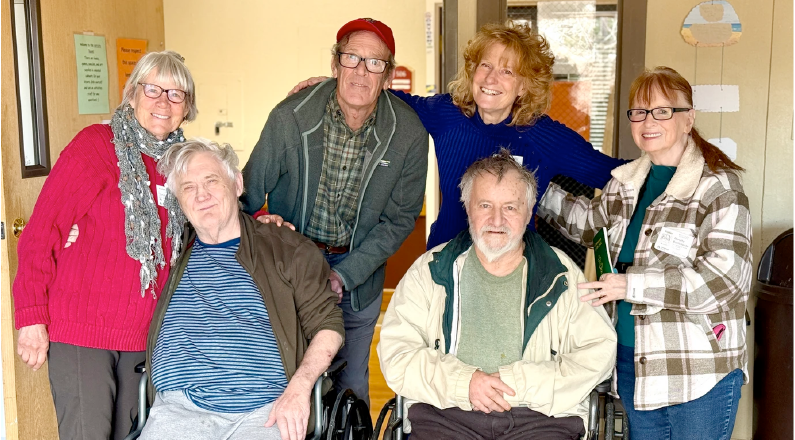
In Boulder, Colorado, the Rosary Team was born, a group of volunteers that, at the initiative of Teresa Rodríguez, a palliative care nurse, was organized in 2019.
Warren was a child who, at the age of six, came into contact with a Catholic farming family. A seed was planted in his heart, despite having been raised Methodist. His story would change almost seven decades later, upon entering a senior care facility in Boulder.
The Denver Catholic newspaper interviewed him shortly after his reception into the Catholic Church on February 22 at St. Thomas Aquinas Parish in Boulder. He was so moved by receiving the Sacraments on the First Sunday of Lent that he had trouble sleeping. Little did he suspect at the time, that he would pass away shortly afterward, during the Easter Octave.
That process, which began in childhood and culminated during his stay at the Boulder Canyon facility, was condensed months earlier, as he reminisced with the Rosary Team during the first sessions at the weekly prayer meetings.
Warren admired everyone in the group. They arrived in pairs at each center. They prayed the Rosary and stayed to keep the elderly residents company and talk with them. This organization is now a large network, serving more than 200 residences across the United States, with the support of Archbishop Samuel Aquila of Denver. Volunteers from the Legion of Mary also assist with the residents’ spiritual needs.
Warren told Teresa Rodriguez, the founder of the Rosary Team, how the Rosary sustained him during one of the most painful moments of his life: the death of his mother and brother within a short period of time. The prayers drew him closer to God and healed his wounds related to his brother.
Each encounter with the Prayer Team made him appreciate his own family more, and he aspired to be like those in their prayer community. This is how he decided to take the final step, asking Father Chris Considine to administer the Sacraments to him in Boulder.
Teresa Rodríguez highlighted the beauty of Warren’s journey in the final stage of his life: «Through the weekly visits of the Rosary Team, the volunteers transmitted to him the powerful love of Christ and connected him with his Christian faith,» and she added: «This is something that often takes a back seat when physical needs are prioritized in a secular healthcare setting.»
During his trip to Austria, Pope John Paul II explained that palliative care needs a «spiritual element» that gives the dying (or terminally ill) the sense of a «pallium,» that is, a «cloak» of protection at the moment of death (Message to the Sick, Address of April 21, 1998).
On its website, the Rosary Team states that it was formally established as a non-profit organization in 2021. Teresa Rodríguez, the founder, was working as a palliative care nurse when, along with her patients, their families, and caregivers, she noticed that while the residents had many entertainment options, they received little spiritual support. This inspired her to create the Rosary Team.
Parishioners from several local churches volunteered to lead the Rosary with the residents of the facility, starting one day a week. Family members began requesting that the Team come more frequently, which led them to meet three days a week.
Sometimes, these elderly people feel like a burden when they can no longer do the things they used to do. They need help with their physical needs and suffer many losses. They lose their homes, their physical abilities, and many of their friends and family members have passed away. But they don’t have to lose their relationship with God, and we can accompany them on this journey.
They can pray for world peace, for the healing of their wounds, for the sick and dying, and for many other intentions. After the Rosary, the group feels very calm; a noticeable difference is apparent. This is one of the many gifts that our Most Holy Mother grants us when we pray the Rosary, notes the Rosary Team website.
As a personal testimony, Teresa points out on this same website: «My mother was a devout believer all my life. From a very young age, she committed herself to praying the Rosary daily and included her family in this devotion. She would gather my father and my four siblings every night to lead the family Rosary, even during our adolescence. I consider this a heroic act, as we weren’t always the most receptive to this commitment.
My mother’s daily intentions were world peace, the end of abortion, and the salvation of non-believers, as well as the consecration of her children and grandchildren to the Immaculate Heart of Mary. She attended Mass every day and taught us that this world is fleeting and that we are destined for something much greater: eternal life.» Leo XIII affirmed that the Rosary is an «intimate companion» and «faithful protector of life,» and that in the «final moments,» the sick person «embraces and holds it as a promise of the crown of glory.
The Letter Samaritanus Bonus of the Dicastery for the Doctrine of the Faith states: The key is that the Rosary functions as a school of hope: palliative care must offer spiritual support that inspires faith and hope and helps to accept death (Letter of the Congregation for the Doctrine of the Faith, 4).
This is the work that many Catholics humbly carry out with great faith, in anonymity, and many benefit, as happened to Warren. For as the Lord tells us in the Song of Songs, chapter 8: Love is stronger than death.

Publicaciones relacionadas:
 Young woman kidnapped by Islamists in 2018 reappears alive
 French Bestseller Shows That Science Proves The Existence of God
 She entered the convent at the age of 8. At the age of 94, she was surprised to meet Pope Francis in the Vatican Basilica. This is how things happened
 These are the 3 books of Pope Francis that shoot to the best sellers on Amazon
