

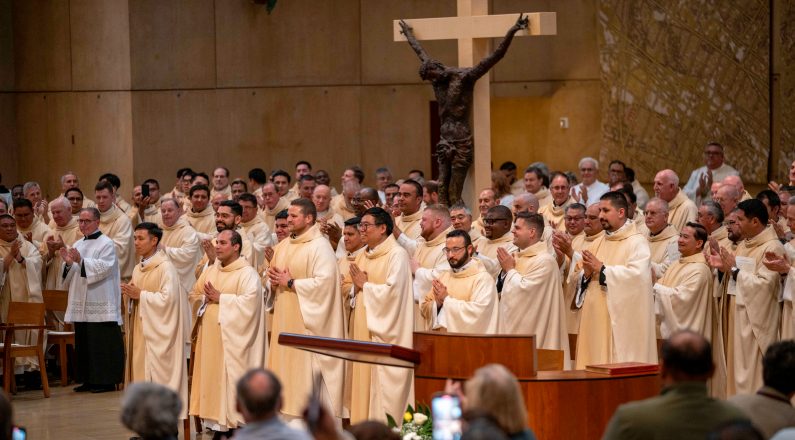
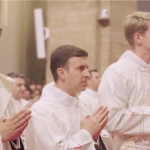
(ZENIT News / Washington, 04.21.2026).- A national survey conducted between 12 February and 20 March among future ordinands provides a detailed snapshot of who these the men who will be ordained as priests in 2026, where they come from, and how their vocation has matured over time.
Out of 428 candidates invited to participate, 334 responded, yielding a robust response rate of 78 percent. The data, compiled through collaboration between the United States Conference of Catholic Bishops and the Center for Applied Research in the Apostolate, reveals patterns that are both statistically significant and pastorally revealing.
One of the clearest findings concerns the type of priesthood being embraced. A large majority—81 percent—are preparing for diocesan ministry, while 19 percent belong to religious institutes. Geographically, the Midwest emerges as a central hub of formation, hosting 35 percent of respondents, while only 5 percent complete their studies abroad. For diocesan candidates, the path to ordination is typically rooted in long-term belonging: on average, they had lived in their future diocese for 16 years before entering seminary. By contrast, those entering religious life report knowing their communities for about five years prior to formation.
The timeline of vocation itself remains strikingly consistent. Most respondents first considered the priesthood at around 16 years of age, but ordination occurs, on average, 17 years later, at 33. This long maturation process underscores a key aspect often overlooked in public discussions: priestly vocation is rarely an impulsive decision, but rather the fruit of prolonged discernment, formation, and personal growth.
The demographic composition of the ordinands reflects both the historical roots and the evolving diversity of the Catholic Church in the United States. A majority, 62 percent, identify as Caucasian, while 17 percent are Hispanic or Latino, 11 percent Asian or Pacific Islander, and 5 percent African American. Notably, more than one in three—35 percent—were born outside the country. Among them, Vietnam, Mexico, and Colombia are the most common places of origin. These foreign-born candidates typically arrived in the United States about 14 years ago, at an average age of 22, suggesting a significant integration process before entering seminary life.
Education also plays a central role in shaping this cohort. At least 65 percent attended Catholic schools at some point, and 63 percent participated in parish-based religious education for an average of six years. A notable minority—11 percent—were homeschooled, often for extended periods averaging nine years. Academic formation prior to seminary is common: 61 percent completed a college or graduate degree, with fields ranging from philosophy and theology to engineering, business, and the sciences. This diversity of academic backgrounds reflects a generation that brings professional and intellectual experience into ecclesial life.
Financial realities are not absent from the picture. Twenty-one percent of respondents carried educational debt when entering seminary, averaging 33,206 dollars. Over time, that burden tends to decrease—by 79 percent among members of religious institutes and 24 percent among diocesan seminarians—indicating structured efforts within the Church to alleviate financial obstacles to vocation.
Work experience is another defining feature. Nearly two-thirds, 64 percent, had held full-time jobs before entering the seminary, and a small proportion, 4 percent, had served in the armed forces. These experiences often contribute to a more grounded pastoral outlook, particularly in engaging with the everyday realities of the faithful.
Family background emerges as one of the most decisive factors. An overwhelming 93 percent were baptized Catholic as infants, and 86 percent grew up with both parents identifying as Catholic. Stability is also evident: 97 percent were raised by their biological parents during their formative years. Additionally, 28 percent report having a relative who is a priest or religious, suggesting that vocation can be nurtured within familial proximity to consecrated life.
Yet vocation is not formed in isolation. The survey highlights the importance of community and encouragement. Nine in ten respondents—92 percent—say they were encouraged to consider the priesthood, most often by a parish priest (70 percent), followed by friends (49 percent), mothers (46 percent), and fellow parishioners (44 percent). At the same time, 41 percent experienced some form of discouragement, often from peers or family members. This tension reflects a broader cultural context in which priestly life is both respected and questioned.
Spiritual practices prior to seminary reveal a strong Eucharistic and devotional foundation. Regular participation in Eucharistic adoration was reported by 81 percent, closely followed by the rosary at 79 percent. Other practices, such as Bible study groups (52 percent) and Lectio Divina (48 percent), also played a role. These habits point to a spirituality rooted not only in personal prayer but in the sacramental life of the Church.
Equally significant is early involvement in parish life. Before entering seminary, 79 percent had served as altar servers, while many also participated as lectors, catechists, or in youth ministry. Sixty-four percent were involved in parish youth groups, highlighting the importance of community-based formation during adolescence.
Finally, the survey sheds light on the formative experiences within seminary itself. A pastoral year internship is cited by 68 percent as having contributed meaningfully to their vocation, while clinical pastoral education, priestly fraternity groups, and language immersion also play notable roles. These elements indicate a formation model that seeks to integrate intellectual, spiritual, and pastoral dimensions.
Taken together, the data outlines a generation of priests shaped by family stability, parish engagement, and sustained discernment. It also reflects a Church that, while facing undeniable challenges, continues to foster vocations through personal accompaniment, sacramental life, and community support.
Thank you for reading our content. If you would like to receive ZENIT’s daily e-mail news, you can subscribe for free through this link.

Publicaciones relacionadas:
 Who Am I For? Pope’s Message About Vocation in the Light of the Gospel Passage of the Rich Young Man
 How Many New Priests Will Be Ordained in France in 2025? These Are the Figures
 In view of the shortage of priests, diocese grants dispensation from Sunday Mass: where and under what circumstances?
 Poland 2025: European leader in number of vocations
