

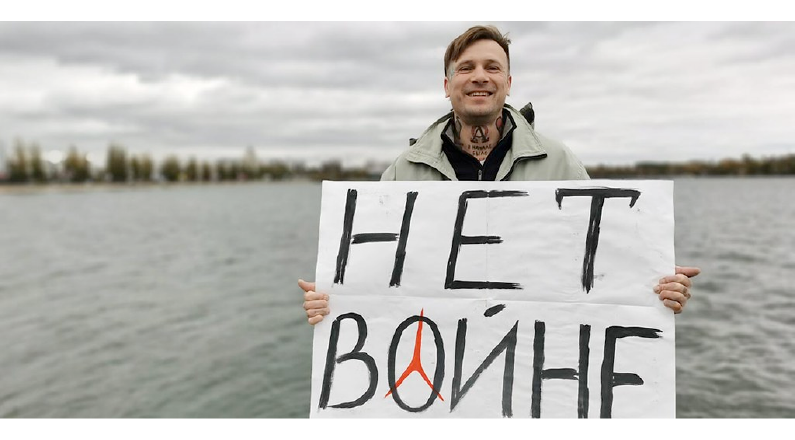
(ZENIT News / Kyiv, 04.21.2026).- The language of religion has long been invoked in the geopolitical imagination of Russia, often framed through the historic notion of a “Third Rome,” a supposed mantle of spiritual continuity after the fall of Constantinople. Yet recent events unfolding in Russia and in territories under its control are raising uncomfortable questions about the coherence between such claims and the lived reality of Christian communities on the ground.
Two episodes, distinct in geography but closely linked in context, illustrate a pattern that is drawing increasing concern among observers of religious freedom: the death in custody of a Christian blogger in Russia, and the seizure of a Catholic church in occupied Ukraine during one of the most sacred moments of the Christian calendar.
The first case centers on Khristolyub Vegan, a Christian preacher and online commentator who died in April 2026 in a penal colony in the Voronezh region. His death, communicated to his family without explanation, occurred while he was serving a three-year sentence imposed earlier that year. The charges brought against him—offending religious believers and “rehabilitating Nazism”—reflect the increasingly expansive use of legal provisions that criminalize dissent under the guise of protecting historical memory and social harmony.
In practice, the accusations against Vegan stemmed from his criticism of Soviet-era crimes, including comparisons between Joseph Stalin and Adolf Hitler, as well as his opposition to the war in Ukraine. Such positions, while controversial, fall within the realm of political and historical debate in many societies. In today’s Russia, however, they can trigger prosecution under laws that penalize any perceived “distortion” of the official narrative of the Second World War.
The legal framework behind these charges was reinforced in 2021, when legislation was enacted to prohibit equating Nazism with communism. The intent, according to critics, was to shield the Soviet past from scrutiny. The implications for freedom of expression have been significant. Cases like that of Vegan are not isolated; they form part of a broader environment in which dissenting voices—particularly those with moral or religious motivations—face increasing constraints.
What makes this case especially striking is the personal profile of the deceased. Vegan described himself as a Christian committed to preaching what he understood as truth, even at personal cost. His final recorded message, filmed before his imprisonment, reportedly conveyed a serene faith centered on Christ and eternal life. For many believers, his story resonates not only as a political tragedy but as a form of witness, recalling the long tradition of Christians who have suffered for their convictions.
Parallel to this internal repression, developments in occupied Ukrainian territories point to a different but related dynamic: the restriction of religious plurality. On April 12, coinciding with the celebration of Easter in Eastern Christian traditions, clergy affiliated with the Moscow Patriarchate took control of a Greek Catholic church in Tokmak, in the Zaporizhzhia region. The building, dedicated to Saints Peter and Paul, was seized, and local faithful were barred from entering.
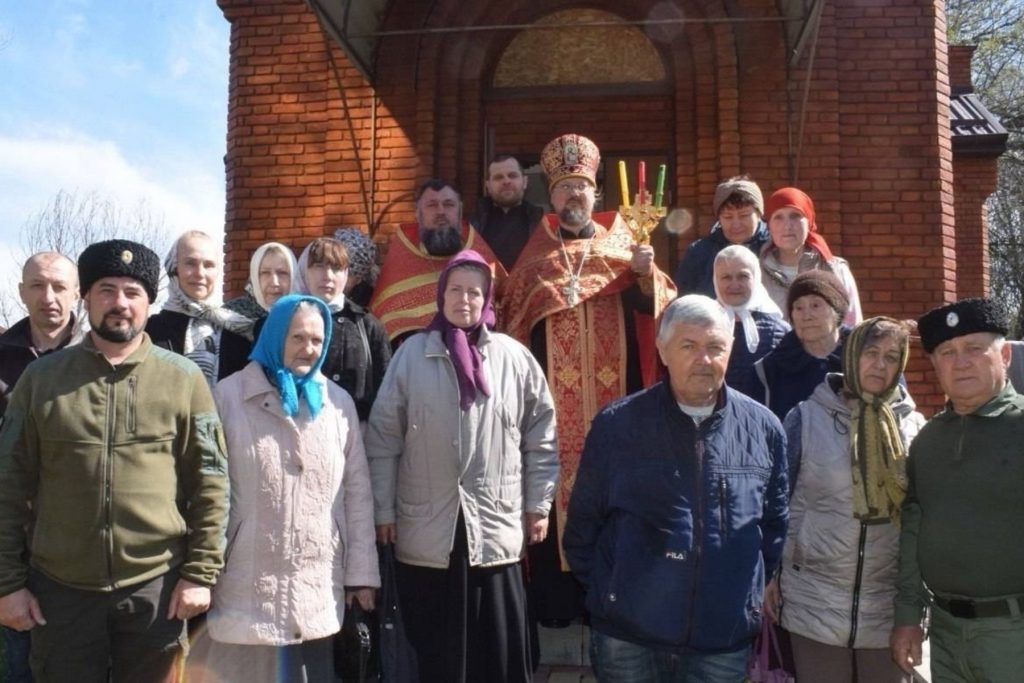
The timing of the incident, on the day commemorating the Resurrection, was not lost on Church leaders. Major Archbishop Sviatoslav Shevchuk condemned the act as a grave offense against the meaning of Easter itself, emphasizing its symbolic weight in a season dedicated to life and reconciliation.
According to statements from the local Greek Catholic exarchate, such incidents are not isolated. They form part of a broader pattern of pressure aimed at marginalizing communities that remain in communion with Rome. In some cases, individuals who attempt to defend their right to worship face severe consequences, including prison sentences reportedly reaching up to 15 years. These measures, applied regardless of age or health, point to a systematic approach rather than sporadic excesses.
The testimony of local believers underscores the human dimension of these policies. Individuals like Svitlana Loy, who continued to attend and care for her parish despite threats, embody a form of quiet resistance rooted in faith. Their experience highlights a fundamental principle often emphasized in Catholic teaching: religious freedom is not merely a political right but a dimension of human dignity.
From a broader perspective, these developments reveal a tension between two competing narratives. On one hand, the Russian state and its allied religious structures present themselves as defenders of Christian civilization. On the other, actions on the ground—ranging from legal persecution of dissenting Christians to the suppression of non-aligned Churches—suggest a more selective application of that identity.
This tension is not new in history. The instrumentalization of religion for political purposes has often led to contradictions between rhetoric and reality. What is distinctive in the current context is the scale and visibility of these contradictions, amplified by modern communication channels and international scrutiny.
For the Catholic Church, the situation raises both pastoral and diplomatic challenges. Supporting persecuted communities requires not only moral clarity but also prudence, particularly in a conflict marked by deep geopolitical divisions. At the same time, the Church’s consistent defense of life, family, and religious liberty provides a framework for interpreting these events beyond partisan alignments.
Ultimately, the stories emerging from Russia and occupied Ukraine are not only about politics or law. They are about the conditions under which faith can be lived openly. When preaching leads to imprisonment, or when worship is restricted by force, the issue at stake is not merely institutional autonomy but the freedom of conscience itself.
Thank you for reading our content. If you would like to receive ZENIT’s daily e-mail news, you can subscribe for free through this link.

Publicaciones relacionadas:
 Poignant: Was the Departure of Mother Teresa’s Nuns, Expelled from Nicaragua by Daniel Ortega’s Regime
 Nicaragua will be left without nuns and religious: government expels them all and sets date for their departure
 Global Christian Persecution Reaches New Heights Amid Rising Nationalism, Conflict, and Repression
 Colombian President Harasses Catholic Priest Live on Air for Speaking Out Against Communism
