

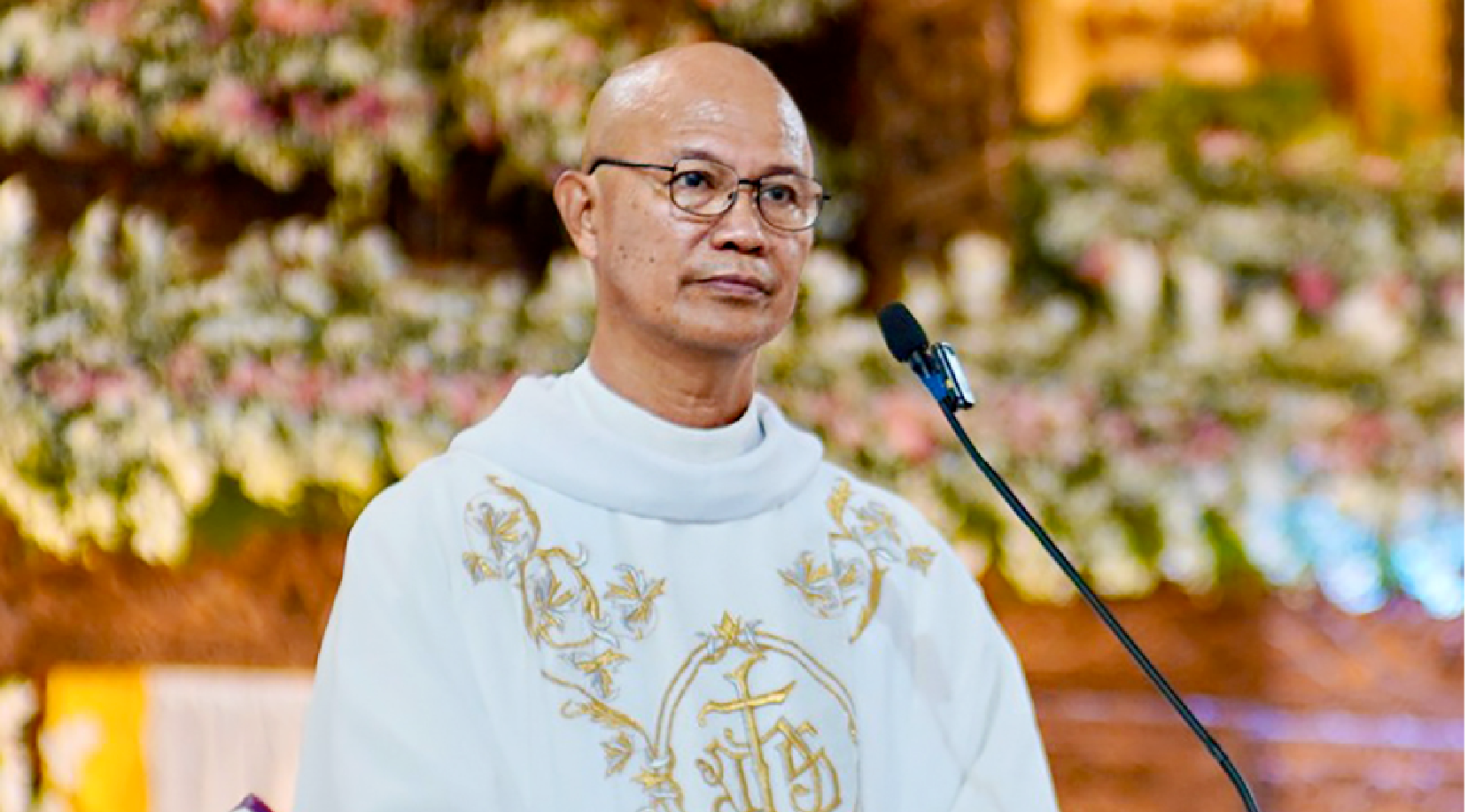
(ZENIT News / Manila, 05.06.2026).- In a country where episcopal appointments are often greeted with celebration, ceremony, and intense public attention, the decision of a Filipino priest to decline becoming a bishop only weeks before his ordination has stunned clergy and faithful alike. Yet beyond the surprise surrounding Father Gerardo Fortich Saco Jr.’s announcement lies a deeper and rarely discussed reality inside the Catholic Church: the immense spiritual, pastoral, and personal burden carried by those called to the episcopacy.
Father Saco, who had been appointed by Pope Leo XIV as the next bishop of Tagbilaran on March 25, announced on May 5 that he would not proceed with his episcopal ordination scheduled for May 26. In a public statement released at dawn, the 60-year-old priest explained that his decision arose from “a deep awareness of my own human limitations and insufficiencies.”
The announcement reverberated across the Philippines, where such refusals are highly unusual in public view. Although priests sometimes decline episcopal appointments privately before they are officially announced, it is exceedingly rare for a bishop-elect to step away after preparations for ordination have already advanced so visibly.
By the time of his withdrawal, much of the machinery surrounding his installation was already in motion. An episcopal coat of arms had been prepared, official portraits had been taken, and his episcopal motto — drawn from Matthew 14:27, “Take courage, it is I” — had already circulated publicly. Only days earlier, on the feast of Saint Joseph the Worker, patron of the Diocese of Tagbilaran, Saco presided over a pontifical Mass and continued to be formally introduced as bishop-elect.
For many Catholics in Bohol, the reversal felt particularly painful because the diocese has already spent months without a permanent shepherd. Since September 2025, when Bishop Alberto Uy was transferred to Cebu as archbishop, Tagbilaran has been governed by Saco himself in his role as diocesan administrator. In practical terms, he was already overseeing much of diocesan life and was widely perceived as a natural choice for continuity.
His experience appeared to reinforce that perception. Ordained a priest for the Diocese of Tagbilaran in 1993, Saco had served not only in local parishes but also abroad, including missionary work in Libya between 2001 and 2003 and pastoral ministry in New York from 2003 to 2005. He had additionally served as vicar general, effectively the bishop’s principal collaborator, before assuming temporary leadership of the diocese.
For that reason, many observers believed he possessed both the administrative experience and pastoral maturity required for episcopal ministry. Yet his own words suggest that external qualifications and internal certainty are not always the same thing.
“Please understand this change of heart,” he wrote to the faithful, while assuring them that he would continue serving as a priest and accompanying them “in faith in the Risen Lord, who never abandons us in moments of trial and need.”
Archbishop Alberto Uy later confirmed that the Vatican had accepted Saco’s decision after it was communicated to Pope Leo XIV through the apostolic nuncio. While expressing sadness, Uy emphasized that the choice had clearly been made after serious prayer and discernment.
Others within the Philippine episcopate responded with similar respect. Bishop Crispin Varquez, who had been expected to serve as co-consecrator during the ordination ceremony, admitted he was surprised but said he admired Saco’s humility.
That humility had already become evident shortly after the original appointment was announced. In one widely shared video, Saco appeared kneeling before an image of the Virgin Mary, visibly emotional and in tears while offering flowers in prayer. The recording spread rapidly online and attracted tens of thousands of reactions, reflecting both public affection for the priest and awareness of the gravity of what had been asked of him.
His own first comments after accepting the appointment now appear especially revealing in retrospect. “I am truly unworthy,” he had said at the time. “I lack many things, but like many whom God has called before me, I trust that His grace is sufficient.”
The case has also drawn attention because it reflects a broader phenomenon inside the global Church. Cardinal Marc Ouellet, former prefect of the Vatican Dicastery for Bishops, once stated that roughly 30 percent of priests chosen for the episcopacy decline the appointment. Former Manila Archbishop Cardinal Gaudencio Rosales likewise noted years ago that such refusals are not uncommon because many priests understand the enormous responsibility attached to the office.
“You cannot violate conscience,” Rosales said at the time. “If they believe they cannot do it, that must be respected.”
In the Philippines, where Catholicism remains deeply woven into national culture and bishops often occupy prominent moral and social roles, Saco’s public refusal carries unusual symbolic weight. Some faithful reacted with disappointment, others with confusion, and many with sympathy. But perhaps the strongest reaction has been respect for a priest who chose transparency over silent acceptance.
Thank you for reading our content. If you would like to receive ZENIT’s daily e-mail news, you can subscribe for free through this link.

Publicaciones relacionadas:
 Remains of the oldest church in the world’s first Christian country found
 Ongoing Liturgical Dispute in India’s Syro-Malabar Church Escalates Amidst Threats of Canonical Action
 4 German Bishops Criticize german Synodal Path Amid Global Church’s Synodal Reflections
 Cuba: Oil sanctions will hit the poorest and weakest warn bishops
