(ZENIT News / Los Angeles, 05.06.2026).- For nearly a century, Virginia Eidson carried a quiet absence in her spiritual life. She had crossed states during the Great Depression, witnessed the transformation of America across generations, raised a family, buried her husband, and preserved the memory of her Cherokee, Choctaw, and Irish roots. Yet one thought continued to trouble her as she approached her ninety-eighth birthday: she had never been baptized.
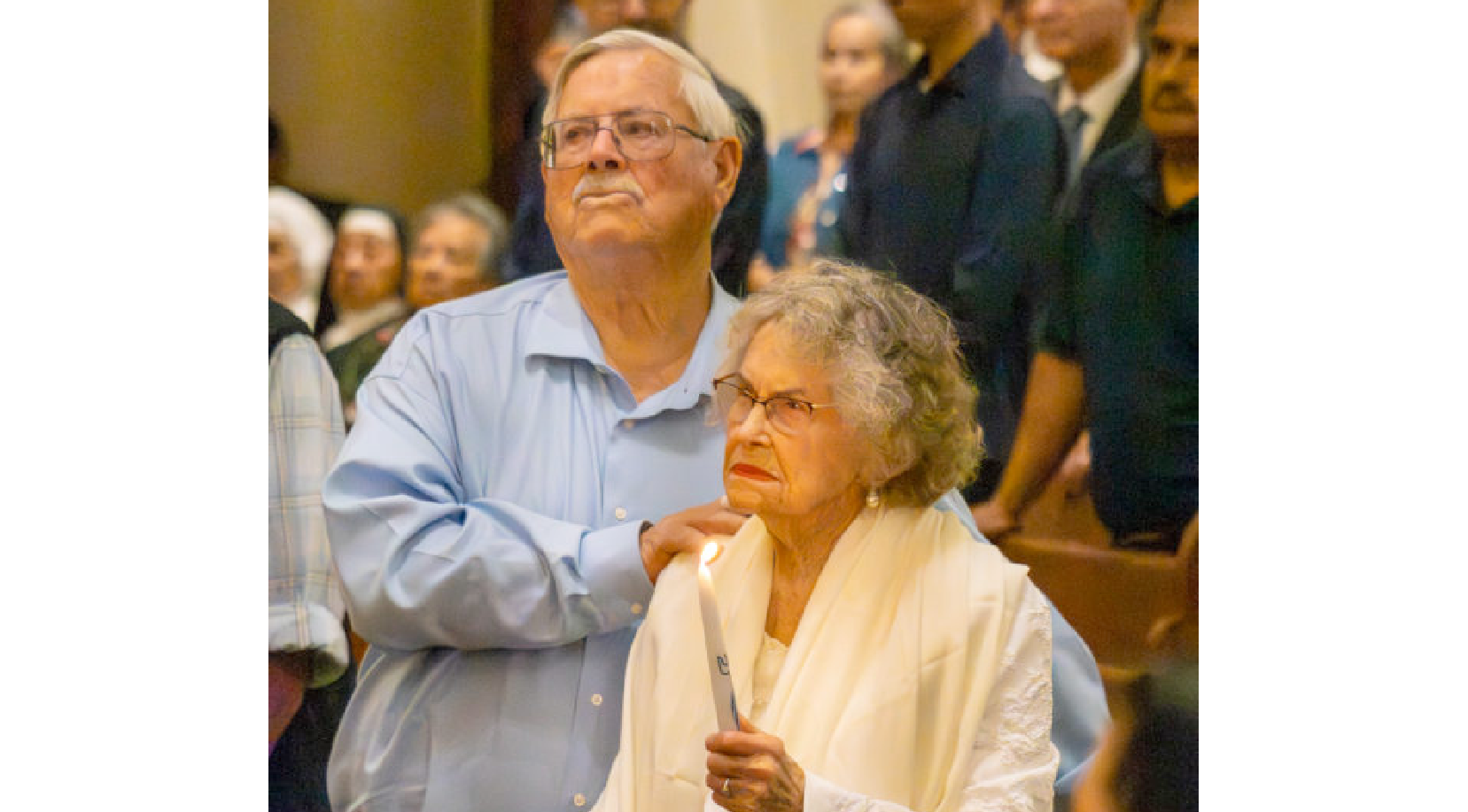
That changed during the Easter Vigil of 2026 at Saint Clare Parish in Oxnard, California, where Virginia became Catholic surrounded by her family and parish community. Among the year’s converts, she was by far the oldest. Her son Bruce, himself a convert to Catholicism decades earlier, stood beside her as her sponsor.
The story might seem unusual because of her age, but those who know her describe the decision not as sudden or symbolic, but as the culmination of a spiritual journey that had quietly matured over many years.
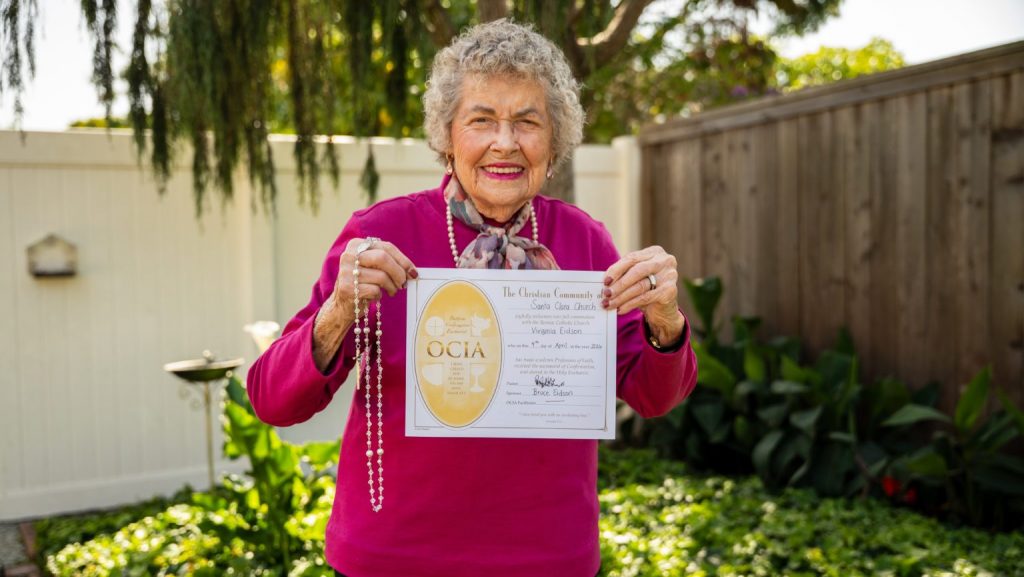
“One night I went to bed thinking, ‘What am I going to do about my religion?’” Virginia recalled. “The next morning I woke up and said, ‘I’m going to become Catholic.’”
Her pastor, Father John Love, admitted he was initially stunned when Bruce informed him that his mother wished to be baptized. Virginia had long been a familiar face at the parish, attending Mass regularly with her family, participating in parish activities, and accompanying her son to events organized by the Knights of Columbus. To many parishioners, she already seemed fully part of the community.
“I see her in church all the time. What do you mean she’s not Catholic?” the priest jokingly replied.
Rather than requiring the nearly 98-year-old woman to complete a lengthy formation process, Father Love chose a more personal approach. Through conversations with Virginia, he sought to discern whether she understood the essentials of the faith and genuinely desired to enter the Church. He quickly became convinced that her decision reflected deep conviction rather than emotional impulse.
Only then did he fully discover the remarkable historical journey behind her family.
Virginia was born in Oklahoma into a family whose roots intertwined Cherokee, Choctaw, and Irish heritage. Those identities carried memories not only of resilience but also of suffering and displacement deeply woven into American history.
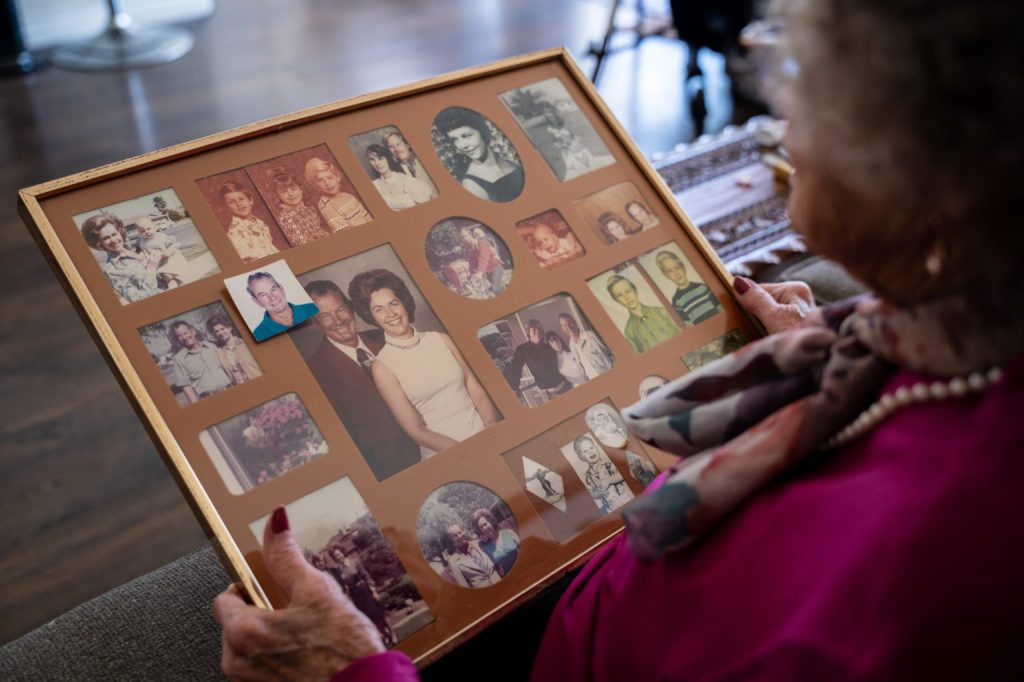
Her father’s family had endured the aftermath of the infamous Trail of Tears, the forced removal imposed by the United States government in the nineteenth century upon several Native American nations living in the Southeast. Thousands died during the brutal relocation to Oklahoma, where surviving families attempted to rebuild their lives. Virginia’s grandparents, of Choctaw and Irish descent, carried their infant son—her future father—through that traumatic migration.
She never heard those stories directly from him because he died when she was still very young. Yet the memory of that inherited suffering remained embedded in family life.
Her mother was Cherokee, and the family eventually farmed land in Pittsburg County, Oklahoma, property acquired by Virginia’s grandfather for his children. But during the Dust Bowl years of the 1930s, severe drought and catastrophic dust storms devastated the region’s agriculture. Like countless American families during the Great Depression, the Eidsons were forced to leave in search of survival.
Virginia was about twelve years old when her stepfather packed eleven family members into a car and headed west toward California after hearing reports of available work. The journey mirrored the migration of thousands of families fleeing economic collapse across the Great Plains.
Their first attempts to find employment revealed another harsh reality of the era. According to Virginia, employers were willing to hire her stepfather only if the children also worked in the fields. He refused. Eventually, he secured employment in the oil fields near Bakersfield, where the family began rebuilding its life.
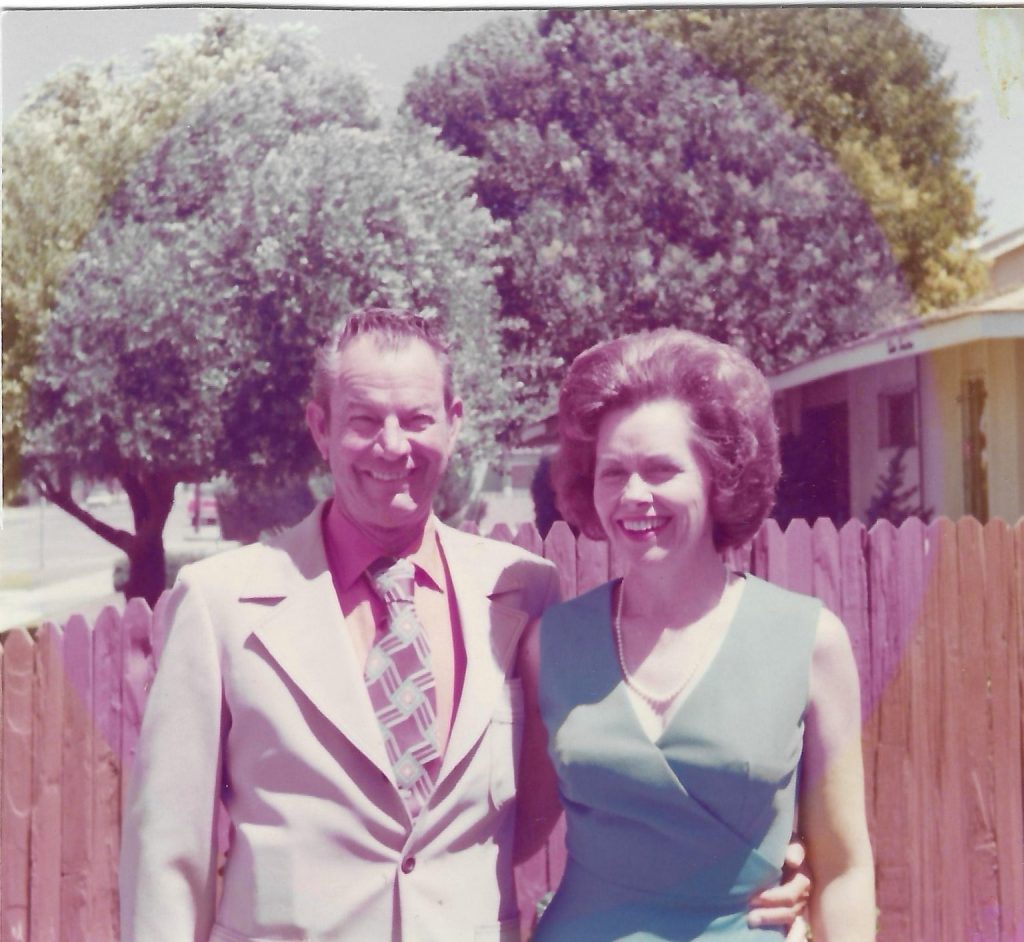
That experience of migration, perseverance, and cultural memory shaped Virginia’s worldview throughout her life. Her Native American heritage remained important to her well into old age. She subscribed to tribal publications and periodically returned to Oklahoma, where family stories continued to pass between generations.
Bruce Eidson remembers visiting his maternal grandmother there as a child. Sitting in a rocking chair, she would recount stories of wagon caravans crossing Indigenous lands and of life before modern development transformed the region. Those memories profoundly altered his own understanding of American history.
“I used to watch cowboy and Indian movies,” Bruce reflected. “Then I realized there was a completely different perspective on the white settlers.”
Virginia eventually married Edward Eidson, a deputy sheriff in Kern County. After decades together, the couple retired to Cayucos on California’s central coast before Edward died in 2010. Years later, Virginia moved to Oxnard to live near Bruce, where she settled into a quiet daily life centered on gardening and feeding birds and squirrels outside her home.
Meanwhile, Bruce’s own path had already brought Catholicism into the family. After marrying a Catholic woman, he entered the Church through the Order of Christian Initiation of Adults and became deeply involved in parish life and the Knights of Columbus. His mother accompanied the family regularly, gradually developing admiration not only for Catholic worship but also for the sense of spiritual belonging she encountered there.
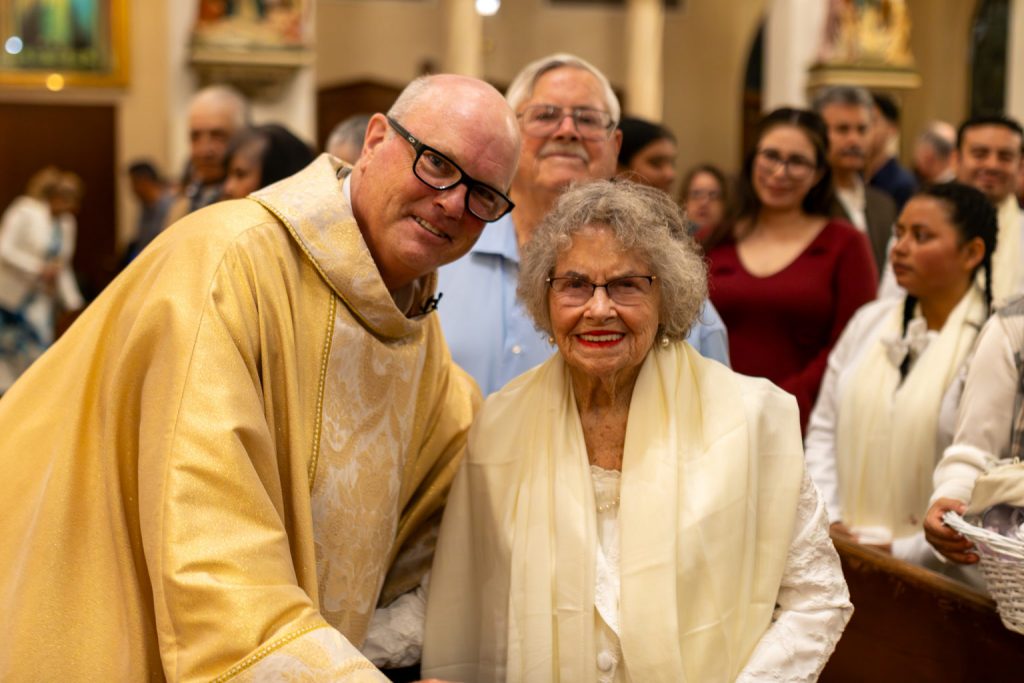
Father Love later reflected that Virginia’s life carried striking biblical echoes. He saw in her family history elements of exile, migration, endurance, and eventual arrival. For him, it seemed fitting that a woman shaped by so many journeys would undertake one final spiritual exodus late in life.
After her baptism, Virginia spoke simply about what she experienced.
“I felt peace,” she said. “I felt in my heart that I had done the right thing.”
Her story has resonated far beyond her parish because it quietly challenges modern assumptions about faith and aging. Virginia Eidson’s journey offers another possibility: that the deepest spiritual decisions sometimes emerge slowly, through decades of memory, suffering, family life, and reflection.
For those who witnessed her baptism during the Easter Vigil, the moment was not merely remarkable because she was 98 years old. It was remarkable because, after nearly a century of life, she still believed there was one more important step left to take.
Thank you for reading our content. If you would like to receive ZENIT’s daily e-mail news, you can subscribe for free through this link.