

R. Cavanaugh
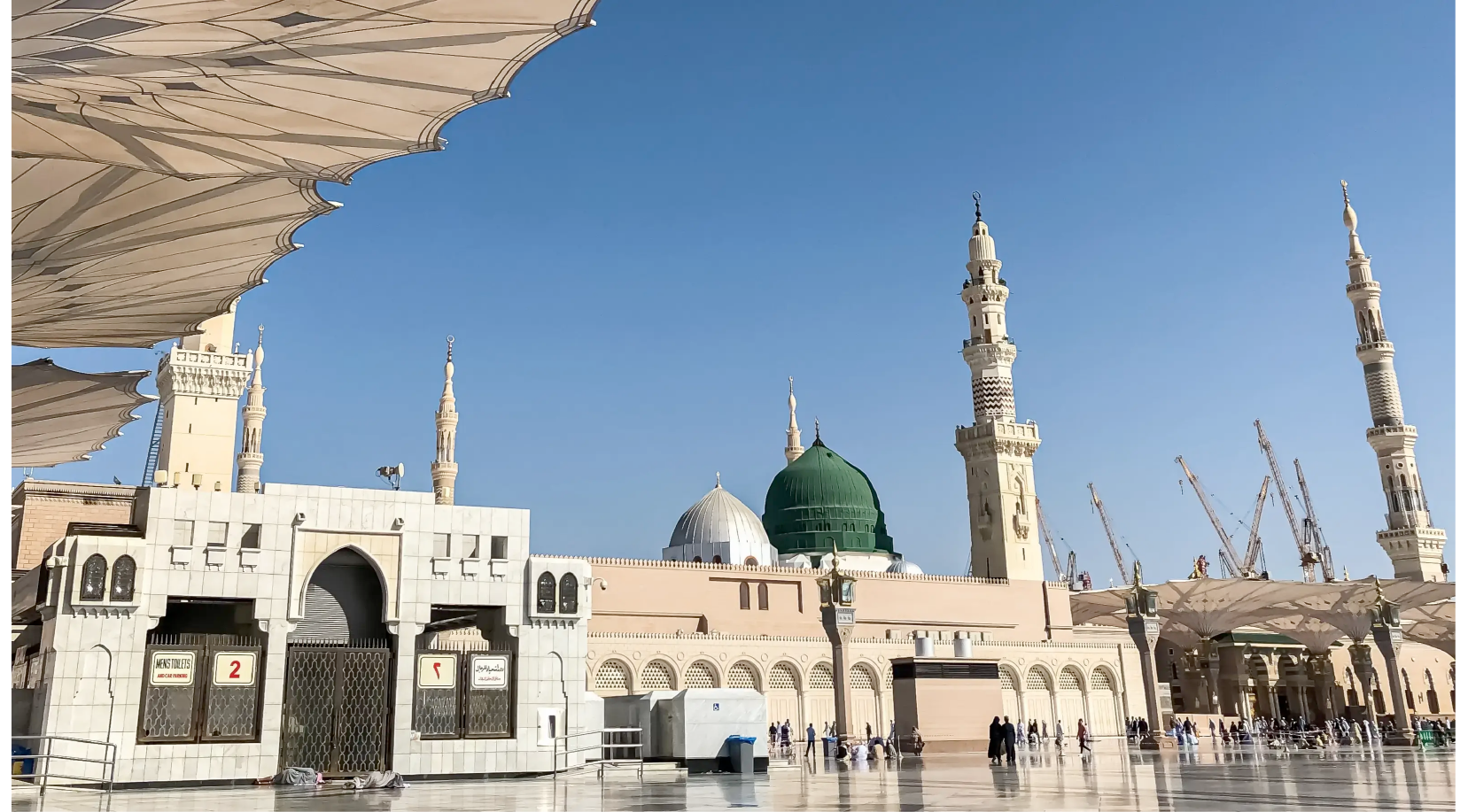
(ZENIT News – Persecution.org / Rome, 05.19.2026).- Attacks on churches are a harsh reality in many countries. But Saudi Arabia is not one of them.
The birthplace of both Islam and Wahhabi radicalism, this country of more than 35 million people has more than a handful who would be up for the task. But no matter how much radical passion you have, it’s hard to detonate yourself inside something that doesn’t exist.
No churches are allowed here. Not even North Korean-style “sham churches” that give a spooky semblance of religious freedom. The Kingdom of Saudi Arabia refuses even to pretend. The answer is simply no.
Such a rule, of course, presents something of a problem for the 2.3 million Christians — virtually all of them foreigners — living inside the country.
“Foreign Christians often do get together and pray in each other’s houses,” said “Nicolas,” a Lebanese Christian who grew up in Saudi Arabia. “We used to do that quite a lot with family friends.”
Nicolas added that they also used to host Christmas parties with decorated trees and multiple non-Saudi Muslim guests.
One important factor here is socioeconomic class. “We lived in a compound with only other foreigners,” Nicolas said.
Police surveillance and intrusion are far more of a reality if you’re poorer and live in apartments that have illegal immigrants. These were the types of places where foreigners — often from Ethiopia or the Philippines — would get caught as a group partaking in Christian activities.
The laws regarding the practice of such non-Muslim worship remain rather unclear and subject to various interpretations. Police raids on private Christian gatherings are less common than in previous decades. And when they do take place, the official reasons given pertain less to religion and more to illicit mingling of genders or the presence of illegal immigrants.
Nicolas said he and his family could regularly attend Mass at the consulate of a Western nation, as such venues have a layer of diplomatic protection. Both Protestant and Catholic services were available, though they were kept “hush-hush” and required preregistration.
Nicolas said he knew only a few Saudis, whom he described as wealthy and Westernized. He said he has never met a native Saudi Christian and doesn’t know anything about them.
“I’m sure if there are any, they live in complete secrecy or try to leave the country and claim asylum abroad,” he added.
Technically, Saudi converts to Christianity are supposed to face the death penalty. Recent years, though, have seen no such official executions. That said, converts have faced lethal justice from disapproving family members.
Aside from religious intolerance, Saudi Arabia has received negative coverage for the way many foreign workers working there face exploitation.
Nicolas explained that such exploitation is typically based not on religion but on race.
“Black people and South Asians get the worst treatment,” he said. “East and Southeast Asians are treated slightly better.” He also noted that Gulf Arabs tend to receive preferential treatment over non-Gulf Arabs.
Though he tended to socialize with other foreigners, Nicolas’s interactions with Saudi nationals were usually amicable.
“Locals regularly assumed we were Muslims,” he said. “Most of the time, they didn’t care when they found out we weren’t.”
Nicolas explained that he lived in Jeddah, a port city on the Red Sea, and the most liberal and cosmopolitan part of the country. He added that people in the Saudi capital, Riyadh, tend to be more traditional, and that rural areas would have some serious hard-liners.
He said he thinks that only “very few [Saudis] in the cities” would approve of acts of jihadist violence. Nicolas added that, “support for that kind of extremism would only really be found among the poorest and least-educated Saudis.”
Even in comparatively liberal Jeddah, though, there were incidents that made it clear Nicolas and his family were in a sharia state.
His friend had a cross necklace “ripped off her neck and confiscated” by the notorious Saudi religious police. These authorities once arrested his aunt for sitting in the front seat of a taxi without her husband present. His mother never faced arrest but was scolded a few times for smoking in public and not covering her head during Ramadan.
His grandmother once had a situation with local airport officials when they discovered an Arabic-language Bible in her possession. She ultimately avoided any punishment and kept her Bible. Nicolas suspected this favorable outcome was due to her advanced age. “Saudis respect elders quite a lot,” he noted.
The most vivid incident occurred during an evening out with a group of friends, all of them Arab foreigners, some Christian and some Muslim.
Two of these friends had longer hair and were confronted by the religious police, who disapproved of men having such a hairstyle. Because religious identity is listed on Saudi residence permits, the religious police were quickly able to ascertain that one of these longish-haired men was Christian and the other was Muslim.
These police simply yelled at the Christian. But because the Muslim was held to a higher standard, the police started beating him and “cut off his hair right then and there,” Nicolas recalled. “It was brutal.”
He believes that most of these religious police are not necessarily sadists but are instead “indoctrinated” people who feel “they are doing the right thing.”
Since the country made reforms in 2016, the religious police have far less power. Beatings and involuntary haircuts, among other forms of abuse, are less common. Also, instead of being able to question and arrest people for any reason, the religious police can “only observe and report” to the regular police, Nicolas explained.
The glory days of violently righteous authorities seem to have subsided. But Saudi Arabia remains a sharia kingdom, which means it’s best to stay Christian on the stealth and keep your crosses hidden.
Thank you for reading our content. If you would like to receive ZENIT’s daily e-mail news, you can subscribe for free through this link.

Publicaciones relacionadas:
 How Many Exorcists Are There in the Catholic Church and in Which Countries Do They Work?
 Cardinal Sako, Patriarch of Chaldean Catholics Says: “I’m Disappointed by the Holy See’s Position”
 Catholic nuns in Gaza facing Israeli bombing threat: we will not flee without our sick and elderly people
 1 in 20 new priests by 2025 in the U.S. come from the military. Research reveals surprising facts
