

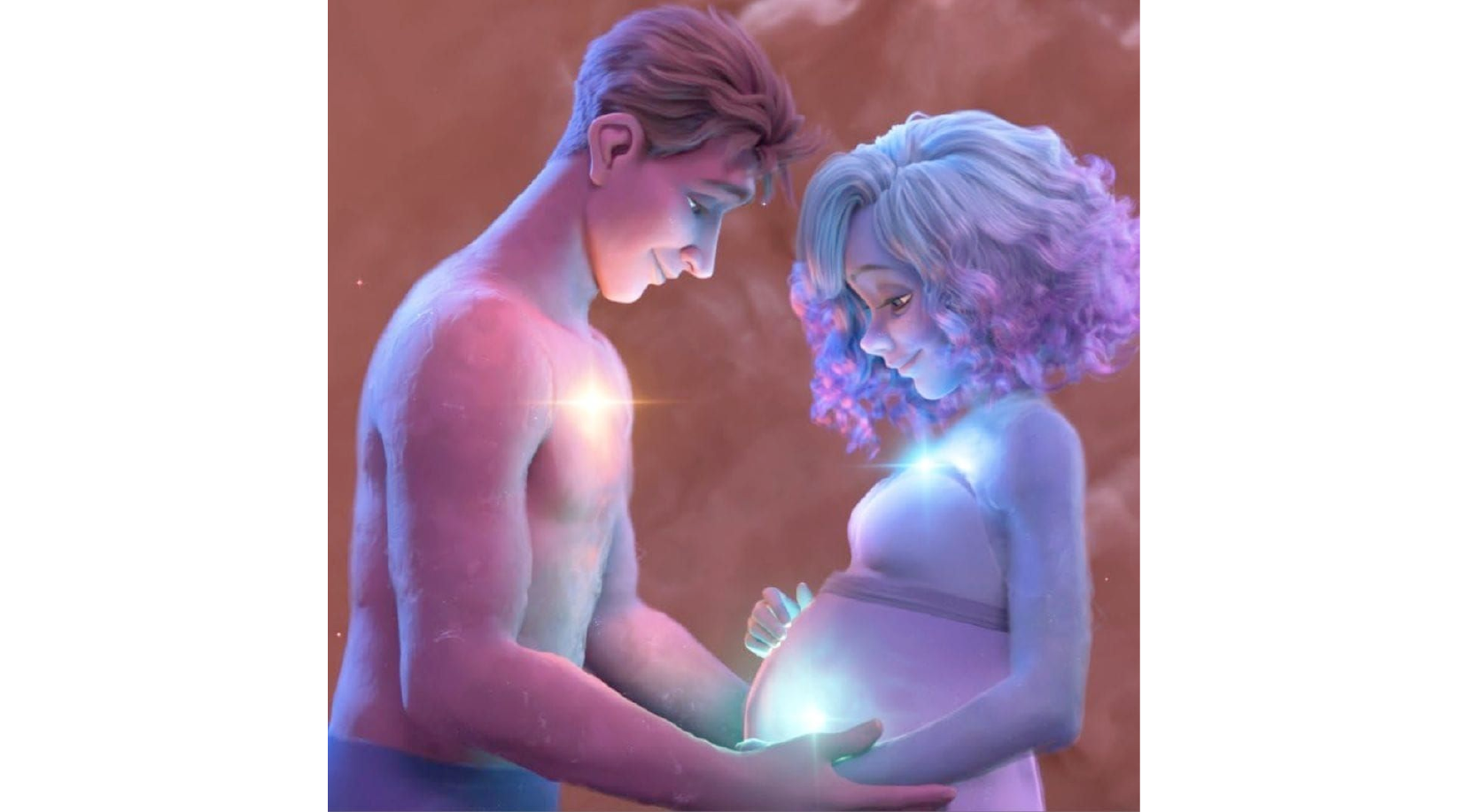
(ZENIT News / Rome, 05.18. 2026) – Animation is often associated with bright stories, epic adventures, and endearing characters. However, the new short film from Walt Disney Animation Studios demonstrates that this artistic language can also address some of the most difficult experiences of human life. Its new production, Versa, is a short but powerful story about the loss of a baby and the emotional process a young couple goes through to cope with that pain.
Directed by animator Malcon Pierce, the short film, which runs for just six minutes and contains no dialogue, has become one of the most talked-about projects in recent months, both for its emotional impact and for the conversations it has sparked on social media and among film critics.
Far from being a work of fiction, Versa draws from a profoundly personal experience of its director. During the production of the film Moana, Pierce and his wife were expecting their son, Cooper. However, the baby died in the late stages of pregnancy, an experience that radically transformed the couple’s lives.
That experience eventually became the creative driving force behind the short film. Pierce explained that the grief they went through was «immensely great and almost impossible to overcome,» a feeling he wanted to convey in a work capable of accompanying those who have experienced a similar loss.
The story follows an unnamed couple who, after losing their child before birth, try to find a path back to hope. Through symbolic imagery and an emotionally charged visual narrative, the film portrays a journey that passes through anticipation, loss, grief, and, finally, acceptance.
One of the most striking aspects of Versa is its narrative style. Instead of dialogue or explicit explanations, the story unfolds through poetic animation in which the characters move within an almost cosmic visual universe. The narrative is supported by movements inspired by dance, particularly figure skating, and by an orchestral soundtrack that accompanies each stage of the emotional process.
This style allows the story to transcend languages and cultures. The viewer doesn’t need words to understand what the protagonists feel: the joy of a child’s arrival, the emptiness left by their loss, and the slow emotional reconstruction that follows grief.
For Pierce, that was precisely the objective The work does not intend to offer simple answers or close wounds, artificially, but to show that pain is part of life and that, over time, it can be integrated into the memory and love of those who experience it.
The loss of a child before or shortly after birth remains a rarely seen theme in film and popular culture. In this context, the short film seeks to offer more than entertainment: it aims to be an emotional mirror for those who have experienced a similar loss.
Animation allows this pain to be expressed symbolically and universally. Through stars, cosmic landscapes, and silent gestures, the story conveys a central idea: even in the midst of tragedy, the love that parents feel for their child does not disappear. Even before its general release, the short film had already been presented at animation festivals, where it received praise for its sensitivity and artistic approach.
In just a few minutes, the short film tackles one of the most difficult pains to explain: the loss of a child who has not yet been born. And it does so without speeches or explicit messages, relying solely on the power of image, music, and emotion.
At the same time, the film has also generated debate online. While many viewers have celebrated the sensitivity with which it addresses grief and the portrayal of prenatal life, others have interpreted the short film within broader cultural discussions about family and values.
Perhaps that’s why the work has resonated with so many people, because, beyond any cultural debate, the heart of the story is universal: the love between parents and children and the human capacity to find meaning even in the midst of pain. Versa doesn’t just tell a story; it opens a space for other people to recognize their own.

Publicaciones relacionadas:
 Argentina: Carmelite Nun of the Beautiful Smile Who Died of Cancer, Begins Her Path to the Altars
 Irish nun receives Presidential Award in Zambia
 A generation returns? New data suggest a surprising revival of Catholic identity among Spanish youth
 The Papal Foundation Announces $15 Million in Grants for 2026: 144 Projects, 75 Countries, Support for the Poor, Seminaries, and the Fight Against Church Abuse
